What is a brushless DC motor?
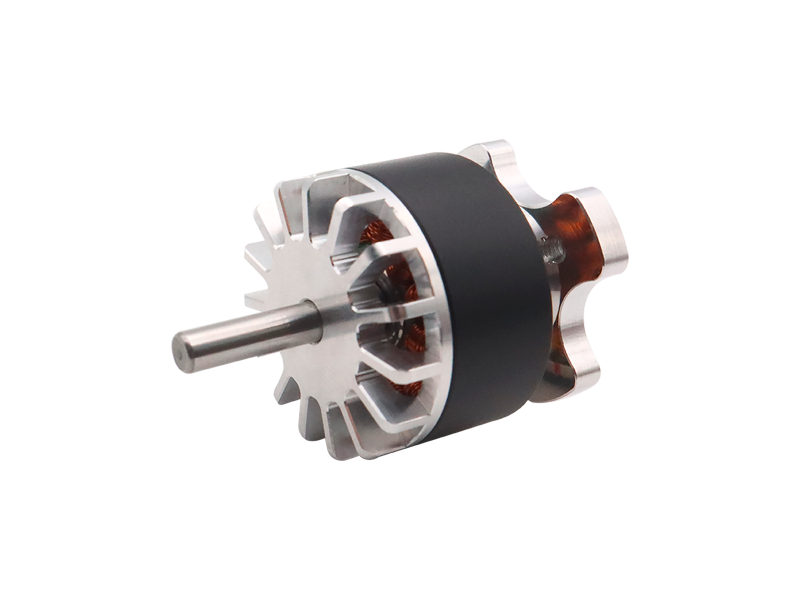
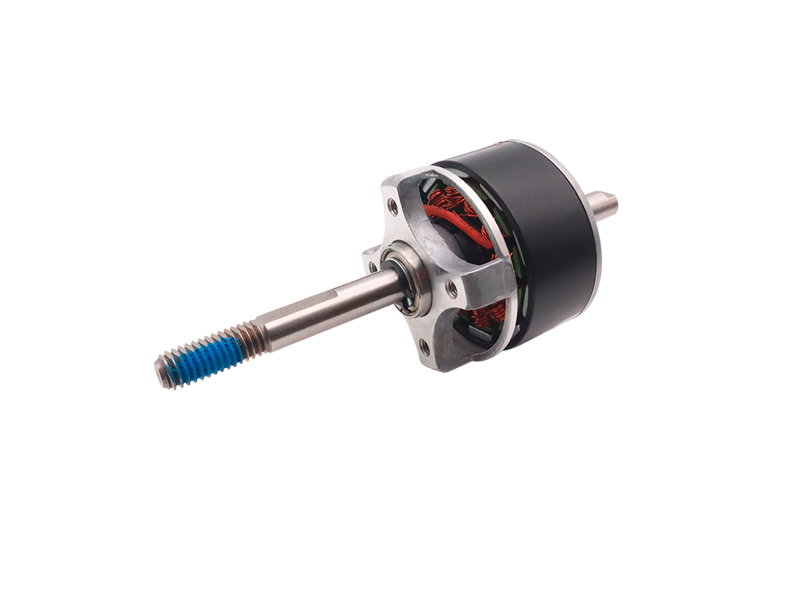
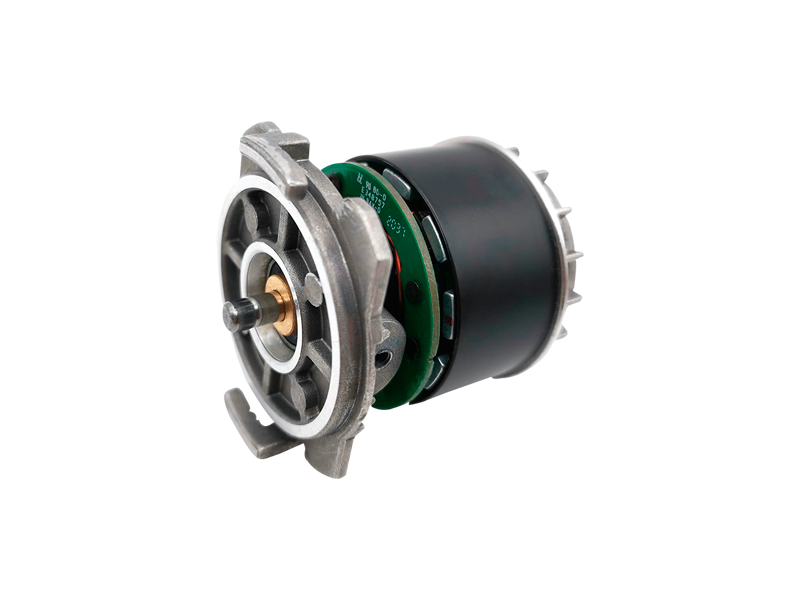
A brushless DC motor is a typical electromechanical integrated product consisting of a motor body and a driver. Brushless motor refers to a motor without brushes and commutators (or collector rings), also known as a commutatorless motor. As early as the 19th century, when the motor was born, the practical motor produced was the brushless form, namely the AC squirrel cage asynchronous motor. This type of motor has been widely used. However, asynchronous motors have many insurmountable defects, resulting in slow development of motor technology. In the mid-20th century, transistors were born, so transistors were used. Therefore, the use of transistor commutation circuits instead of brushes and commutators in DC brushless motors emerged. This new type of brushless motor is called electronic commutator DC motor, which overcomes the defects of the first generation brushless motors.
Brushless DC motors have the same working principle and application characteristics as general DC motors, but their composition is different. In addition to the motor itself, the former also has an additional commutation circuit. The motor itself is closely integrated with the commutation circuit, and many low-power motors are integrated with the commutation circuit. From the appearance, brushless DC motors are exactly the same as DC motors.
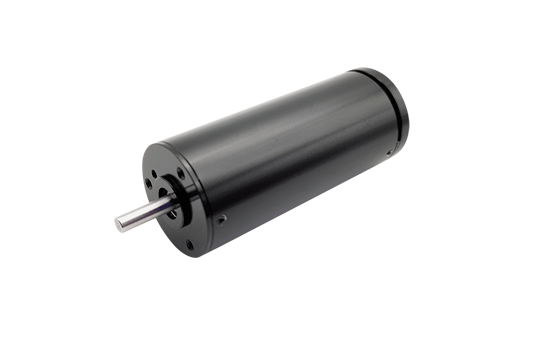
A DC brushless reducer consists of a stator and a rotor. The stator is composed of one or more pole pairs connected in pairs, while the rotor is a component of an electrical winding with permanent magnet nodes. The permanent magnet nodes in the rotor are called magnetic poles, which rotate around the magnetic field between the N and S poles. The electrical winding is connected to an external power source to excite current to pass through the rotor winding. The rotor winding is usually referred to as a synchronous motor because their current frequency is the same as the power frequency.
DC motors have the characteristics of fast response, large starting torque, and the ability to provide rated torque from zero speed to rated speed. However, the advantages of DC motors are also its disadvantages. Because DC motors need to generate constant torque performance under rated load, the armature magnetic field and rotor magnetic field must be maintained at a constant 90 ° angle, which requires the use of carbon brushes and rectifiers. Carbon brushes and rectifiers generate sparks when the motor rotates, and carbon powder not only causes structural damage, but also limits its usage. AC motors do not have carbon brushes and rectifiers, which are maintenance free, sturdy, and widely used. However, in order to achieve performance equivalent to DC motors, complex control technology is needed. With the rapid development of semiconductors, the switching frequency of power components has been greatly accelerated. Improve the performance of the drive motor, The speed of microprocessors is also increasing, which can realize the control of AC motors in a rotating two axis Cartesian coordinate system, and appropriately control the current components of AC motors in both axes, achieving similar performance to DC motor control and comparable to DC motors.