What is the difference between a brushless generator and a brushless motor?
Brushless motors and brushless generators are two completely different categories of products, with only one word difference. Today we will briefly introduce their main differences.

As the name suggests, the main function of a brushless generator is to generate electricity, converting kinetic energy into electrical energy by providing torque through external components such as wind blades. A brushless generator is actually composed of two generators, one serving as the exciter and the other as the main generator. The excitation winding of the main generator is located in the rotor, and the armature winding is located in the stator (to output the generated electricity); The armature winding of the exciter is in the rotor, and the excitation winding is in the stator. The working principle of a brushless AC generator is to provide excitation to the excitation winding of the exciter on the stator. The rotor armature winding will generate AC power, which will be rectified and supplied to the excitation winding of the main generator on the rotor, thereby inducing the required AC power in the armature winding of the main generator on the stator. This is the "brushless" working principle of a typical AC generator.
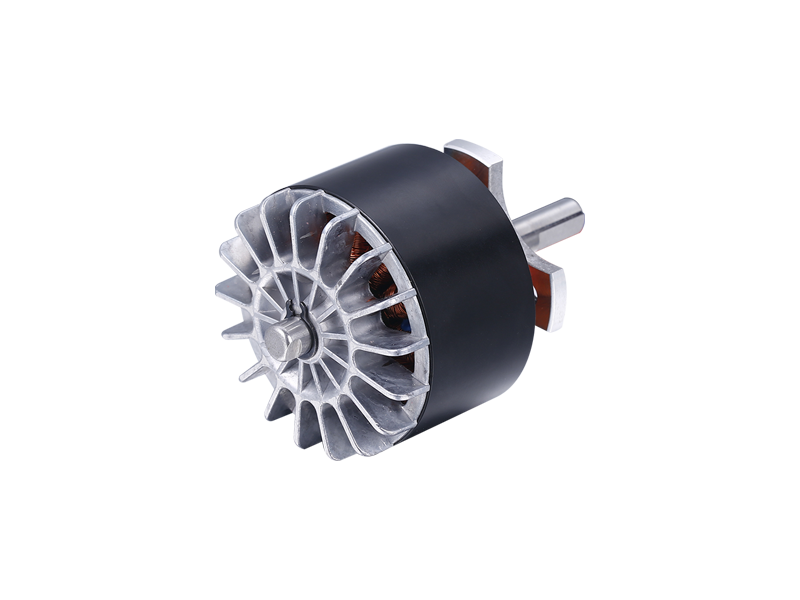
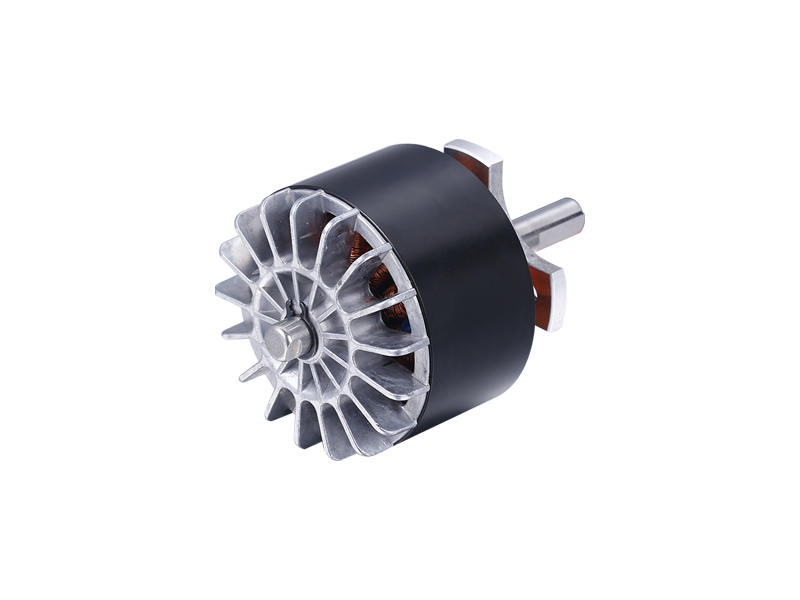
Brushless motor relies on changing the alternating frequency and waveform of the current wave input to the stator coil of the brushless motor, forming a magnetic field that rotates around the geometric axis of the motor around the winding coil. This magnetic field drives the permanent magnet steel on the rotor to rotate, thereby driving the motor to rotate. It converts electrical energy into kinetic energy, which is exactly the opposite of the energy conversion of the brushless generator above. Its main components are stator, rotor, and electronic commutator. Compared with traditional brushed DC motors, it has the advantages of low electromagnetic interference, low noise, and ground maintenance costs.