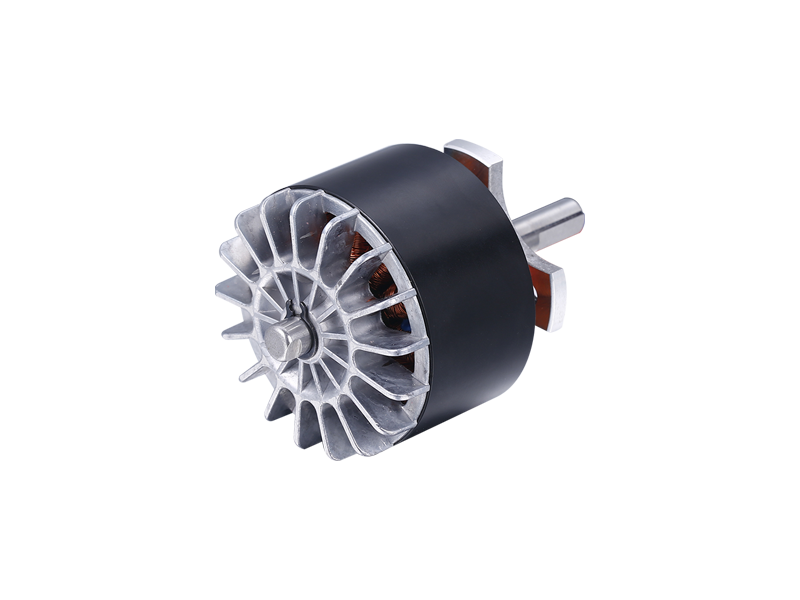
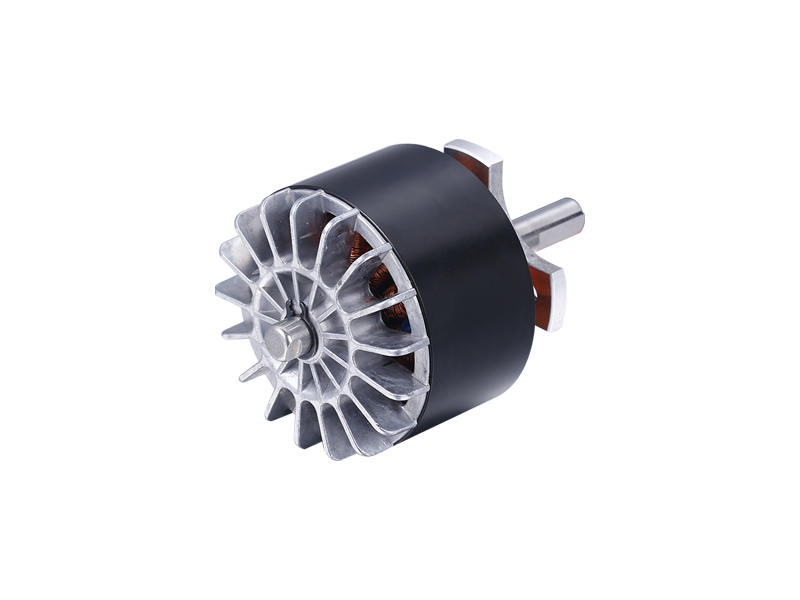
Should brushless motors be used for car window lifting?
Car window motors are a major category of automotive component motor applications. Generally, a small car will use four or even more window motors, and the usage is very considerable. It is not difficult to reach one million units per year. So, do car windows need to use brushless motors?

The main function of the car window motor is to lift and lower the glass window, and it is often powered by DC12V voltage. The no-load speed of the motor is generally 6500RPM, and the stalling torque requires about 270mNm. Of course, this is not the final usage state. The lifting speed of the car window determines that it must adopt a deceleration structure, so the coordination of the deceleration transmission structure is essential. The general overall composition is shown in the following figure:
Based on our experience working with some clients, this part is mostly customized by the clients themselves. And most of them use brushed motors, for two main reasons:
Firstly, the issue of price. Compared with brushless motors, brushed motors are much cheaper. Although they have many other shortcomings, price is still a problem that many customers have to consider. Each car uses four of these reduction motors, and if brushless reduction motors are used, the overall budget would be much higher in cost.
Secondly, this is also the most critical reason why customers can accept brushed motors, which is that this application does not have high requirements for the lifespan of the motor. Because people generally do not frequently lift or lower their car windows, even if there is a brush motor with a lifespan of only a few hundred hours, based on a few minutes of daily use, it is sufficient to support users until they replace their new car.
From the above situation, it can be seen that in the short term, window motors will still be dominated by brushed motors. I just don't know if some luxury car models use brushless motors.