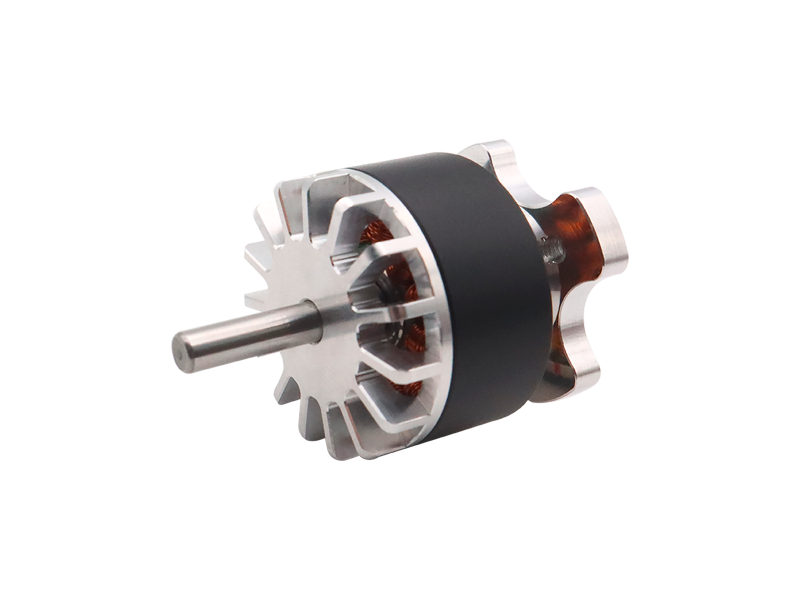
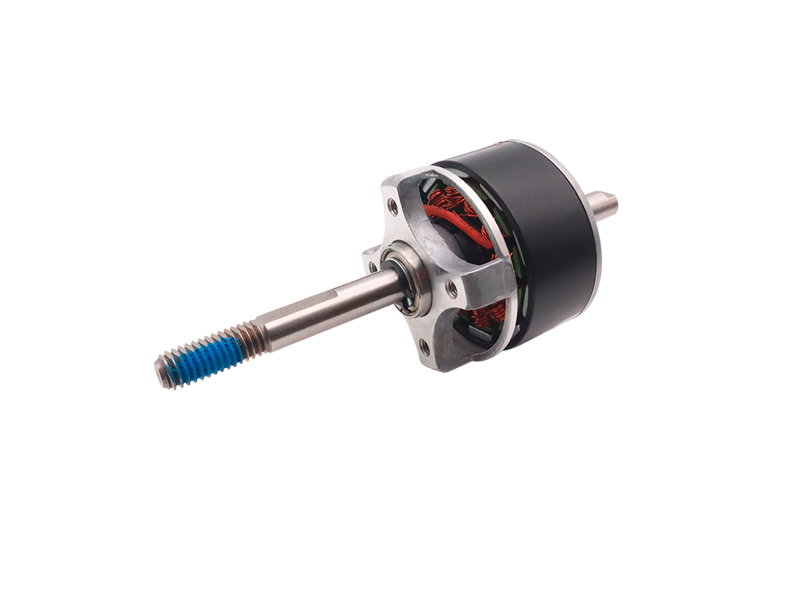
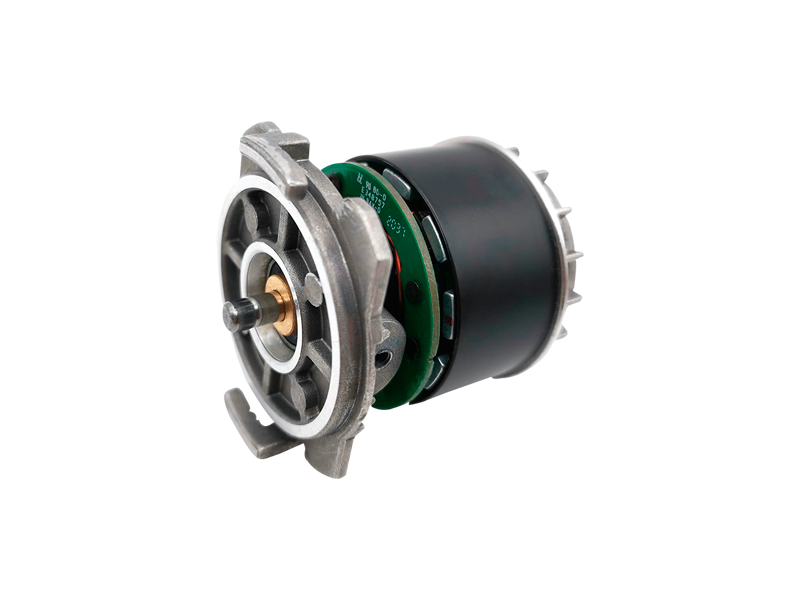
Technical points and selection guide for brushless motor drivers.
1、 Key technical points
Electrical parameter matching
Voltage adaptation must strictly match the rated value of the motor, and the error should be controlled within ± 10%. For example, a 48V motor needs to be paired with a 43-52V driver to avoid overvoltage breakdown or undervoltage stall.
A 30% margin should be reserved for current capacity, and it is recommended to use a 6.5A driver for 5A motors to cope with startup surge current.
Control algorithm selection
Six step commutation: Low cost but large torque fluctuation, suitable for simple scenarios such as fans.
FOC vector control: precise speed regulation is achieved through a current loop/velocity loop/position loop, suitable for high-precision equipment such as robotic arms, reducing harmonic losses by 40%.
Security protection design
The overcurrent protection threshold is usually set at 150% of the rated value, and the overheat protection requires an NTC temperature sensor to be installed on the PCB board, with a recommended trigger temperature of ≤ 85 ℃.
2、 Scenario based selection strategy
Industrial equipment: Priority should be given to drivers that support CAN bus (such as TMC5160), with a continuous current of ≥ 20A and a protection level of IP65 or above.
Consumer electronics: Adopting a miniaturized solution with integrated MOSFET (such as DRV8313), with power consumption less than 5W and support for sensorless startup.
Medical equipment: Must comply with EMC Class B standards, recommended linear Hall sensor+optocoupler isolation design.
3、 Compatibility Verification Checklist
Check if the number of motor poles is consistent with the driver parameters (e.g. Pole Pairs=4 needs to be set for 4-pole motors).
High frequency applications (>50kHz PWM) require verification of MOSFET switching losses and the addition of heat sinks if necessary.