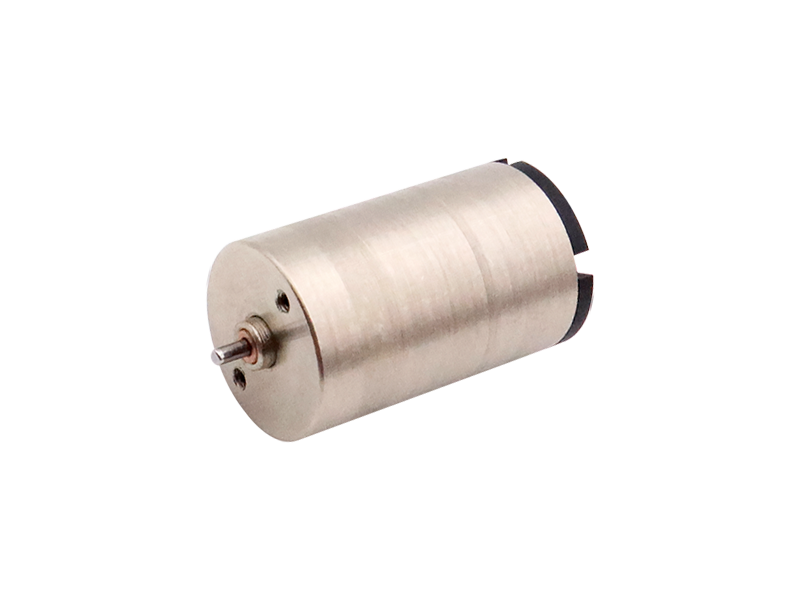
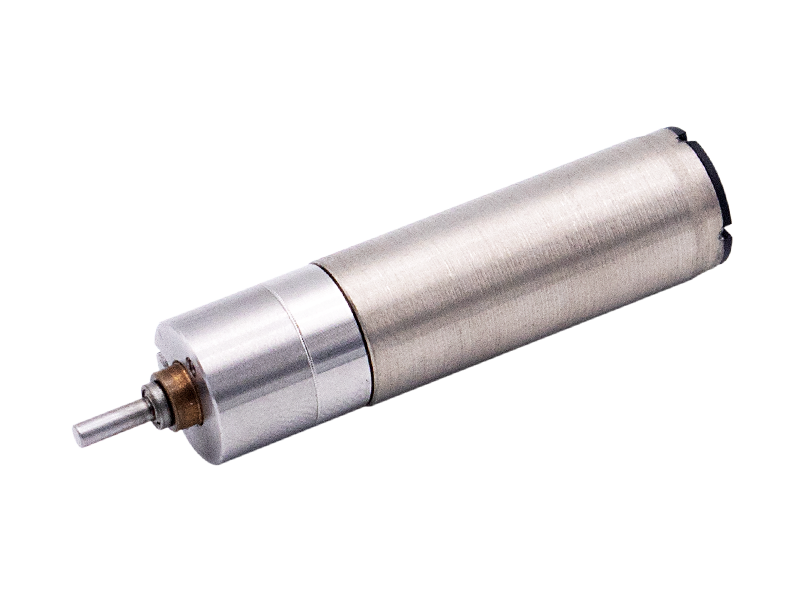
Method of commutation for brushless DC motor.
Brushless DC motors achieve high-precision speed adjustment, high efficiency, and high output power by precisely controlling the rotor of the motor through an electronic controller. Compared with traditional brushed DC motors, brushless DC motors do not require friction between the brush and motor rotation, thus having a longer service life, more stable performance, and lower maintenance costs.

Brushless DC motor is an efficient and reliable motor, and its commutation method is one of the key factors affecting the performance and lifespan of the motor. Today, Jinyuan Electromechanical will introduce three commutation methods for brushless DC motors, namely voltage reversal, Hall sensor, and sensorless. Each method has its own characteristics and application scenarios.
1、 The commutation method of
brushless DC motor
The commutation methods of brushless DC motors generally include voltage reversal, Hall sensor, and sensorless.
1. Voltage reversal commutation
Voltage reversal commutation is the simplest way of commutation, and reversing the circuit voltage can change the direction of the motor. This commutation method has the advantages of simple operation and low cost, but it is prone to overcurrent phenomenon, so current protection is required.
2. Hall sensor type commutation
Hall sensor commutation is a method of adding Hall sensors to monitor the position of the motor rotor and control commutation. By measuring the magnetic pole position of the motor through a Hall sensor, the controller can accurately determine the polarity of the magnetic field and control the phase sequence of the motor. This commutation method has the advantages of accurate commutation, no sound, and high efficiency, and is a commonly used method.
3. Insensitive commutation
Non inductive commutation is achieved through dynamic feedback of current, without the need for Hall sensors. The principle of this method is that the current in the opposite direction of the motor will generate a back electromotive force under the action of the magnetic field. The rotor position is determined by detecting the change in the back electromotive force, and then the phase sequence of the motor is controlled. The advantages of this method are high reliability without sensors, simple construction, low noise, and high accuracy at medium and low speeds. However, its applicability is narrow and needs to be selected according to the type and characteristics of the motor.
2、 Applicable scenarios for different commutation methods
Different commutation methods for brushless DC motors have their own characteristics and applicable ranges, and should be selected according to specific situations.
Voltage reversal commutation is suitable for applications with low power and low voltage drive. The transmission system requirements are relatively simple and can be used in situations where the torque is not too large.
Hall sensor based commutation is suitable for small and medium power applications, especially in situations that require higher accuracy and stability. This type of motor requires the addition of Hall sensors in the circuit during use, making the design more complex.
Non inductive commutation is suitable for higher power application scenarios and has strong adaptability. It does not require the controller to add specialized Hall sensors, eliminating the noise impact of sensors on the motor. But its control circuit requires higher requirements and requires the use of higher-level controllers.