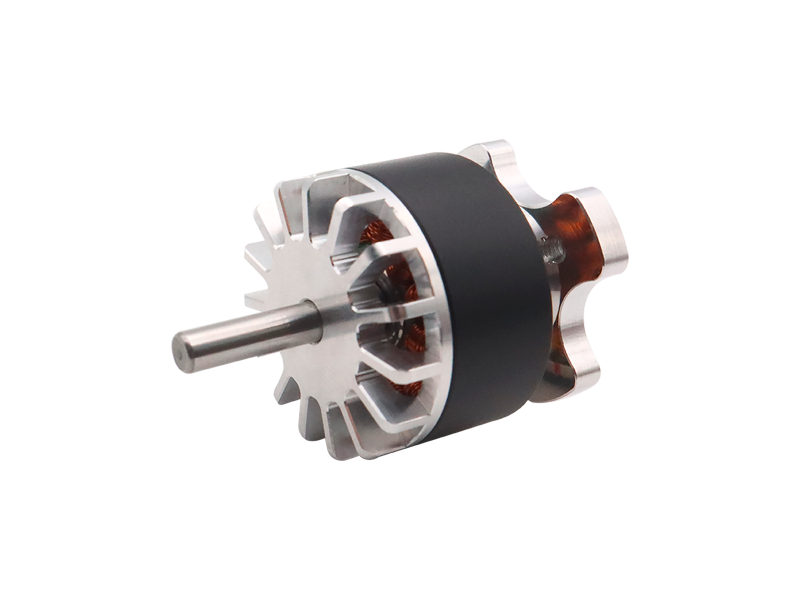
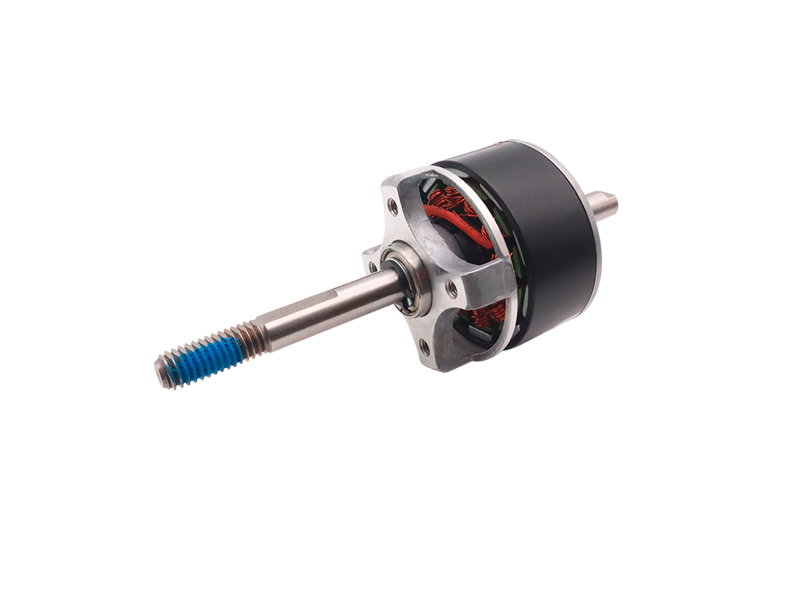
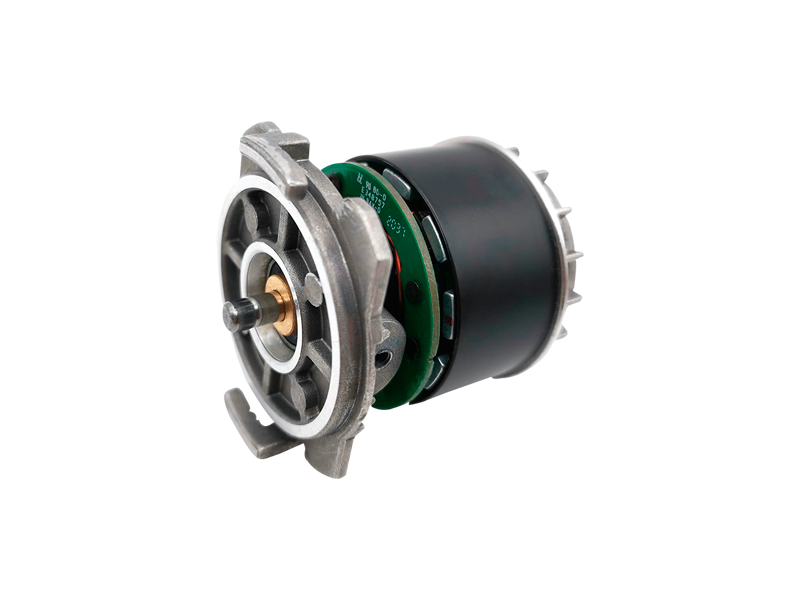
How is a brushless motor driven.
The electronic commutator brushless DC motor is unique in its operating mechanism, as it does not rely on traditional mechanical commutators to regulate the current flow inside the coil. On the contrary, it cleverly utilizes an electronic commutator to transfer current. This unique current generates an alternating current signal during its flow, which in turn drives the motor and provides strong and stable power support for various devices.
The working principle of
brushless DC motors is, to some extent, similar to that of brushed DC motors. For example, in the basic logic of energy conversion and power output, there is a certain commonality between the two. However, they have significant differences in specific implementation methods and performance.
The Lorentz force law clearly states that as long as a current carrying conductor is placed in a magnetic field, it will inevitably be affected by some force. Just like in actual industrial production, the operation of many electromagnetic devices relies on this principle. Due to the presence of a reactive force, the magnet will bear an equal and opposite force. The power relationship of this interaction has crucial applications and manifestations in many fields of physics. For example, in the design of maglev trains, it is precisely the precise grasp and clever use of this force that enables the high-speed and smooth operation of the train.