How does a brushless DC motor operate.
With the rapid development of motor technology and the widespread adoption of various high-power electronic devices, this desire has gradually been realized. The structure of DC brushless motors is reliable, simple, and easy to maintain. Its speed is no longer limited by mechanical commutation. If high-speed bearings are used, it can also operate at speeds of up to tens of thousands of revolutions per minute.
The main advantages of DC brushless motors are good speed regulation and starting characteristics, large locked rotor torque, and are widely used in various drive devices and servo systems. However, DC brushless motors all have brushes and commutators, and the sliding mechanical contact formed between them seriously affects the performance, accuracy, and reliability of the motor. The sparks generated can cause radio interference, shorten the life of the motor, and the commutator brush device makes the structure of the DC motor complex, difficult to maintain, and noisy. For a long time, people have been seeking DC motors that do not require brushes and commutators.
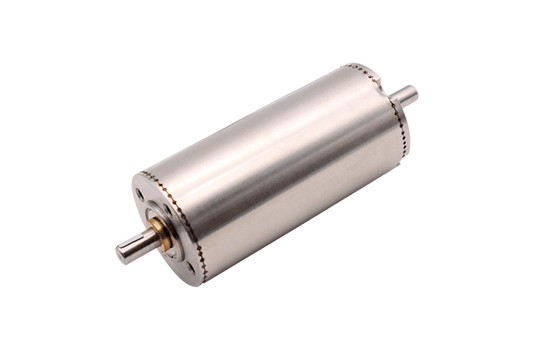
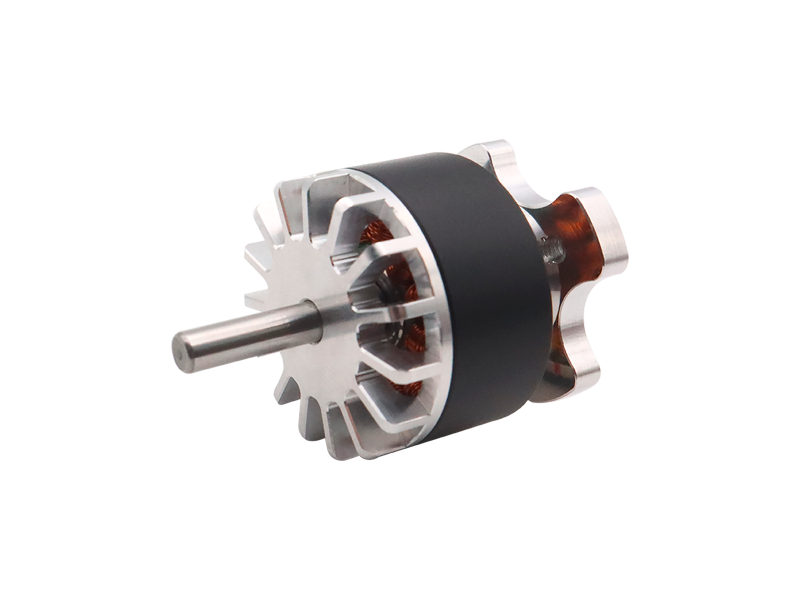
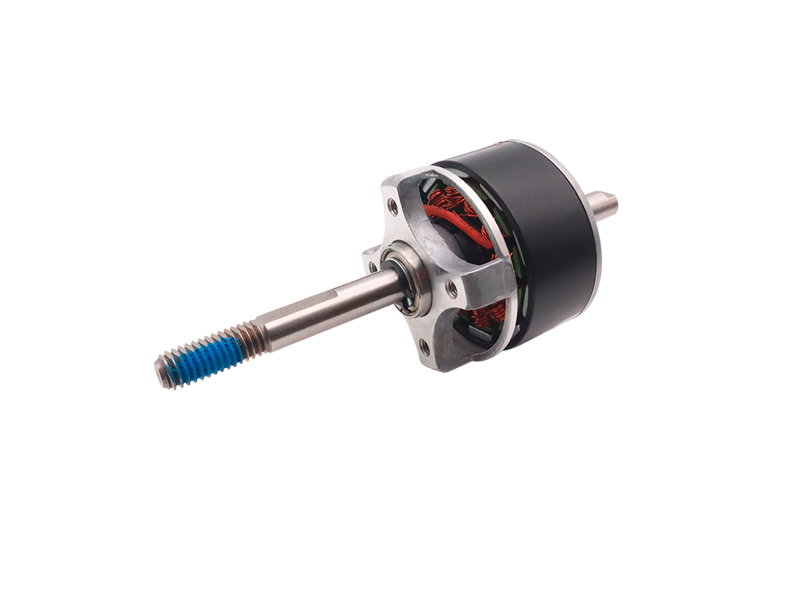
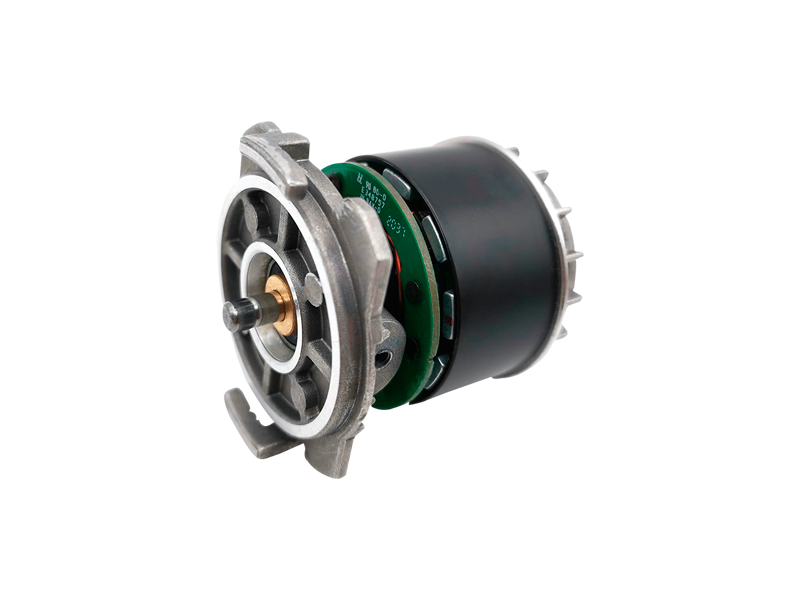
The overall structure of a brushless DC motor mainly consists of a rotor, a stator, and sensors. The rotor is composed of permanent magnets, which can be flat, disc-shaped, or cylindrical in shape. The stator is composed of windings and iron cores. The windings consist of several turns of coils, with several excitation poles distributed on the coils. The sensors are used to detect the speed and position of the rotor and provide feedback to the control system, allowing the motor to operate as required. During the rotation of the rotor, sensors continuously detect the position and speed of the rotor, and adjust the electrification of the stator winding through the control system to ensure that the motor operates as required.
In the case of a fixed number of rotor stages, changing the frequency of the rotating magnetic field of the stator can change the speed of the rotor. A DC brushless motor is a synchronous motor with an electronic control (driver) that controls the frequency of the rotating magnetic field of the stator and feeds back the speed of the motor rotor to the control center for repeated correction, in order to achieve a way that is close to the characteristics of a DC motor. That is to say, a DC brushless motor can maintain a certain speed of the motor rotor even when the load changes within the rated load range.
Brushless motors generally hope to use speed control that can stabilize at the set value without significant changes when the load changes. Therefore, the motor is equipped with a Hall sensor that can sense the magnetic field as a closed loop control for speed and also as a basis for phase sequence control. However, this is only used for speed control and cannot be used as positioning control.
The working principle of a DC motor is to use the magnetic field interaction between the rotor permanent magnet and the stator coil to generate torque. When the motor is working, current is passed through the stator winding to generate a rotating magnetic field. The permanent magnet on the rotor interacts with the stator magnetic field due to rotation, generating torque and causing the rotor to start rotating.