Difference between brushless motor and brushed motor.
In modern motor applications, brushless DC motors (BLDC) and brushed DC motors (BDC) are the two most common types. There are significant differences between the two in terms of structure, performance, lifespan, and application scenarios. This article will deeply analyze the differences between these two types of motors from multiple dimensions, providing you with comprehensive and professional references.

1、 Comparison of Basic Structures
The most obvious difference between brushless motors and brushed motors lies in their internal structural design.
1. Structure of brushed motor
The design of brushed motors is relatively traditional, and the core components include:
Stator: typically composed of permanent magnets, used to provide a stable magnetic field.
Rotor: Composed of armature windings, it generates electromagnetic torque under the action of a magnetic field when energized.
Commutator: Connected to the rotor coil, it plays a role in switching the direction of current.
Electric brush: in physical contact with the commutator, used to transmit external power current to the rotor winding.
The advantages of this structure are low manufacturing cost and simple control method, but due to long-term friction between the brush and commutator, it can cause energy loss, noise, and wear.
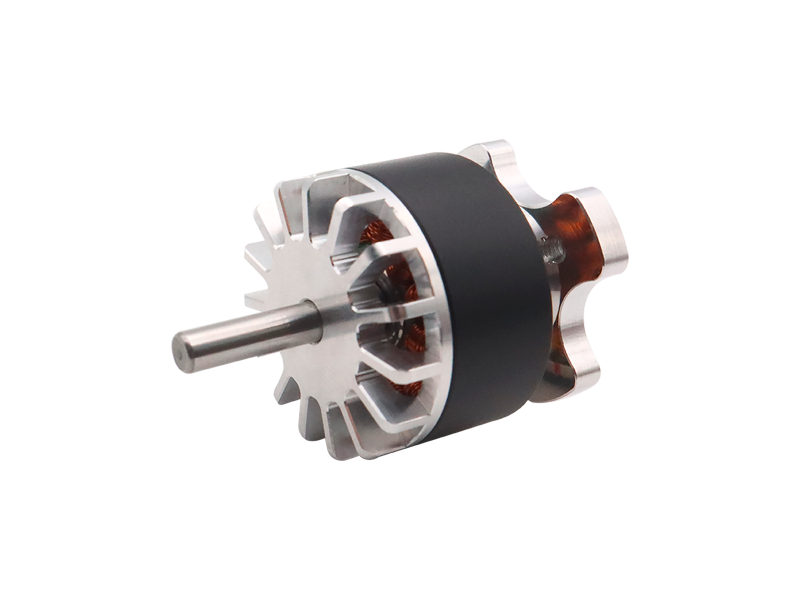
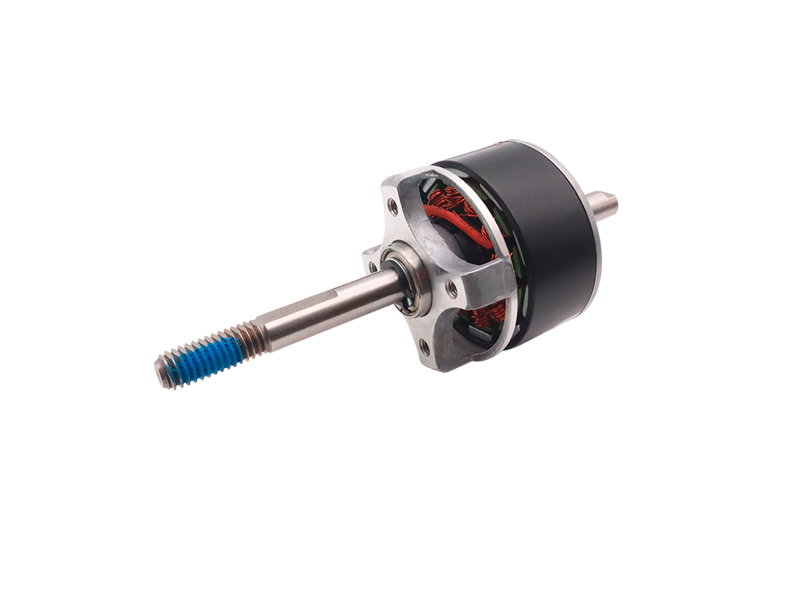
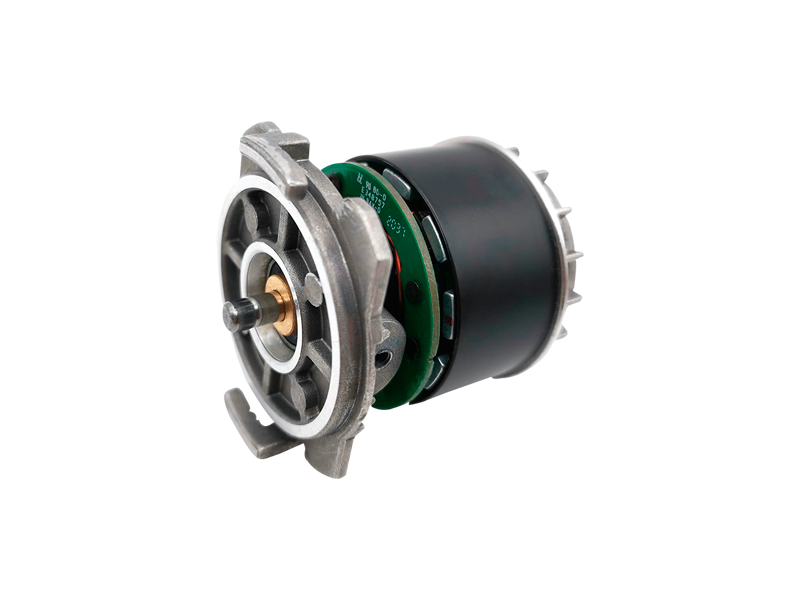
2. Structure of brushless motor
The brushless motor adopts a modern design, and its core components are:
Stator: The winding is fixed to the motor casing, forming a rotating magnetic field.
Rotor: Typically made of high-performance permanent magnets, it rotates in response to changes in magnetic field.
Electronic controller (driver circuit): replaces mechanical commutators and achieves current commutation through electronic means.
Position detection device: commonly used as Hall sensors, it can also be implemented through sensorless algorithms to ensure accurate current switching.
This structure avoids mechanical friction, improves operational efficiency, and extends the lifespan of the motor.
2、 Differences in working principles
Although both brushless motors and brushed motors rely on the principle of electromagnetic induction to achieve energy conversion, there are significant differences in their working principles due to the different commutation methods.
1. Working principle of brushed motor
The operation of brushed motors relies on mechanical commutation:
After the external power supply is connected, the current enters the commutator through the electric brush and is then transmitted to the rotor winding.
After the rotor is energized, an electromagnetic field is formed, which interacts with the stator magnetic field to generate torque, thereby driving the rotor to rotate.
During the rotation of the rotor, the commutator continuously switches the direction of current to ensure consistent torque direction, allowing the motor to continue rotating.
This method has a simple structure and high starting torque, but due to its reliance on mechanical friction for commutation, it is prone to spark, arc, and energy loss.
2. Working principle of brushless motor
Brushless motors adopt electronic commutation method:
The controller detects the rotor position through Hall sensors or sensorless control algorithms.
Based on the position signal, the controller accurately switches the power sequence of the three-phase winding, causing the stator magnetic field to continuously rotate.
The permanent magnet rotor is attracted and repelled by the rotating magnetic field, thus continuously rotating.
This method not only eliminates mechanical contact wear, but also achieves higher speeds, more precise control, and higher energy efficiency.
3、 Performance differences
1. Efficiency
Brushed motors typically have an efficiency of 75% to 80% due to friction and arc losses.
Brushless motors have low losses, with efficiency typically ranging from 85% to over 90%, and some high-end products can exceed 95%.
2. Service life
The lifespan of brushed motors is limited by the wear of the electric brushes, typically ranging from 1000 to 3000 hours.
Brushless motors have almost no mechanical wear and tear, with a lifespan of over 10000 hours.
3. Noise and vibration
Brushed motors generate noise and electromagnetic interference due to friction and commutation.
Brushless motors run smoothly and quietly, making them particularly suitable for noise sensitive environments.
4. Control performance
Brushed motor speed regulation is simple, but the accuracy is not high.
Brushless motors can achieve high-precision speed regulation and positioning through controllers, and are widely used in high demand scenarios such as drones and robots.
4、 Cost and maintenance differences
Brushed motor: Low manufacturing cost, simple control circuit, but requires regular replacement of brushes, high maintenance cost.
Brushless motor: The initial cost is relatively high and requires the configuration of a driver, but it is almost maintenance free in the later stage and has a better overall cost-effectiveness.