Brushless motor topic: Principles, advantages, and applications!
1. Advantages of BLDC:
BLDC does not use mechanical commutation brushes but directly uses electronic commutators. In use, BLDC has many advantages over
brushed motors, such as:
Can achieve better torque and speed characteristics; High speed dynamic response; High efficiency; Long lifespan; Low noise; High speed.

In addition, the superior torque and size ratio of BLDC make it more suitable for applications that are sensitive to the weight and size of the motor itself. In this application note, a series of discussions will be conducted on the structure, basic principles, characteristics, and applications of BLDC. The corresponding explanations for the terms that may be used during the discussion can be found in Appendix B "Glossary".
2. BLDC structure and basic working principle:
BLDC belongs to a type of synchronous motor, which means that the magnetic field generated by its stator and rotor are of the same frequency, so BLDC does not produce the frequency difference phenomenon of ordinary induction motors. There are differences between single-phase, 2-phase, and 3-phase motors in BLDC, and the different phase types determine the number of stator coil windings. Here we will focus on discussing the most widely used 3-phase BLDC.
2.1 Stator:
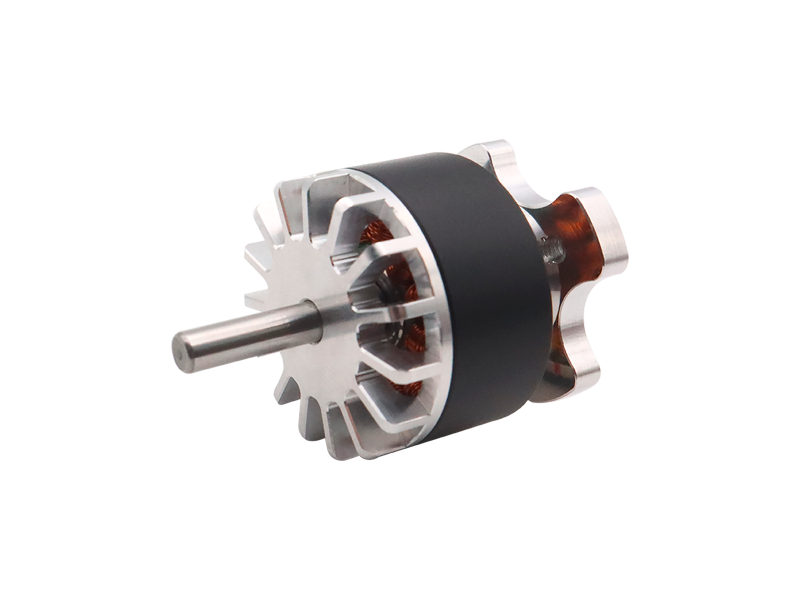
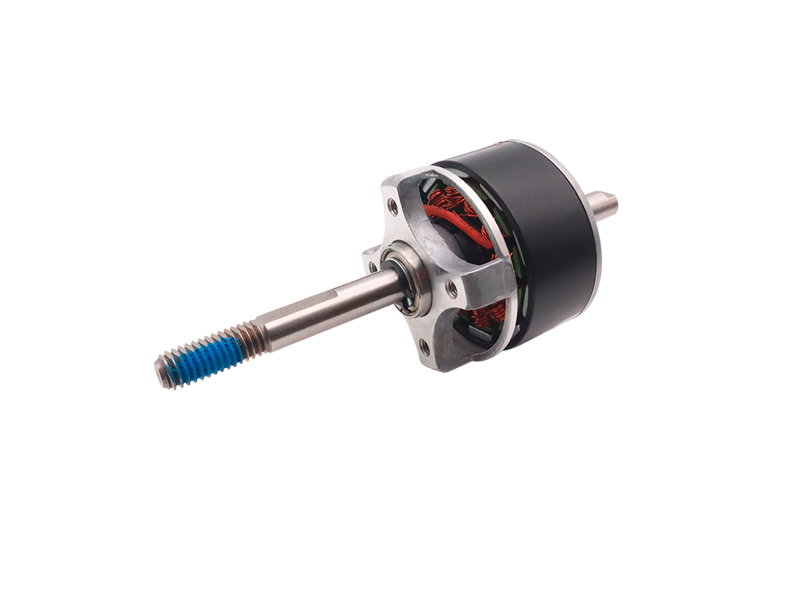
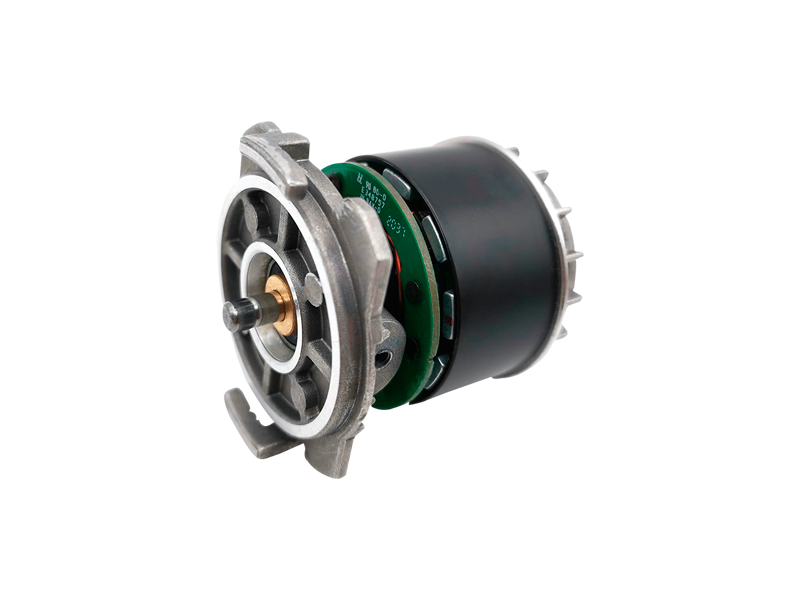
The BLDC stator is made up of many silicon steel sheets that are laminated and axially stamped. Each punch slot has a certain number of coils that form the winding, as shown in the following figure. Traditionally, the stator of a BLDC is somewhat similar to that of an induction motor, but there are some differences in the distribution of stator windings. Most BLDC stators have three windings arranged in a star pattern, each of which is composed of many internally bonded steel sheets arranged in a certain way. An even number of windings are distributed around the stator to form an even number of magnetic poles.