Why has coreless dc motor become the preferred choice for humanoid robot joints?
In recent years, the global humanoid robot industry has entered a period of rapid development. From laboratories to factories, from demo prototypes to small-scale trial production, more and more enterprises are accelerating the landing and application of humanoid robots in intelligent manufacturing, logistics and handling scenarios. This process not only depends on the advancement of AI algorithms, but also on whether robots can truly achieve humanoid level flexibility, coordination, and reliable motion.

To achieve these actions, whether it is bending down to pick up objects, reaching out to open the door, or grabbing eggs, precise driving of high-performance joints is indispensable behind them. Humanoid robots have 20 to 40 degrees of freedom, and each action is the result of multiple joints working together.
Among them, high dynamic and high-precision movements such as finger grasping, wrist rotation, and neck swinging pose extremely demanding requirements for the response speed, volume, and control smoothness of the driving system.
Among the numerous motor technology routes, hollow cup motors are gradually becoming the preferred driving solution for these highly flexible joints due to their unique structural design and excellent dynamic performance. It is not only the foundation of "mobility", but also the core guarantee for achieving "precision, lightness, and reliability" movement.
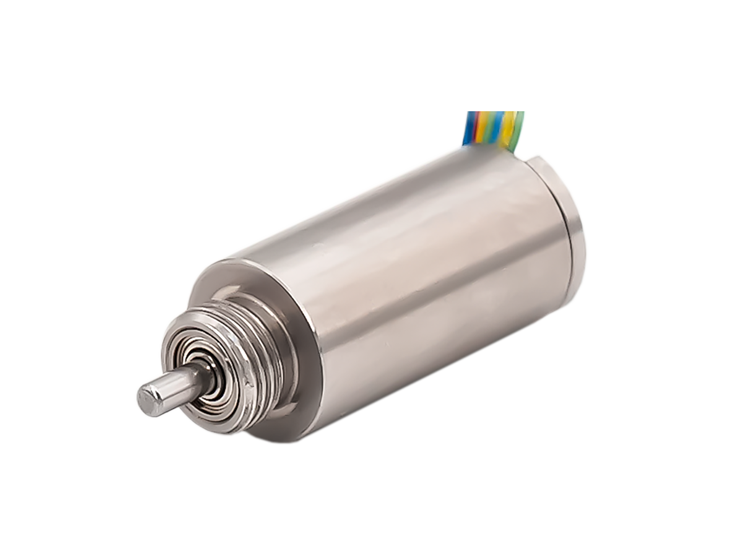
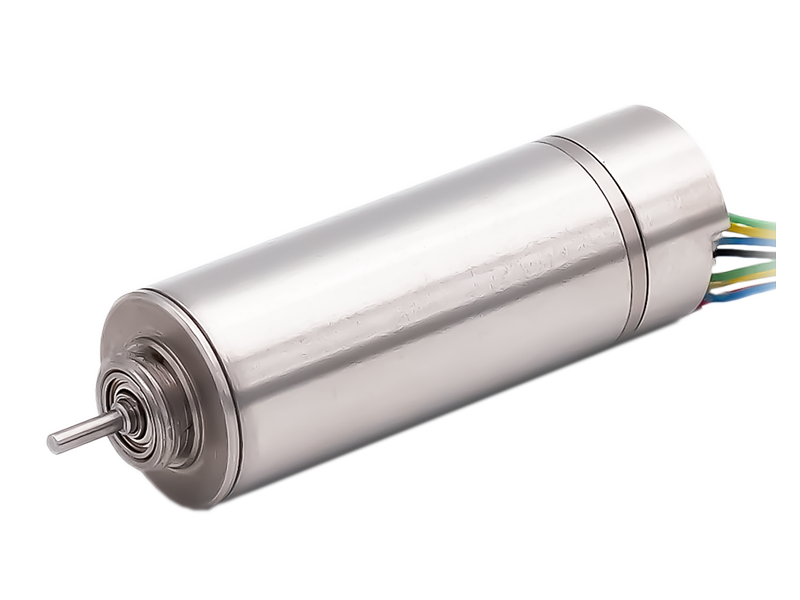
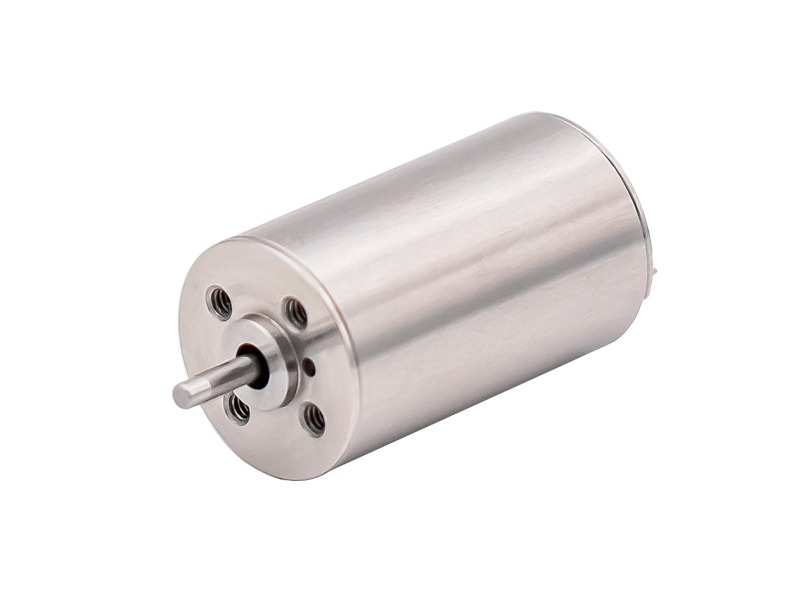
What is a coreless dc motor?
The hollow cup motor adopts a coreless design for its rotor, and the coil is directly wound or formed on a non-magnetic skeleton, forming a "hollow cup" structure. This design fundamentally changes the electromagnetic characteristics of traditional motors, bringing three core advantages:
(1) Low inertia: fast response, agile start stop
Due to the coreless design of the rotor, it is lightweight and significantly reduces the moment of inertia. This also means that the motor can start, accelerate, decelerate, and stop in a very short time, with a response speed of milliseconds, making it suitable for fine operations that require frequent start and stop.
(2) High response: precise following of control instructions
Low inertia combined with high motor response capability enables it to accurately follow control signals and achieve high-frequency reciprocating motion.
(3) No cogging effect: smooth operation, continuous torque output
In traditional motors, the change in magnetic resistance between the iron core and the permanent magnet can cause a "cogging effect", resulting in torque ripple and vibration. The coreless structure of the hollow cup motor completely eliminates this problem, making its operation smoother, with continuous output torque, avoiding shaking and noise, and improving control accuracy.
In addition, the hollow cup motor also has the advantages of small size, light weight, high efficiency, and low heat generation, which is suitable for the space limited and functionally sensitive application scenarios of humanoid robots.
Why is the hollow cup motor the preferred choice for humanoid robots?
In humanoid robots, different joints have different requirements for the drive system. Large joints (such as hips and knees) pay more attention to torque output and often use frameless torque motors; And small joints emphasize fast response, lightweight, and high-precision control. For example, the finger joints can achieve fine grasping and kneading under the use of hollow cup motors, while the wrist and neck support flexible rotation and posture adjustment.