What motor is used for electric bicycles? The advantages of brushless DC motors are obvious!
Friends who have read previous articles should know that the application range of DC brushless motors is very wide. Today, we will focus on introducing the application of DC brushless motors in electric bicycles.
The DC brushless motor used in electric bicycles is usually made into a disc motor, installed in the hub of the wheel, which is connected to the wheel rim by spokes and directly drives the wheel to rotate.
The stator is composed of the stator core, armature winding and its lead wires, sensing elements and their lead wires, stator bracket, shaft, and other parts. The stator core is generally made with multiple pairs of poles and multiple slots to meet the requirements of high torque and low speed. The form of the stator winding is similar to that of a multi-phase permanent magnet synchronous motor, and it plays an important role in achieving energy conversion.
The number of winding phases is mostly three, and a Y-shaped connection is used. The three-phase windings are connected to the corresponding power switching devices in the electronic switch circuit, which is the three-phase semi controlled driving mode.
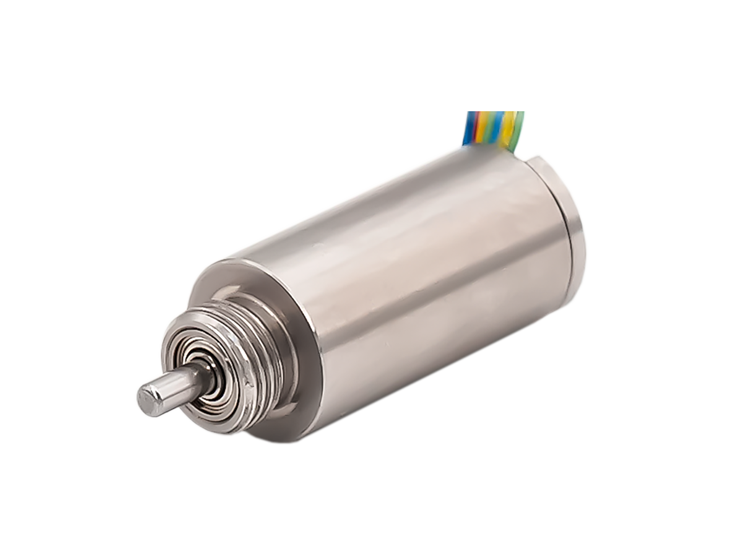
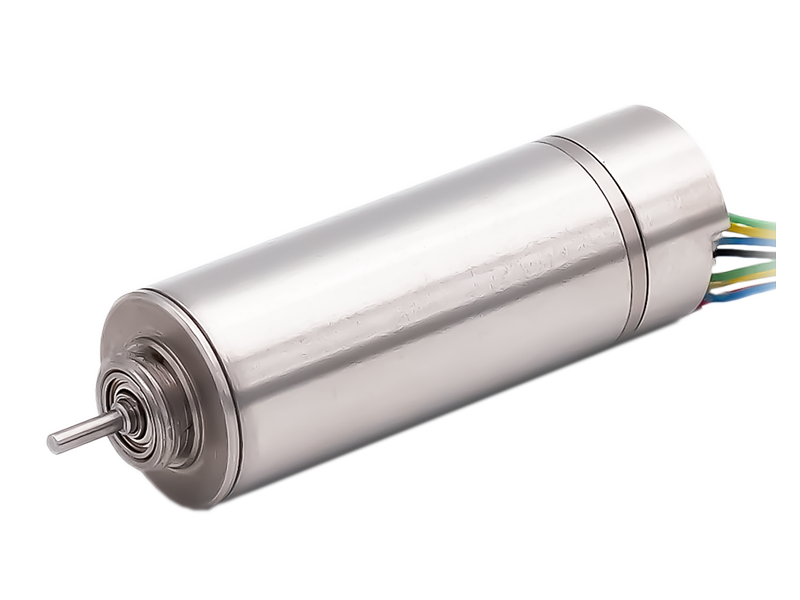
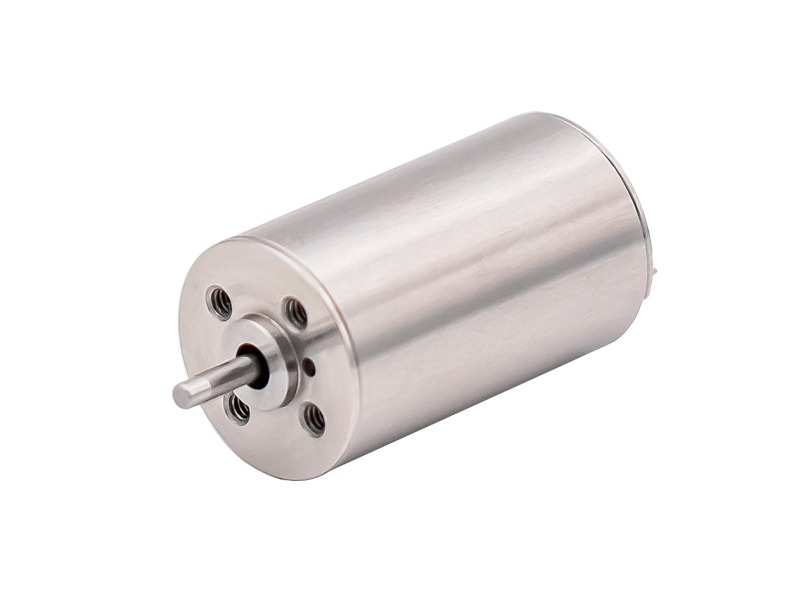
Another type widely used in electric bicycles is the outer rotor permanent magnet DC brushless motor. Currently, most of the developed outer rotor permanent magnet DC brushless motors adopt a multi pole, multi slot, and flat structure.
The application of brushless DC motors in electric bicycles has the following advantages compared to brushed DC motors:
1. Long lifespan, maintenance free, and high reliability. In brushed DC motors, the brushes and commutator wear out quickly, and usually need to be replaced after about 1000 hours of operation. In addition, the technical difficulty of its reduction gearbox is relatively high, especially the lubrication problem of the transmission gear, which is currently a major challenge in existing brush solutions. So brushed motors have problems such as high noise, low efficiency, and susceptibility to malfunctions.
2. High efficiency and energy-saving. Generally speaking, due to the lack of friction losses caused by mechanical commutation, gearbox consumption, and speed control circuit losses, the efficiency of brushless DC motors can usually be higher than 85%. However, considering the highest cost-effectiveness in actual design, to reduce material consumption, it is generally designed at 76%, while the efficiency of brushed DC motors is usually around 70% due to the consumption of gearboxes and overrunning clutches.
It can be seen that the advantages of using brushless DC motors in the field of electric bicycles are very obvious.