What motors are used on humanoid robots.
The types of motors used on humanoid robots vary according to their design goals and functional requirements, mainly including servo motors, brushless DC motors, stepper motors, and other special motors. These motors are usually selected based on the robot's motion mode, load requirements, and accuracy requirements. The following are several common types of humanoid robot motors and their application scenarios:
1. Servo motor
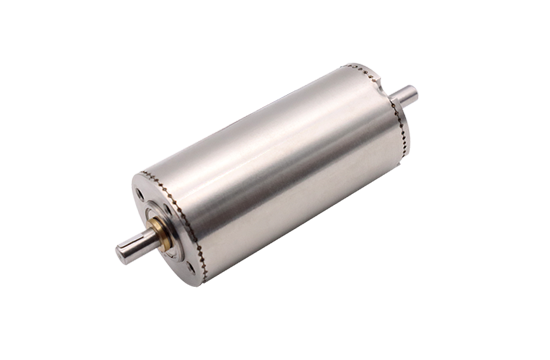
Servo motor is the most commonly used type of motor in humanoid robots, which is suitable for joint motion control and positioning of robots due to its high precision, fast response speed, and strong controllability.
Features:
High precision position control
Fast dynamic response, suitable for complex motion control
Can be combined with feedback devices (such as encoders) to achieve closed-loop control
Support torque control, speed control, and position control
Application Scenario:
Joint motion control: Servo motors are widely used in robot joints such as shoulders, elbows, and knees, achieving precise motion trajectories and smooth control through closed-loop control.
Finger and wrist movements: For parts that require precise control, such as fingers and wrists, the high precision of servo motors makes them an ideal choice.
2. Brushless DC motor (BLDC)
Brushless DC motors are widely used in robots due to their high efficiency, light weight, and long lifespan, especially for moving parts that require high speed control.
Features:
No commutator wear, high reliability, long lifespan
High efficiency, high power density
The accuracy is slightly inferior to servo motors, but good control effects can still be achieved through closed-loop control
Low noise, suitable for a quiet working environment
Application Scenario:
Drive system: Brushless DC motors are commonly used to drive large joints such as the legs and feet of robots, providing powerful power.
Back or trunk movements: Larger modular areas may be driven by brushless motors.
3. Stepper motor
Due to its stepper control characteristics, stepper motors are suitable for motion systems that require precise positioning and simple control. Although they may not be as accurate in dynamic response and control accuracy as servo motors, they still have their advantages for certain scenarios.
Features:
Accurate angle control, with each pulse corresponding to a fixed angle of rotation
Open loop control is simple and does not require feedback system, but load changes may cause step loss
Cheaper than servo motors, with a relatively simple structure
Application Scenario:
Head Movement: Stepper motors can be used to control the rotation of a robot's head due to their simple angle control and low cost.
Small auxiliary mechanisms, such as fine-tuning movements or other light load precise movements in the visual system.
4. Piezoelectric motor
Piezoelectric motor is a new type of micro drive technology suitable for small and precise motion control in robots, usually used for parts that require extremely high precision, such as small joints like fingers.
Features:
Capable of providing extremely high resolution, suitable for micro motion control
Small size, low power consumption
No noise, suitable for precise operation
Small torque, not suitable for high load applications
Application Scenario:
Fie hand movements: Some robot hands require very precise control, such as when grasping small objects, piezoelectric motors can provide extremely high precision.
Sensor fine-tuning: In robots involving precision instruments, piezoelectric motors can achieve fine-tuning of sensors or camera lenses.
5. DC motor (brushed)
Although brushed DC motors have relatively low efficiency and short lifespan, they are still used in some low-cost humanoid robots due to their simple control and low cost.
Features:
Simple control and affordable price
Poor dynamic response and limited lifespan due to mechanical wear
Regular maintenance is required (brush wear)
Application Scenario:
Simple Joint Motion: In some low-cost robots, brushed DC motors can be applied for simple joint drive.
6. Biomimetic muscle motor (artificial muscle)
This is an emerging type of driving technology that simulates the working mode of biological muscles and is suitable for flexible drivers in humanoid robots. It is based on the principles of material deformation or fluid mechanics and can achieve flexible movements.
Features:
Flexible drive, biomimetic motion, natural
Lightweight, suitable for wearable and portable robots
Low power, high control complexity
At present, it is mostly for research purposes and has not yet been widely applied
Application Scenario:
Flexible movements: Biomimetic muscle motors can be used for robot arms, fingers, or other parts that require simulation of human muscle movements, providing natural and gentle motion effects.
7. Harmonic reducer combined with motor
In many high-end humanoid robots, motors are often combined with harmonic reducers to achieve high-precision low-speed output. The advantages of harmonic reducers are high transmission accuracy and zero clearance, which can effectively reduce mechanical errors and improve the motion control accuracy of robots.
Application Scenario:
High precision joints: used in key joint positions such as robot shoulders and elbows to ensure high precision and rigidity.
Servo motors and brushless DC motors are the most commonly used types of motors for humanoid robots. The former is suitable for precise control and complex movements, while the latter provides efficient driving force.
Stepper motors are suitable for scenarios that require precise step control, while emerging technologies such as piezoelectric motors and biomimetic muscle motors are gradually being applied to specific precision and flexible tasks.
In complex robot systems, motors are often combined with reducers (such as harmonic reducers) to optimize torque and accuracy. Each type of motor has its unique advantages, and selecting the appropriate motor combination based on the different task requirements and design requirements of the robot can achieve optimal performance.