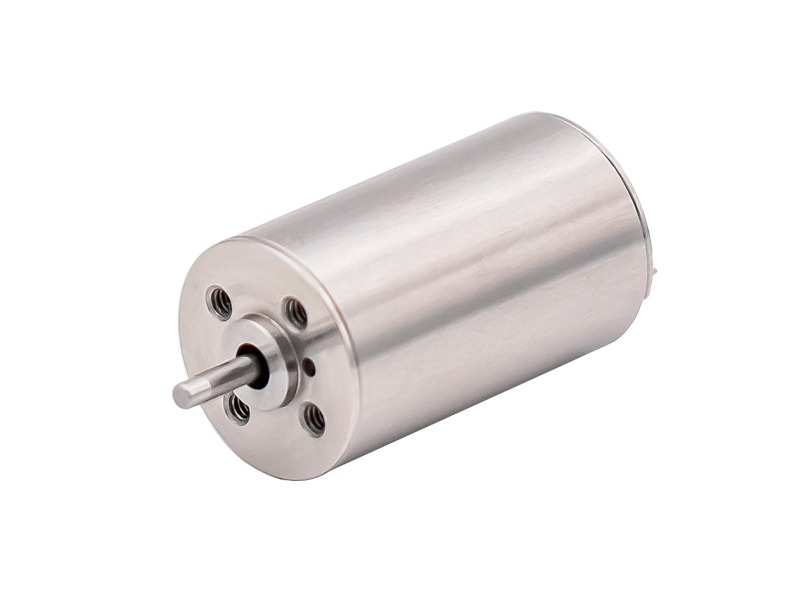
What does "brushless" mean in a brushless DC motor?
Recently, we often talk about brushless DC motors, but do you really understand what "brushless" means?
A brushless DC motor consists of a motor body and a drive unit, serving as a typical electromechanical integrated product. A brushless motor refers to a motor without brushes and commutators (or slip rings), also known as a commutatorless motor.
Since brushless DC motors operate in a self-controlled manner, they do not require additional starting windings on the rotor like synchronous motors under variable frequency speed control during heavy-load starts, nor do they experience oscillations or step-outs under sudden load changes.
As early as the birth of electric motors in the 19th century, the practical motors produced were brushless in form, specifically squirrel-cage induction motors, which were widely used.
However, asynchronous motors have many insurmountable drawbacks, leading to slow progress in motor technology. In the mid-20th century, the invention of transistors gave rise to brushless DC motors that replaced brushes and commutators with transistor commutation circuits. This new type of brushless motor, known as electronically commutated DC motors, overcame the shortcomings of the first-generation brushless motors.
What exactly are the differences between "brushed" and "brushless"?
During the operation of a brushed motor, the coil and commutator rotate, while the permanent magnets and carbon brushes remain stationary. The alternating current direction in the coil is achieved through the rotation of the commutator and brushes.
2) The brushless DC motor consists of the motor body and a driver, serving as a typical mechatronic product. Since brushless DC motors operate in self-controlled mode, they do not require additional starting windings on the rotor like synchronous motors under variable frequency speed control for heavy-load startup, nor do they experience oscillations or step loss during sudden load changes.
3) Brushed motors are traditional products with relatively stable performance. Brushless motors are upgraded versions, offering better lifespan and performance than brushed motors. However, their control circuits are more complex, requiring stricter screening for component aging.
4) Brushless motor equipment can be applied in industries such as dairy, brewing, meat processing, soy product processing, beverage production, bakery, pharmaceuticals, and high-standard dust-free workshops. For example, the brushless motor (DIHOUR) hand dryer produced by Dio Electric is widely used in factories.
5) Brushed motors can only be suitable for areas with less demanding requirements, such as various restrooms, but are unsuitable for use in cleanrooms and explosion-proof workshops.
6) Service Life: Brushless motors can operate continuously for approximately 20,000 hours, with a typical lifespan of 7-10 years. Brushed motors: Can operate continuously for about 5,000 hours, with a typical lifespan of 2-3 years.