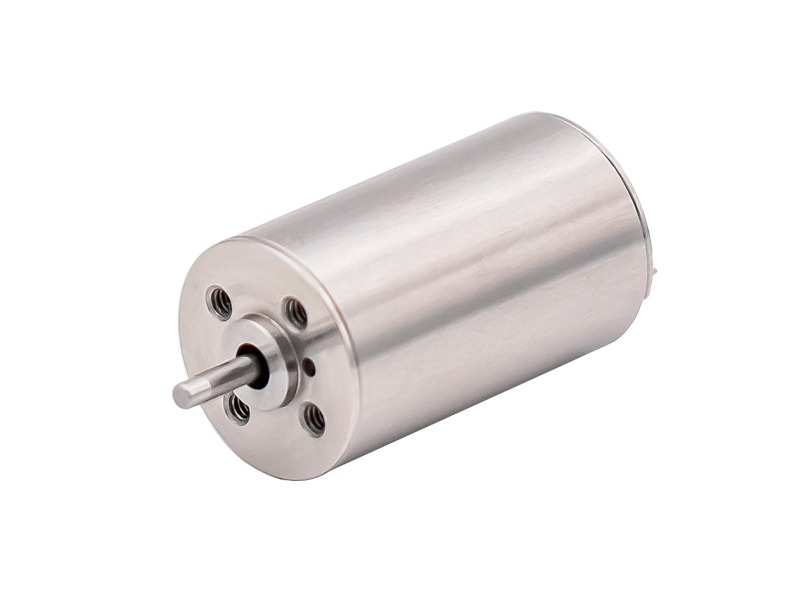
Hollow cup motor for electric toothbrushes.
I. The Origin of Electric Toothbrushes
In 1954, Swiss physician Philippe-Guy Woog invented the first wired electric toothbrush, and Broxo S.A. manufactured the first commercial electric toothbrush, named Broxodent. Over the following decade, electric toothbrushes gradually gained popularity and entered developed countries such as Europe and the United States.
After 1980, electric toothbrushes underwent continuous improvements in both movement forms and frequencies, leading to the emergence of various movement styles. The sonic vibration type stands out for its cleaning effectiveness and user experience.
The Sonicare sonic toothbrush was invented in the 1980s by David Giuliani, who co-founded Optiva to develop the Sonicare sonic toothbrush. The company was acquired by Philips in October 2000, establishing Philips Sonicare as a benchmark in the sonic electric toothbrush category.
Oral-B is a toothbrush and other oral care products brand. In 1984, Procter & Gamble acquired Oral-B, and in 2005, Colgate-Palmolive acquired Procter & Gamble. Oral-B pioneered the oscillating-rotating technology in 1991, and over 60 clinical studies have since been published, confirming the superior performance of electric toothbrushes with this technology. Oral-B toothbrushes are also highly renowned in the field of mechanical rotating electric toothbrushes.
Electric toothbrushes were introduced from abroad, and currently, those produced by Chinese companies on the market largely follow the styles of these two foreign brands.
II. The Principle of Electric Toothbrushes
The principle of an electric toothbrush motor is quite simple, similar to the vibration mechanism in a phone. It involves a hollow cup motor with an eccentric hammer (meaning the motor's output shaft is off-center, creating vibration through imbalance) that drives the entire toothbrush to vibrate, causing the brush head to move accordingly.
Ordinary rotary electric toothbrush: It utilizes a hollow cup rotary motor, which transfers motion to the brush head position through a cam and gear linkage mechanism. The brush head position also features corresponding oscillating mechanical structures, converting the motor's rotational motion into left-right oscillating movement.
Ultrasound toothbrush: Utilizing the high-frequency vibration principle of magnetic levitation motors, it employs an electromagnetic vibration excitation device as the vibration source. Upon electrification, the electromagnetic device generates a magnetic field, causing the excitation device to levitate in the center of the magnetic field and produce high-frequency vibrations. These vibrations are then transmitted to the brush head via a drive shaft. This vibration mechanism avoids mechanical friction inside the motor, offering strong stability and substantial output power. The generated ultrasound frequency can reach 37,000 cycles per minute. Due to the minimal friction of the magnetic levitation motor, even at high speeds, the noise remains within an acceptable range.