What are the specific requirements for the motor performance of quadruped robots?
Four legged robots are a type of robot actively developed by academia and industry, with promising development prospects. The commonly seen robotic dog belongs to a type of quadruped robot.
Compared to wheeled and tracked robots, quadruped robots have good environmental adaptability, ensuring flexibility, stability, and interpersonal coordination of robot movement in complex geographical terrain environments and uneven ground. Therefore, they can assist humans in completing high-risk and harsh working environment tasks, such as emergency rescue, high-level inspection, safety investigation, terrain survey, space exploration, etc. High dynamic characteristics, referring to the running mode of cheetahs, can still quickly adjust gait and movement mode during high-speed running.
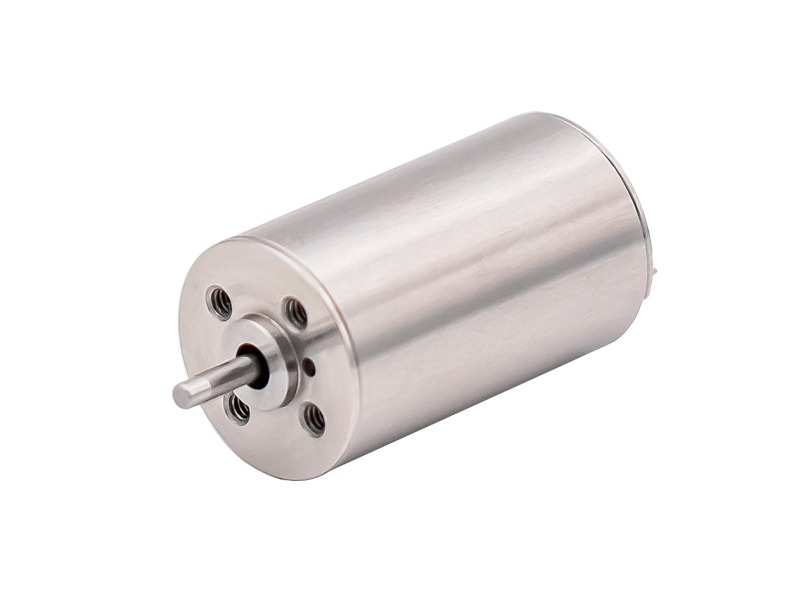
In terms of performance requirements, quadruped robot motors focus more on high torque density, high power density, small moment of inertia, and response speed blocks.
1. The gait of quadruped robots varies during walking, running, and jumping, and the motor is constantly in a state of alternating forward and reverse rotation. The torque output is not at the rated value, but rather a variable that constantly changes with the motion state. Therefore, the motor torque reaches its peak in a short period of time;
2. The motor operates continuously in both forward and reverse directions, requiring a high response speed and requiring a small moment of inertia and light weight;
3. Four legged robots typically use 12 motors, each with limited installation space, short diameter and length, and a flat structure;
4. Other constraints: heat dissipation and temperature rise of the motor, maximum frequency limit of the motor controller, effective value of excitation current, etc.
5. In addition, in order to ensure that the joints of the robot output sufficient torque, a reducer needs to be added to convert the high-speed low torque motor output into low-speed high torque joint output.