What are the requirements for brushless DC motors used in drones?
The central part of a brushless motor is a component with silicon steel sheets and windings (called coils), which does not rotate and is called the "stator". Surrounding the stator is a component of a "rotor", which includes a magnetic yoke and a coil of permanent magnets. In a single-phase motor, when electrical energy is fed into the stator, a magnetic field is generated that attracts and repels the magnets in the rotor, causing the rotor to rotate 180 degrees. In order to maintain rotation, the magnetic poles of the electromagnet switch every 180 degrees, which is the way the motor generates power. Typically, the motors found on drones are three-phase motors, but this basic principle remains unchanged.
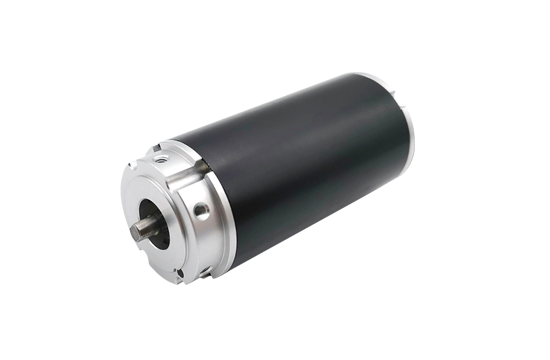
The brushless motor takes the aircraft into the sky and keeps the camera level, fast, powerful, agile, efficient, and extremely reliable. The vibration amplitude of the drone motor has a significant impact on performance. During the flight, the motor usually brings greater vibration. Once the damping control is not good, it will generate a large acceleration, which will inevitably lead to changes in the output of the gyroscope, resulting in changes in the angle. Any delay in flight actions gives users the intuitive feeling that the drone is unstable.
As the acceleration and weight of the drone increase, it will bring greater pressure to the entire motor system. In order to improve the efficiency of drone motors, they must be small in size, have high output power, and reduce power consumption. Only by increasing the size of the motor can motor efficiency be achieved. However, drone motors must be compact and have high power to be installed on drones. In order to increase output power, it is necessary to increase the rated torque and speed of the motor. The increase in torque tends to increase the size of the motor. Meanwhile, the drone motor has a high fundamental frequency and carrier frequency, which increases the impact of eddy current losses generated in the winding. In addition, during operation, the resistivity of the conductor increases with the temperature of the coil, effectively increasing the heat dissipation of the armature, which can suppress and reduce the resistance of the armature to improve efficiency.
Drones can hover and conduct aerial photography, while MEMS sensors (such as 3-axis accelerometers, 3-axis gyroscopes, and barometric sensors) can detect the pitch and roll angles of the drone during flight. When the MEMS sensor integrates inertial measurement function to detect angle changes, the motor can be adjusted to rotate in the opposite direction to achieve stable flight in the specified direction. Professional grade drones require at least four to six brushless motors to drive the rotor of the drone, and the speed and direction of the drone are controlled by the motor driven controller. The total maximum pulling force of multi rotor motors should not be less than 1.5 times the total weight of the drone, and preferably more than 2 times. The motor control system is very important for the stability of drones, and the motor system of professional drones is more accurate and reliable. This is the direction that needs to be improved in the field of drone motors.
The quality of motor windings also plays an important role in the performance of drone motors, and the number of coils is directly related to the magnitude of electromagnetic force. If the motor rotates one or more times around a circle, the distribution of the magnetic field will change, thus affecting the electromagnetic force, which directly affects the output power of the motor. Therefore, once the number of windings changes, it will directly affect the performance of the drone. There are currently two types of unmanned motor windings: manual winding and machine winding. The cost of manual winding is relatively high. The machine winding requires a wire feeder and the slot filling rate is difficult to control. The high-power and high-efficiency motors on the market are manually wound.
Conclusion
Consumer grade drones use DC brushless motors, which require strict performance testing and technical validation systems to ensure product reliability. There are certain requirements for motor structure design and motor control algorithms. With the development of high-performance chips, sensors can not only meet the information fusion needs of navigation, but also achieve optimal control of drone flight, with a low threshold for motor manufacturing technology.