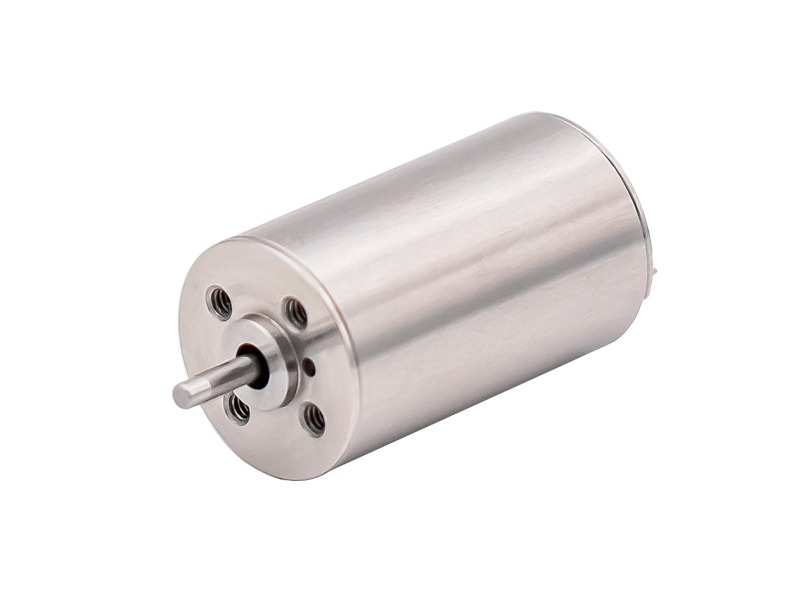
Unveiling the Key Features of DC Brushless Reduction Motors.
With the continuous advancement of technology, industries such as intelligence, AI, and robotics have rapidly developed. Brushless DC geared motors are widely used in power output applications like driving and transmission. However, many people still lack sufficient understanding of brushless DC geared motors. Today, Jin Yuan editor will provide a brief introduction to help everyone grasp their characteristics.
Characteristics of DC geared motors:
1. Low energy consumption: DC geared motors are the technological crystallization of the transmission industry, boasting high technological content. They save space, are durable and reliable, can withstand certain overload capacities, and meet power demands. DC geared motors feature low energy consumption and superior performance.
2. Low vibration: Low noise, high energy efficiency, made of high-quality forged steel materials, rigid cast iron housing, and gear surfaces treated with high-frequency heat; equipped with a new sealing device for excellent protection performance, strong environmental adaptability, and capable of continuous operation in harsh environments such as corrosion and humidity.
3. Compact Structure: Small size, aesthetically pleasing design, and strong overload capacity. After meticulous processing, the positioning accuracy is ensured, forming the complete set of gear transmission assemblies. The DC geared motor is equipped with various types of motors, achieving electromechanical integration, which fully guarantees the product's operational quality characteristics. The coaxial helical gear transmission ratio is finely graded with a wide selection range, broad speed spectrum, and a ratio range of i=2-28800.
4. Low energy consumption: With superior performance, the reducer boasts an efficiency of up to 96%, featuring minimal vibration and low noise. The DC geared motor adopts a series-based, modular design, offering extensive adaptability. It can be combined with various motors, device orientations, and layout plans, allowing for flexible selection of speed and configurations based on practical needs. Its strong versatility ensures convenient operation and maintenance, along with low maintenance costs. Notably, for production lines, only a few spare internal transmission components are required to maintain normal operation and upkeep.