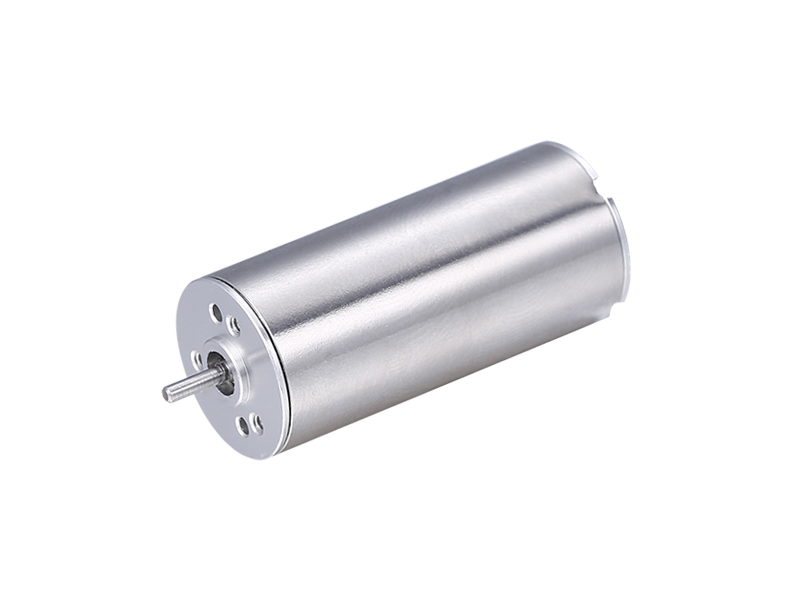
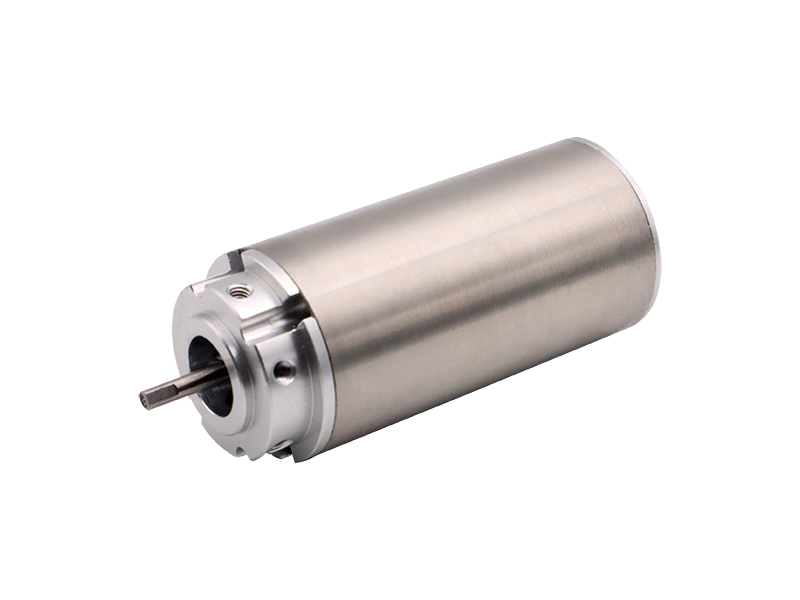
Understand the advantages and disadvantages of brushless and brushed motors.
Brushless motors (BLDC) and brushed motors (DC Brushed) are the two most common types of DC motors, with significant differences in structure, performance, and application. Here is a comparison of their main advantages and disadvantages:
brush motor
Structure: There are physical carbon brushes and commutators (copper plates) inside. Current is conducted through carbon brushes and commutators to the coils (armatures) on the rotor, generating a magnetic field that interacts with the magnetic field of the stator (usually a permanent magnet) to drive the rotor to rotate. The commutator switches the direction of the current flowing through the coil, causing the rotor to continue rotating.
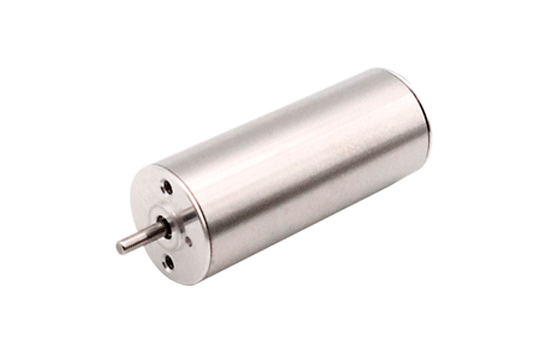
Working principle: Mechanical commutation.
advantage:
Simple structure and low cost: With mature design, simple manufacturing process, and fewer components, the price is usually much lower than that of brushless motors of the same power.
Simple control: simply change the magnitude or polarity of the DC voltage to control the speed and direction of the motor. The driving circuit is very simple (usually only requiring one switch or H-bridge).
High starting torque: It usually provides a higher starting torque at low speeds.
No need for complex controllers: can be directly connected to a DC power supply (with simple switches or potentiometers) to work.
Disadvantages:
Low efficiency:
There is mechanical friction and contact resistance between the carbon brush and the commutator, resulting in energy loss (heating).
The voltage drop of the electric brush will also consume a portion of the voltage.
The efficiency is usually around 50% -75%.
Short lifespan:
Carbon brushes and commutators are the main wear components. The carbon brush will gradually wear out and become shorter with use, and needs to be replaced regularly.
The commutator may also wear out during operation and may be eroded by electric sparks.
The lifespan is usually limited by the lifespan of carbon brushes, ranging from several hundred hours to several thousand hours.
Maintenance requirements: Regular inspection and replacement of carbon brushes, cleaning or replacement of commutators (if severely worn) are required.
Electric spark and electromagnetic interference:
When the carbon brush slides on the commutator to disconnect and connect current, it will generate an arc (electric spark), especially at high speeds or high loads.
Electric spark not only consumes energy and accelerates component wear, but also generates significant electromagnetic interference (EMI), which may interfere with surrounding electronic devices.
Speed limit: Due to the limitations of mechanical commutation and the intensification of electric sparks at high speeds, its maximum speed is usually lower than that of brushless motors.
High heat generation: Due to lower efficiency, more input electrical energy is converted into thermal energy, requiring better heat dissipation design.
Loud noise: The sound of carbon brushes rubbing against the commutator and the sound of electric sparks will produce certain operating noise.
Low power density: Under the same volume or weight, the output power is usually lower than that of brushless motors.
Brushless Motor
Structure: Without carbon brushes and commutators. The rotor is usually a permanent magnet (usually neodymium iron boron strong magnet). There are multiple sets of coils (usually three-phase) wound around the stator. An electronic commutator (ESC/driver) is required outside the motor to control the current to pass through different stator coils in sequence, generating a rotating magnetic field to "pull" the permanent magnet rotor to rotate.
Working principle: Electronic commutation.
advantage:
efficient:
There is no carbon brush friction loss and contact resistance loss.
Electronic commutation is more precise and has less loss.
The efficiency is usually between 80% -95% or even higher. This means more energy efficiency and longer battery life (especially important for portable devices).
Long lifespan:
There are no mechanical wear parts (carbon brushes) that require regular replacement.
The main wear only comes from the bearings. The lifespan can usually reach tens of thousands of hours or even longer.
Less maintenance: basically maintenance free (except for bearings).
High speed: Without the limitation of mechanical commutation, it can achieve very high speeds (tens of thousands or even tens of thousands of RPM).
Low noise, low interference:
There is no friction noise from carbon brushes.
The electromagnetic interference (EMI) generated by electronic commutation is relatively small and easier to control.
High power density: Under the same volume or weight, it can output greater power than brushed motors (thanks to high efficiency, low heat generation, and good heat dissipation design).
Better thermal management:
The heat mainly comes from the stator coils, which are more easily dissipated through the motor casing.
The rotor is a permanent magnet that does not generate heat.
Accurate speed and position control: With appropriate controllers (such as FOC - Field Oriented Control), extremely precise speed regulation, torque control, and position servo can be achieved.
Disadvantages:
High cost:
The motor itself has a more complex structure (precision winding, strong magnets).
A dedicated electronic commutator (ESC/driver) must be equipped, which increases system cost and complexity.
Control complexity:
Complex electronic controllers are required to detect rotor position (through Hall sensors or sensorless algorithms) and accurately control the timing and magnitude of three-phase currents. The driving circuit is complex.
A matching controller is required: it cannot be directly connected to the power supply and must rely on the controller for operation.
Low speed start-up may not be as smooth as brushed motors (sensorless solution): For sensorless brushless motors without Hall sensors, position detection may not be accurate during extremely low speed start-up or stalling, resulting in start-up jitter or smoothness (inductive solutions or controllers with advanced algorithms can solve this problem).
Potential demagnetization risk: If overheated (exceeding the Curie temperature of the magnet) or subjected to strong reverse magnetic field impact, the permanent magnet may partially or completely demagnetize.
Summary and Comparison Table
characteristic
brush motor
Brushless Motor
Simple structure/commutation, complex mechanical commutation (carbon brush+commutator), electronic commutation (external controller)
Low cost (motor itself) High cost (motor+controller)
Simple control complexity (voltage regulation/polarity) Complex (requires dedicated controller)
Low efficiency (50% -75%) but high efficiency (80% -95%+)
Short lifespan (limited by carbon brushes, hundreds to thousands of hours) and long lifespan (mainly due to bearing wear, tens of thousands of hours+)
Maintenance needs (replacement of carbon brushes, etc.) are basically maintenance free
The maximum speed is low but very high
High noise/EMI (friction/spark) and low
The starting torque is usually high and sufficient, depending on the controller
Low power density and high power density
Poor heat dissipation (rotor heating) and good heat dissipation (stator heating, easy heat dissipation)
Precise control with limited excellence (in conjunction with advanced controllers)
Typical applications include low-cost toys, simple tools, car windows, household appliances, low demand scenario drones, power tools, electric vehicles, fans/pumps, robots, high-end household appliances, and scenarios that require high efficiency/long lifespan/high performance
How to choose?
Choose brushed motors: When cost is the primary consideration, the application scenario does not require high efficiency, lifespan, noise, extremely simple control, and moderate power and speed requirements (such as children's toys, simple household appliances, low-cost models, and industrial applications with low maintenance requirements).
Choose a brushless motor: When high efficiency, long lifespan, high reliability, low noise, high speed, high power density, precise control, and high initial cost and system complexity are required (such as drones, high-performance power tools/vacuum cleaners, electric vehicles, servo systems, computer fans, and situations that require long-term operation or maintenance free).
Simply put, brushless motors represent a more advanced technological direction, surpassing brushed motors in most performance indicators, but their cost and system complexity are the main limiting factors. With the development of electronic technology and cost reduction, the application scope of brushless motors is rapidly expanding, constantly replacing the market of traditional brushed motors.