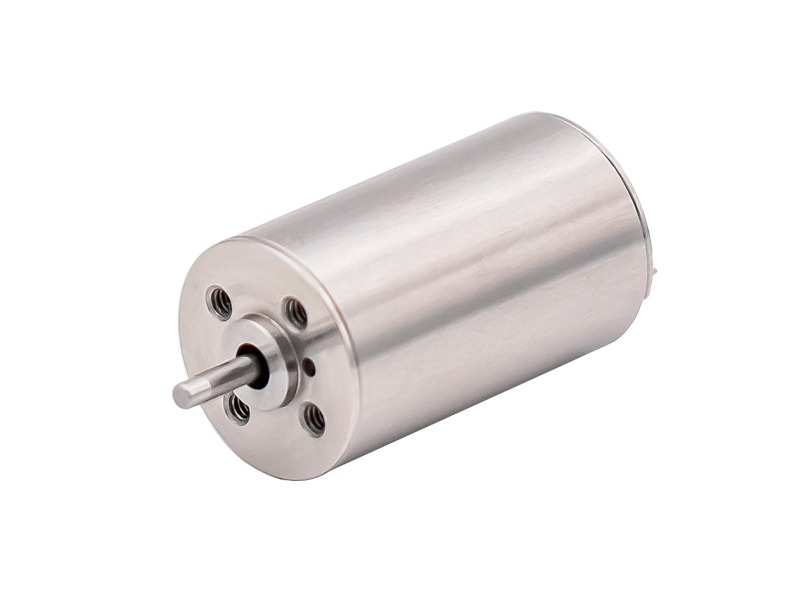
These 44 common sense tips help you better understand brushless DC motors (Part 1).
Many people who are new to brushless DC motors have some doubts about it. Today, Topband Motor has compiled 44 common knowledge about brushless motors, hoping to help everyone understand BLDC.
1. When a single-phase transformer is unloaded, the current is out of phase with the main magnetic flux, resulting in a phase angle difference aFe due to the presence of iron loss current. The no-load current is a sharp waveform due to the presence of significant third harmonics.
2. The current flowing in the armature winding of a DC motor is also AC current. But the current flowing through its excitation winding is direct current. The excitation methods of DC motors include separate excitation, parallel excitation, series excitation, compound excitation, etc.
3. The expression for the back electromotive force of a brushless DC motor is E=CE Fn; The expression for electromagnetic torque is Tem=CT FI.
4. The number of parallel branches of a DC motor is always paired. The number of parallel branches of the AC winding is not necessarily the same.
5. In a brushless DC motor, the components of a single stack winding are connected in series by stacking one on top of another. Whether it is a single wave winding or a single stack winding, the commutator connects all components in series to form a single closed circuit.
6. Asynchronous motor, also known as induction motor, generates rotor current through electromagnetic induction.
7. When an asynchronous motor starts with voltage reduction, the starting torque decreases, and the starting torque and the square of the starting current of the winding decrease proportionally.
8. When the amplitude and frequency of the primary voltage remain constant, the saturation degree of the transformer's iron core remains basically unchanged, and the excitation reactance also remains basically unchanged.
9. The short-circuit characteristic of a synchronous generator is a straight line, and the magnetic circuit is unsaturated when a three-phase symmetrical short circuit occurs; When a three-phase symmetrical steady-state short circuit occurs, the short circuit circuit is a pure demagnetized direct axis component.
10. The current in the excitation winding of a synchronous motor is direct current, and the excitation methods mainly include excitation generator excitation, static rectifier excitation, and rotating rectifier excitation.
11. There are no even harmonics in the three-phase synthesized magnetomotive force; Symmetrical three-phase windings carry symmetrical three-phase currents, and there are no multiples of 3 magnetic harmonics in the synthesized magnetic electromotive force.
12. Three phase transformers generally hope to have a triangular connection on one side or a midpoint grounded on one side. Because the winding connections of three-phase transformers all require a path for third harmonic current.
13. When a symmetrical three-phase winding is subjected to symmetrical three-phase current, the 5th harmonic in its synthesized magnetomotive force is reversed; The 7th harmonic is forward rotating.
14. The mechanical characteristics of series excited DC motors are relatively soft. The mechanical characteristics of his DC motor are relatively hard.
15. Transformer short-circuit test can measure the leakage impedance of transformer windings; The no-load test can measure the excitation impedance parameters of the winding.
16. The transformation ratio of a transformer is equal to the turns ratio of the primary winding to the secondary winding. The transformation ratio of a single-phase transformer can also be expressed as the ratio of the rated voltage on the primary and secondary sides.
17. During normal excitation, the power factor of the synchronous generator is equal to 1; When the output active power remains constant and the excitation current is less than normal excitation (under excitation), the property of the direct axis armature reaction is magnetic assistance; When the output active power remains constant and the excitation current is greater than normal excitation (overexcitation), the property of the direct axis armature reaction is demagnetization.
18. In DC motors, iron loss mainly exists in the rotor iron core (armature iron core) because the magnetic field of the stator iron core remains basically unchanged.
19. In a DC motor, the first pitch y1 is equal to the number of slots that differ between the first and second sides of the component. The synthetic pitch y is equal to the number of slots that differ between the upper edges of two components connected in series.
20. In DC motors, when saturation is not considered, the characteristic of the armature reaction of the cross axis is to shift the position where the magnetic field is zero, but the magnetic flux of each pole remains unchanged. When the electric brush is located on the geometric neutral line, the armature reaction is cross magnetic.
In a DC motor, the component that converts external DC power into internal AC power is the commutator. The function of a commutator is to convert DC into AC (or vice versa).
In a synchronous motor, when the excitation magnetic flux F0 of the stator winding is at its maximum value, the back electromotive force E0 reaches its minimum value. When F0 reaches zero, E0 reaches its maximum value. The phase relationship between F0 and E0 is that F0 leads E0 by 90o. The relationship expression between E0 and F0 is: E0=4.44 f N kN1F0.