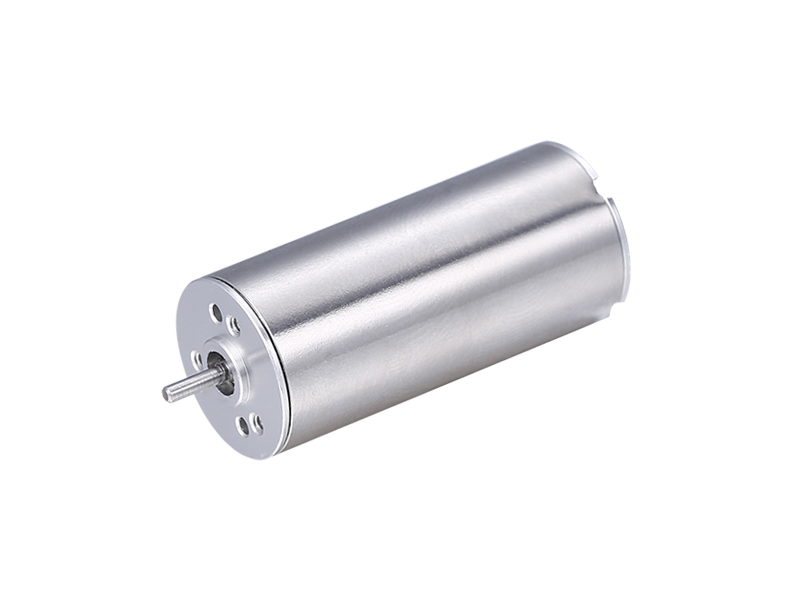
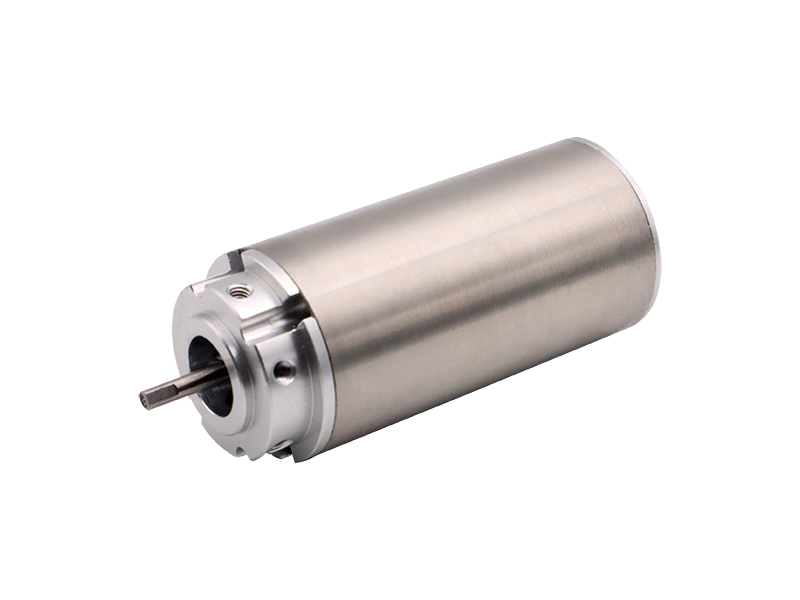
The use of brushless motors in centrifuges.
The brushless motor directly drives the centrifuge to rotate at high speed with the rotor. In the past, motors were DC motors with carbon brushes. When centrifuges were running, the carbon brushes would wear out, causing sparks, noise, and even vibration, and they had a lifespan. At that time, the carbon brushes would need to be replaced before operation. More seriously, the wear of carbon brushes brings about carbon dust pollution, which not only pollutes centrifuges but also pollutes the surrounding environment. This kind of pollution is not suitable for the healthcare industry.
When the rotor rotates at high speed, air friction generates heat, causing the rotor temperature to rise and the sample temperature in the test tube to also rise. Due to the temperature sensitivity of biological samples. Generally, it is required to maintain a temperature of 4 ℃ during centrifugation experiments. Without computer-controlled intelligent technology, it is impossible to achieve such precision. Therefore, using a refrigeration machine to cool the centrifugal chamber achieves the goal of cooling the rotor and cooling the sample temperature. However, measuring the actual temperature of the rotating rotor is extremely difficult. Both domestically and internationally, temperature sensors are embedded near the bottom of the centrifugal chamber to indirectly measure the rotor temperature. The compensation of blood type centrifuge T is also related to the type, speed, and running time of the rotor.
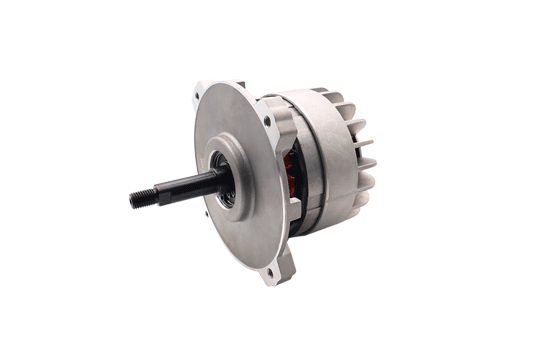
Brushless motor centrifuge performance:
The typical manifestation of simulation technology in the past was to select operating parameters (such as speed, temperature, and time) with a knob and display data with the hands of a dial. Nowadays, the typical manifestation of digital technology is full computer control with user-friendly interface, keyboard operation, digital display, and programmable operation. Its core is intelligent control, which is implemented by computers. All parameters required for centrifuge operation (such as speed, temperature, time, acceleration and deceleration speed, etc.) are inputted through keyboard operation and displayed in numbers, so the error between selecting operating parameters and reading numbers is extremely small. Its disadvantage is that the selection of parameters and the reading values of data are often subject to human interference from operators and readers, resulting in poor control accuracy. And every operation has to be like this, with poor repeatability. Some centrifuges have digital displays (such as knob selection and digital display), and although there have been improvements in readings, the principle of value selection remains unchanged and still belongs to analog technology. Due to its programmable operation, a set of operating parameters can be coded and accessed for use