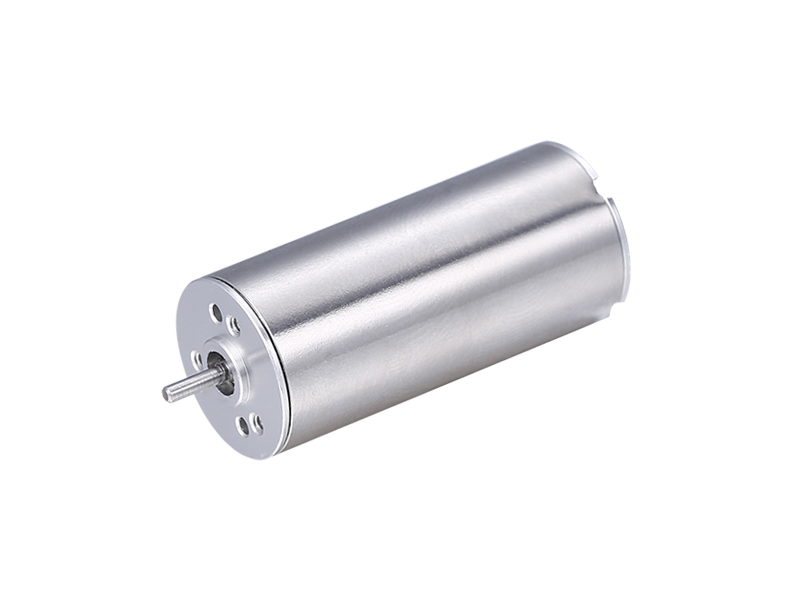
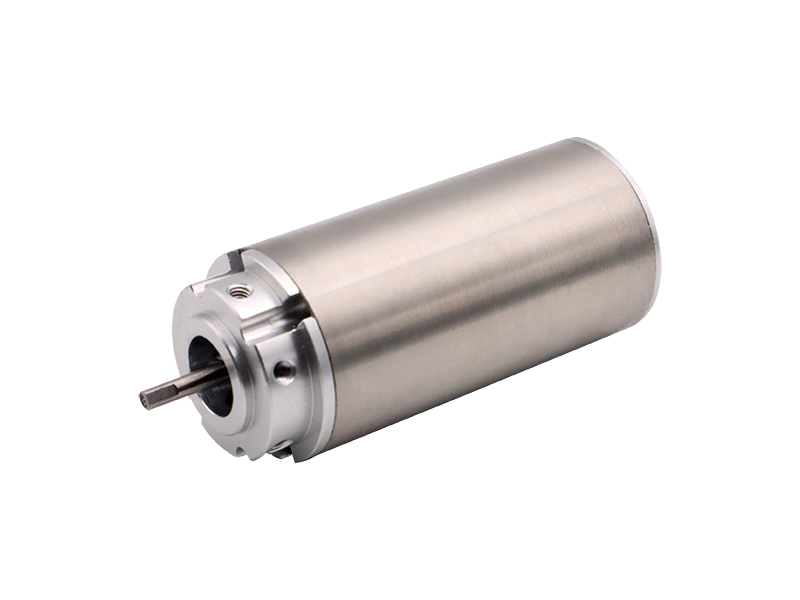
Brushless DC motors have the same working principle and application characteristics as general DC motors, but their composition is different. In addition to the motor itself, the former also has an additional commutation circuit, and the motor itself is closely integrated with the commutation circuit. Many low-power electric motors are integrated with commutation circuits, and from the appearance, brushless DC motors are exactly the same as DC motors.
The motor of a
brushless DC motor itself is the electromechanical energy conversion part. In addition to the motor armature and permanent magnet excitation, the brushless DC motor also has sensors. The motor itself is the core of a DC brushless motor, which is not only related to performance indicators, noise and vibration, reliability, and service life, but also involves manufacturing costs and product costs. Due to the use of permanent magnet magnetic fields, brushless DC motors are able to break away from the traditional design and structure of general DC motors, meet the requirements of various application markets, and develop towards copper and material saving and easy manufacturing. The development of permanent magnet magnetic fields is closely related to the application of permanent magnet materials. The application of third-generation permanent magnet materials has promoted the advancement of DC brushless motors towards high efficiency, miniaturization, and energy conservation.
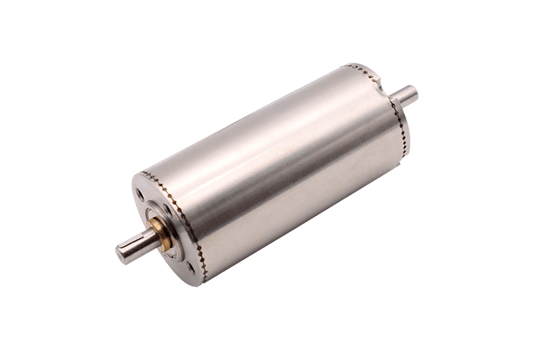
The significance of brushless DC motor
In order to achieve electronic commutation, brushless DC motors must have position signals to control the circuit. Early on, position signals were obtained using electromechanical position sensors, but now electronic position sensors or their DC brushless motor methods are gradually being used to obtain position signals. The simplest method is to use the potential signal of the armature winding as the position signal. To control the motor speed of a brushless DC motor, a speed signal is necessary. The simplest speed sensor to obtain velocity signals by obtaining similar position signals is a combination of a frequency measuring speed generator and an electronic circuit. The commutation circuit of a brushless DC motor consists of two parts: drive and control, which are not easily separated, especially for low-power circuits where they are often integrated into a single dedicated integrated circuit.
In high-power motors, the drive circuit and control circuit of brushless DC motors can be integrated separately. The driving circuit outputs electrical power, drives the armature winding of the motor, and is controlled by the control circuit. At present, the DC brushless motor drive circuit has shifted from a linear amplification state to a pulse width modulation switch state, and the corresponding circuit composition has also shifted from transistor discrete circuits to modular integrated circuits. Modular integrated circuits are composed of power bipolar transistors, power field-effect transistors, and isolated gate field-effect bipolar transistors. Although the isolation gate field-effect bipolar transistor is relatively expensive, from the perspective of reliability, safety, and performance, it is still more suitable to choose a DC brushless motor.