The selection of industrial robot motors involves multiple factors.
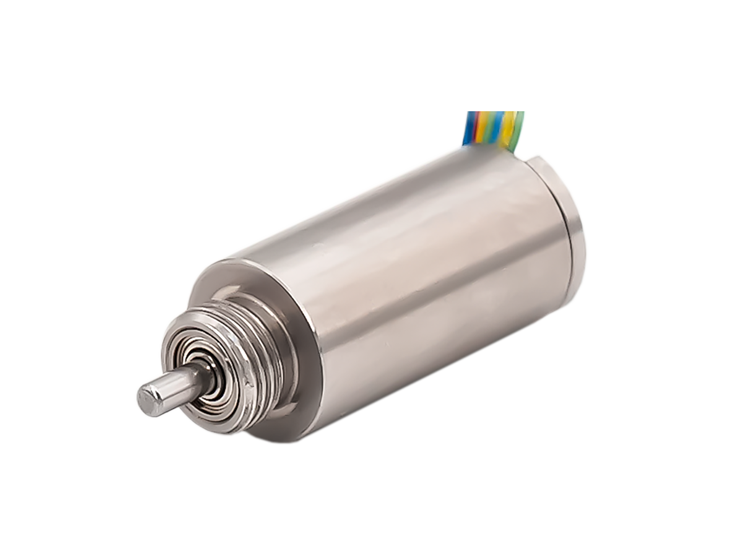
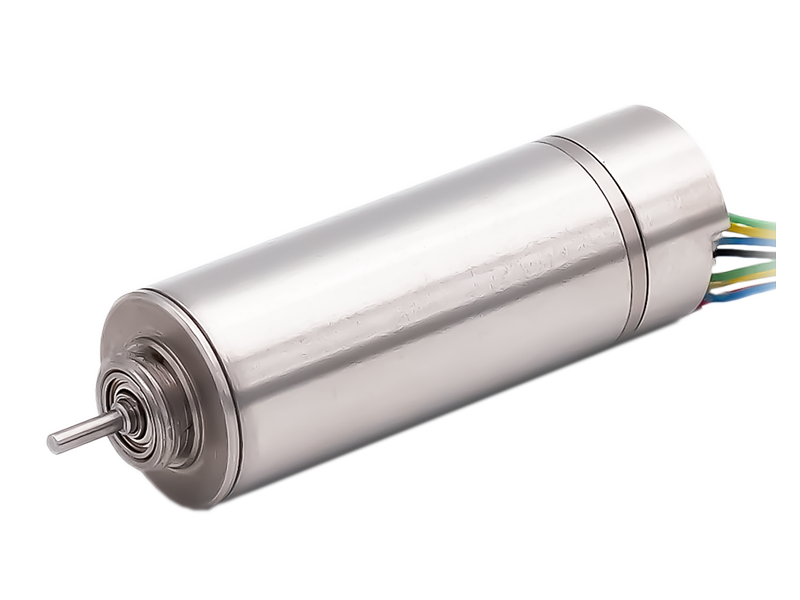
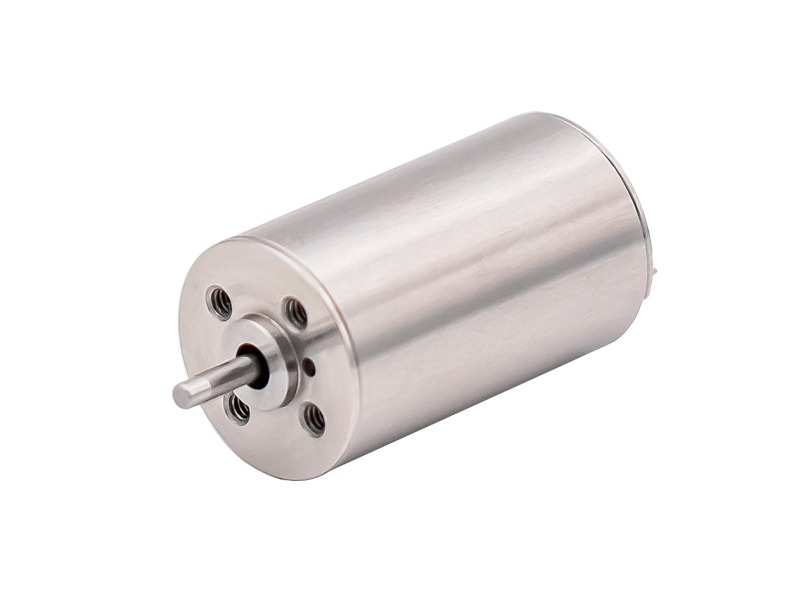
The selection of industrial robot motors requires a detailed understanding for robot enthusiasts who need to develop strategies and conduct careful analysis. It involves determining the speed, acceleration, and torque requirements of industrial robots based on their weight, wheel size, and the application to be implemented. There are many types of motors available in the market today, but the main ones are micro pager motors, servo motors, linear motors, stepper motors, and DC reduction motors used in industrial robots according to their application areas.

Industrial robots are devices that to some extent replicate human movement and reduce danger, providing higher strength, accuracy, and continuity. Based on their operating mode, control, tools used, and the work to be performed, they require extensive motor-driven motion. Industrial robot motors should have the potential to handle a wider range of tasks than ordinary motors, in order to focus on specific tasks.
Types and selection methods of industrial robot motors
The motors used in industrial robots include alternating current (AC) motors, direct current (DC) motors, servo motors, and stepper motors.
1. AC motors can be further divided into asynchronous and synchronous types. For example, an induction AC motor is an asynchronous device mainly composed of a wound stator and rotor. Only by controlling the structure of mechanical robots can they perform tasks. Controlling robots involves three different stages: perception, processing, and action. Sensors provide information to robots about their joint positions and end effectors, which are then processed into a control unit that calculates appropriate signals for the mechanical motion motors. The vast majority of robots use electric motors. Portable robots use both brushless and brushed DC motors, while industrial robots use AC motors. These motors are more suitable for systems with lighter loads and primarily rotating motion.
2. Many industrial applications, including robotics, typically use DC motors, which are commonly used to control speed and direction. Its speed range varies from full speed to zero speed, and there is a large load range. Due to their high torque to inertia ratio, DC motors can quickly respond to changes in control signals. Industrial robot DC motors can be stably controlled to zero motion and accelerate immediately in the opposite direction without the need for complex power switch circuits. Although permanent magnet brushless DC motors have advantages in power consumption and reliability, they are more expensive compared to brushed motors.
Without a commutator,
brushless motors can operate more efficiently at higher speeds than traditional DC motors. Most brushless DC motors operate with trapezoidal AC waveforms, but some motors operate with sine waves. Brushless motors driven by sine waves can operate smoothly at lower speeds with low torque ripple, making them ideal for grinding, coating, and other applications such as surface treatment.
3. A closed-loop servo motor using a digital controller. Send the speed command to the driver amplifier, which then drives the servo motor. Servo motors can generate sufficient torque to quickly move objects from a stop position. Therefore, they are used as wheels for military and industrial robot vehicles. Stepper industrial robot motors can also be used to control position, but they consume power even during rest periods when only the command position is locked and maintained. Therefore, servo motors are commonly used in industrial robots as high-performance alternatives to stepper motors.
4. Stepper motors can operate without feedback and can decompose motor rotation into small angle step movements. It is controlled by pulse command signals and can accurately stop at the command point without the need for brakes or clutch components. After a power outage, permanent magnet stepper motors usually remain in their final position.
The selection of industrial robot motors depends on the type of robot we manufacture and its application. Especially large industrial robots use AC induction motors, while small industrial robots use lightweight motors. For example, if we want to control angular and linear motion, we should use servo motors. However, if you want to proceed step by step, a stepper motor is more suitable. To rotate the robot wheel, we can use a brushed DC motor. However, for building drones, we may use lightweight brushless DC motors.