The reason why brushless DC motors are widely used in the field of drones and robots.
The application of brushless DC motors in the industrial field is very extensive. Today, let's take a look at its application in the fields of drones and robots.

Most structural forms of DC motors are designed based on the use of magnetic force, and they contain many internal mechanisms, some of which are electronic and others are electromechanical. One characteristic of traditional DC motors is the commutator, which functions to alternate the direction of current. Brushless DC motor represents an improved form of traditional DC motor, with higher power, no sliding contacts, longer service life, and more suitable for many application fields. More and more people are using AC or AC motors, which are members of another type of motor and face huge competition. DC motors are still very important due to their special characteristics, especially the precise control of speed and torque over a wide range. Therefore, they are widely used in the industrial field.
The design of traditional DC motors is based on a simple structure and relatively few components, with the main supporting elements being the stator and rotor. The stator is an immovable fixed component composed of electromagnets or permanent magnets (usually small parts). The rotor, installed inside the stator, is a rotating component. The traditional DC motor is also based on the principle of electromagnet. The DC motor composed of stator and rotor is called an inner rotor motor, and the opposite structure is called an outer rotor motor. The winding of the rotor is connected through a commutator, which is a polarity converter that connects sliding contacts made of conductive materials in the form of electric brushes. Common materials for electric brushes include graphite and a mixture rich in copper and silver metals.
In operation, the contact points of the electric brush are of decisive importance to the function of the DC motor, because when the DC current passes through the winding of the rotor or the rotor itself, it will be electromagnetically transformed and generate magnetic force according to the characteristics of the stator. Due to the repulsion of the same pole and the attraction of the opposite pole, this causes the rotation of the rotor, which in principle will soon disappear. Therefore, in order to maintain continuous rotation, the direction of the current must be periodically reversed. The commutator of a DC motor is composed of electric brushes and is responsible for the regular reversal of polarity.
In addition, the structure of electric brush DC motors varies depending on the connection between the stator winding and the stator winding. In series wound motors, the magnetic field winding and rotor winding are connected in series, one after another, laying the foundation for AC feedback. Corresponding to parallel or parallel motors, where two coils are connected in parallel, composite motors are a combination of series and parallel designs. Depending on their size, this type supports multiple operating behaviors and demonstrates the advantages of both types of structures.
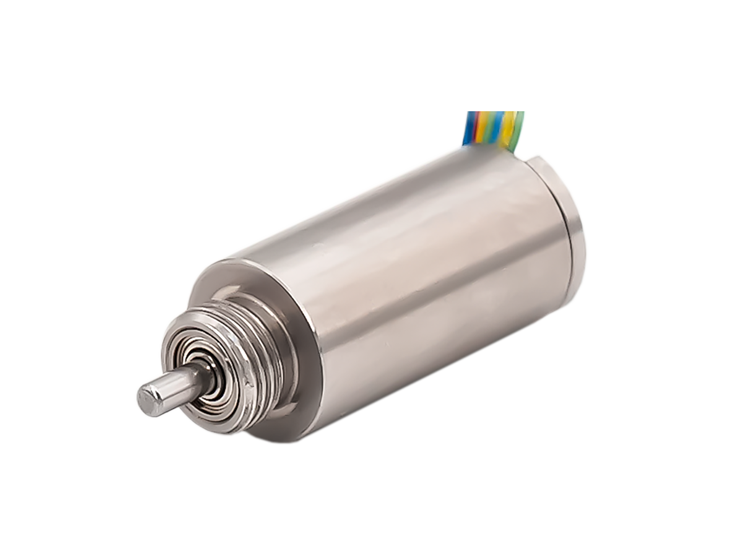
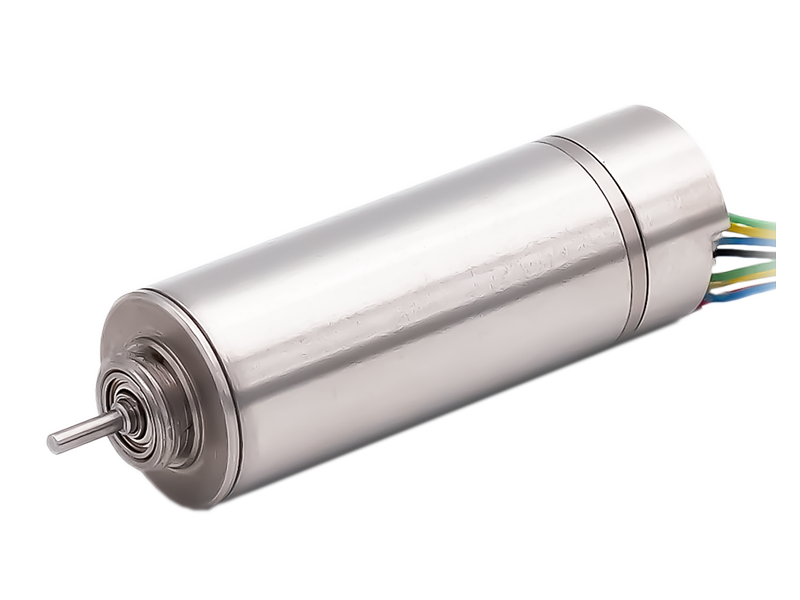
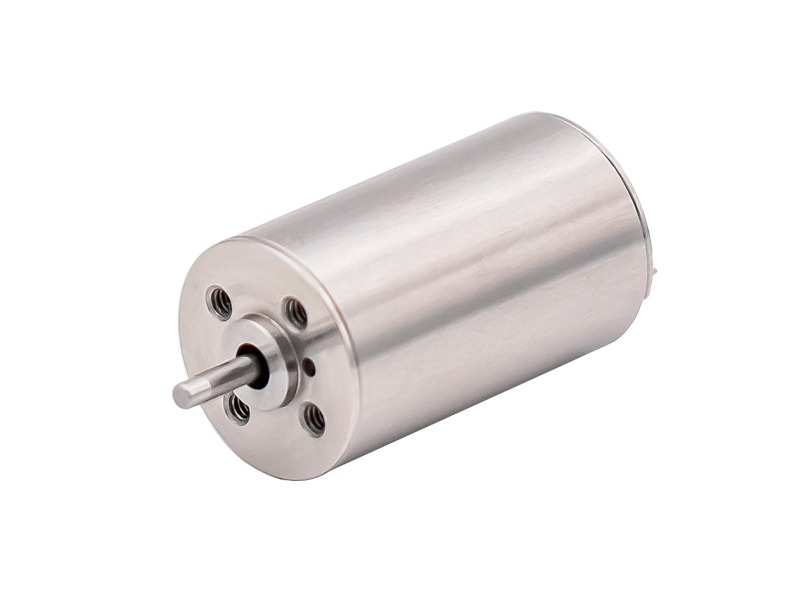
The design that competes with brushed DC motors is brushless DC motors, or simply brushless DC motors. As the name suggests, this design differs from classical structures in an important aspect - it does not include mechanical sliding contacts or brushes. The function of the mechanical commutator is taken over by an electronic power circuit, which tracks the position of the rotor with the help of sensors and is manifested as a form of electronic commutator. For example, by integrating control algorithms, the commutator function can be executed in many applications without sensors. Therefore, the structure of brushless DC motor can be compared with that of undamped synchronous motor, but it has more flexible control possibilities; In addition, due to the addition of an inverter circuit, brushless DC motors can be powered by DC electricity. Brushless DC motors, or more precisely, magnetic coils with integrated stators, are typically three-phase structures. Due to the fundamental differences in performance characteristics between these two structures, a basic choice must be made between using electric brushes or brushless DC motors.
Considering the impact of brush and brushless commutator systems and their differences, especially the service life of DC motors, as sliding contacts or brushes are physical components of mechanical operation, they often wear out and their service life is limited. High speeds can also have a significant impact on the service life of brushes. On the other hand, the service life of brushless DC motors is limited only by the internal integrated ball bearings, which operate at a relatively reliable level. Due to the absence of mechanical friction, sparks will not form on the commutator, thus preventing the risk of electric brush ignition. Electric brushes also have the effect of limiting their use under specific environmental conditions. For example, in high vacuum applications, only brushless DC motors can be considered.
Compared with brushed motors, brushless DC motors have many advantages in performance, which may vary depending on the application and manifest in different ways. However, as a rule, they include higher starting torque, maximum precision controllers, and are more resistant to load fluctuations and higher speeds. The electric brush structure provides several operational advantages - setting the movement of the rotor, all that is needed is to provide a voltage to two contacts. There are not many types of motors that can be put into operation so easily. In contrast, brushless DC motors do not require an electronic commutator system, and their start-up operation is much more complex. Price factors must also be considered, as the electronic modules mentioned above and the sensing systems often incorporated into brushless DC motors tend to have higher costs.
Due to the many performance advantages of brushless DC motors, their application scope is constantly expanding. In many industrial fields, brushless motors have replaced traditional designs, and many emerging industries and sub fields have emerged. Especially, their speed and torque are relatively simple, coupled with their precise adjustment and high dynamics, DC motors with integrated permanent magnets have been found to be very popular in applications that require very precise control and low torque, such as in the fields of robots and drones. Brushless DC motors are very popular among model aircraft and drone users, mainly due to the relationship between performance and weight, as well as a large range of structural size design. Compact brushless DC motors have made lighter drone models possible.