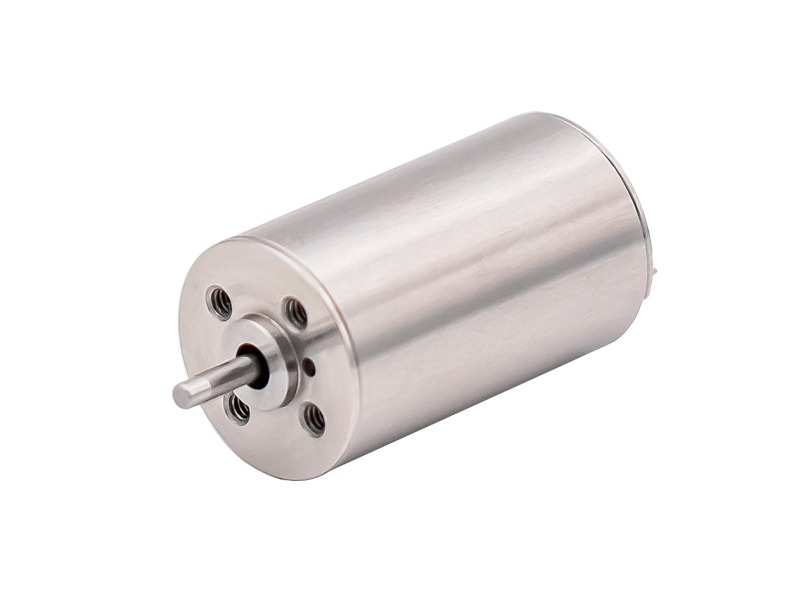
The reason for the high cost of coreless brushless motors.
Why are coreless brushless motors more expensive than brushed motors, internal rotor brushless motors, and external rotor brushless motors? This is primarily due to a triple premium effect stemming from their material costs, performance advantages, and application scenarios.
The material highlights include the use of hollow cup rotors made from micron-level self-supporting copper wire (ironless copper windings), with copper purity requirements exceeding 99.9%, and a material usage 40% higher than traditional windings. High-performance neodymium iron boron magnets are employed, accounting for over 30% of the total cost. In contrast, brushed motors only require ordinary magnetic steel, resulting in lower costs. Due to the extremely high rotational speed of the hollow cup, ceramic bearings—this high-performance component—are necessary, with costs 3-5 times higher than conventional bearings.
High Performance of Coreless Brushless Motors:
VS brushed motor: Lifespan extended by 5 times (up to 5,000 hours), energy conversion efficiency >90% (brushed motors only 60%)
Inner and outer rotor brushless motors: 2x higher power density (30% more torque at the same volume), response time <10ms (outer rotor >30ms)
Domestic Scarcity: 70% of global production capacity is monopolized by overseas entities (e.g., Germany's Faulhaber), with a domestic production rate of less than 10%, driving up prices due to scarcity.
The Premium for High-End Customization of Coreless Brushless Motors:
It is commonly used in high-end products such as medical equipment, robots, bullet trains, automobiles, and smart homes, and its price is significantly higher than that of conventional motors.
When you need a motor for your R&D, the coreless brushless motor can meet your requirements. However, it's also essential to understand the cost of this type of motor. Customers unfamiliar with coreless brushless motors may perceive them as more expensive than the final product they are developing.