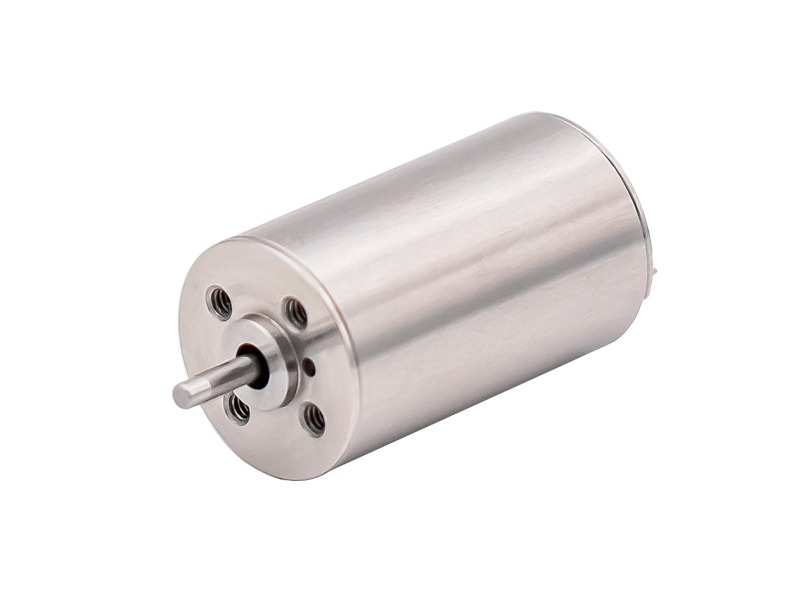
The myriad variations of miniature geared motors.
The miniature geared motor uses a DC motor as the power source, converting electrical energy into high-speed rotational mechanical energy. Through multi-stage gear meshing, it achieves speed reduction and torque amplification, with the output shaft transmitting the reduced-speed power to directly drive external mechanical loads. Its design integrates with the gearbox to ensure effective torque transmission, forming the fundamental operating principle of basic miniature geared motors.
Why is it said that miniature geared motors are highly versatile? The true core lies in the flexible combination of three components—DC motors, gearboxes, and output shafts—allowing them to be paired in various ways to form different high-torque, high-power geared motors. Here's a more intuitive way to understand their wide variety:
1. Selection of DC motor types, which can also be adjusted based on parameters such as voltage, speed, and torque used by brushed motor.
DC brushed motors include various series such as K, M, N, 020, 030, 050, 130, 150, 180, 300, 310, 330, 350, 370, 380, 390, 500, 520, 36ZY, 1215, 1220, and 1230, all of which can serve as power sources.
DC brushless motors are available in various types: hollow-cup brushless motors with diameters ranging from 16 to 36 mm, internal-rotor brushless motors with diameters from 24 to 42 mm, and external-rotor brushless motors with diameters from 14 to 61 mm. After 2025, brushless motors paired with gearboxes will become increasingly common due to their advantages such as long lifespan, high speed, and low noise. When combined with a gearbox, their performance surpasses that of brushed motors.
2. Selection of Gearbox Types: The gearbox determines the torque and speed based on the reduction ratio. The specific calculation is as follows: DC motor torque * gearbox ratio * conversion efficiency (80%-85%) = torque size. The gearbox can be selected according to requirements
Planetary gear structure: Composed of a sun gear, planetary gears, and an internal ring gear, featuring high precision and smooth transmission;
**Common Gear Structure**: Multiple-stage gears are connected in series, featuring a simple structure but larger axial dimensions;
Worm gear structure: Suitable for high reduction ratio scenarios, typically used in combination with an intermediate gearbox
3. The output shaft can be selected based on its length, diameter, and shape to ensure effective torque transmission.
This serves as the foundational product for miniaturized geared motors, yet customer requirements evolve with product variations. Within this basic customization scope, we can further enhance the motor's versatility by integrating additional functional or performance accessories—such as control boards, encoders, electrical connections, and flange front-end cover customizations. Additionally, we can improve service life and stability by adjusting winding configurations, bearings, magnets, and other material specifications.