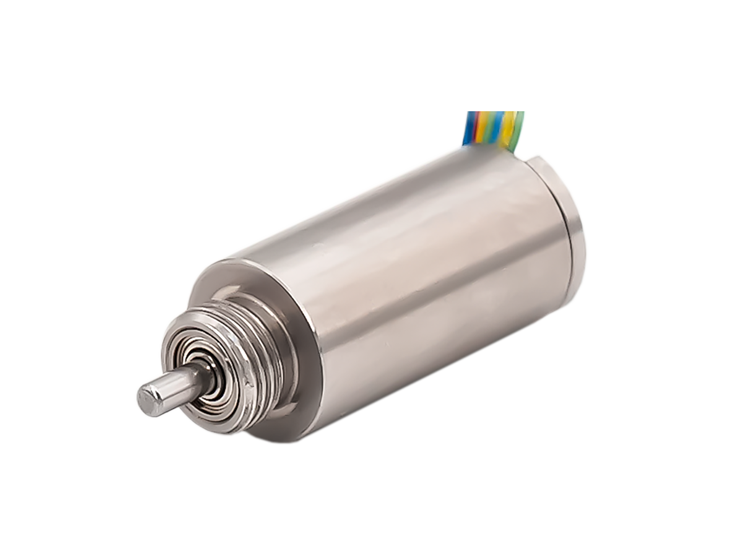
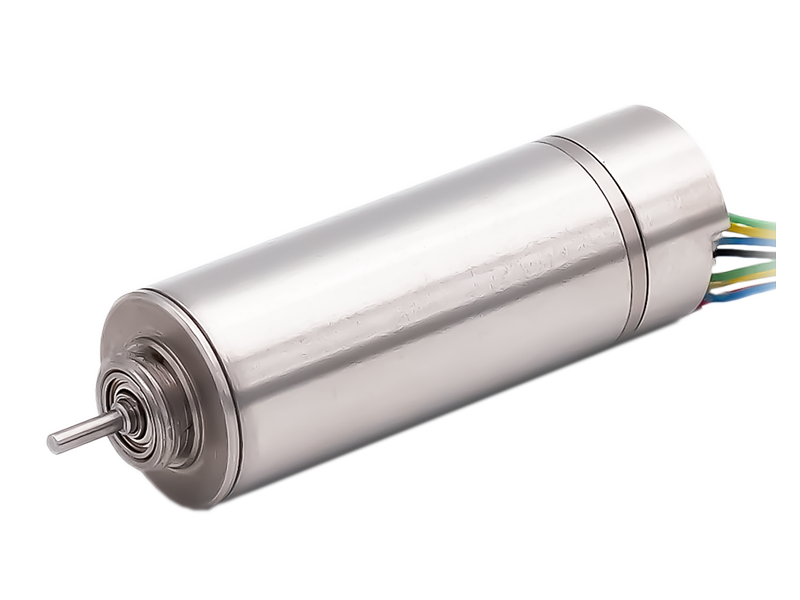
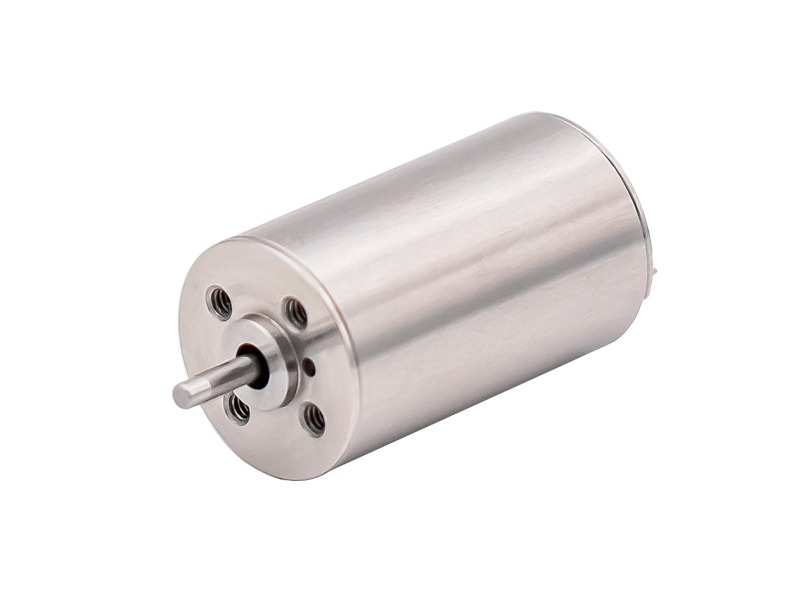
The difference and application scenarios between hollow cup motors and ordinary motors.
In the development of modern industry and technology, as a key component for energy conversion, the performance of motors directly affects the efficiency and reliability of equipment. There are various types of motors, among which the hollow cup motor (also known as slot free brushless DC motor) exhibits significant advantages in specific application scenarios due to its unique structural design. This article will explore the main differences between hollow cup motors and ordinary motors, as well as their respective application scenarios.

structural difference
The core of a hollow cup motor lies in its rotor structure. It adopts a lightweight rotor called a "hollow cup", which is made of thin metal sheets or carbon fiber materials, forming a hollow cylinder without an iron core. This design greatly reduces the weight of the rotor, reduces inertia during rotation, and thus achieves the ability to quickly start, stop, and change direction. In addition, due to the absence of an iron core, the hollow cup motor hardly generates eddy current losses during operation, improving efficiency.
In contrast, ordinary motors (such as traditional
brushed DC motors or AC motors) typically have rotors with iron cores. These iron cores not only increase the weight of the motor, but also generate significant eddy current losses during high-speed operation, leading to a decrease in energy efficiency. Meanwhile, brushed motors also suffer from brush wear and require regular maintenance.
performance difference
Response speed: Hollow cup motors, due to their light weight and low inertia, can achieve faster acceleration and deceleration processes, making them suitable for applications that require frequent start stop or speed regulation.
Efficiency: Due to the reduction of eddy current losses, the efficiency of hollow cup motors is usually higher than that of ordinary motors, especially under low load conditions.
Noise and vibration: Hollow cup motors operate more smoothly and quietly, while ordinary motors may produce more vibration and noise due to hysteresis effects caused by the iron core.
Lifespan: Although the cost of hollow cup motors is relatively high, their maintenance free nature and long lifespan make them more cost-effective in certain applications.
Application scenarios
Hollow cup motors are particularly suitable for fields that require high precision, response time, and efficiency, such as:
Precision instruments, such as positioning systems in medical equipment, require high precision and stability.
Drones: Lightweight design is needed to improve flight time and flexibility.
Automated production line: used for rapid sorting and packaging processes, capable of efficiently completing tasks.
Robot technology, especially service robots and entertainment robots, has high requirements for smoothness and response speed of actions.
Ordinary motors are widely used in various conventional industrial and household appliances, including but not limited to:
Household appliances, such as washing machines, air conditioning fans, etc., are sensitive to cost and do not have very strict performance requirements.
Traditional manufacturing industries, such as conveyor belt drives and water pump controls, focus on reliability and durability.
Transportation vehicles: electric vehicles, electric bicycles, etc., which require high power output scenarios.
In summary, hollow cup motors and ordinary motors have their own advantages, and the choice of which type of motor to use should be determined based on specific application needs. With the advancement of technology, hollow cup motors are expected to be widely used in more fields in the future, bringing higher efficiency and better user experience to various industries.