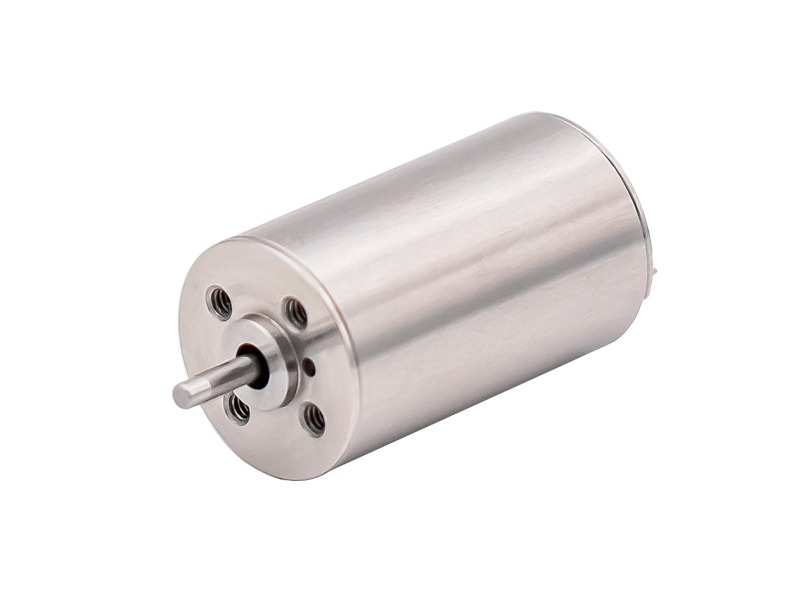
The advantages of external rotor brushless motors are too prominent.
The outer rotor brushless motor is a significant branch in the motor field, characterized by its unique structure where the rotor encases the stator and eliminates the need for mechanical commutators. This distinctive design delivers differentiated performance, making it widely adaptable to diverse product applications across various industries.
1. Efficient Performance Advantages
First, it boasts high efficiency and energy-saving performance, with a mechanical commutation-free structure that minimizes frictional losses. The energy conversion efficiency can reach 85%-95%, far surpassing traditional brushed motors. Long-term operation significantly reduces energy consumption, making it particularly suitable for equipment requiring continuous operation.
Second, the high power density adapts to compact scenarios. The rotor's external embedding design reduces the motor's volume and weight while delivering greater torque, enabling strong performance within limited space and resolving the contradiction of "small equipment requiring high performance.".
Third, it features low noise, stability, and a long lifespan, with no carbon brush wear issues. The operating noise typically remains below 50 decibels. Additionally, the external rotor offers a large heat dissipation area, preventing high temperatures from affecting component longevity. The average service life can reach 3,000 to 10,000 hours, making it the preferred choice for high-frequency usage scenarios.
Fourth, it boasts high control precision and, when paired with an electronic speed regulation system, enables millisecond-level rotational speed adjustment. It supports complex commands such as forward and reverse rotation, variable-speed operation, and meets the requirements for precise control.
II. Core Application Domains
In the consumer electronics sector, drone rotors and robotic vacuum drive wheels rely on their high power density and precise control to achieve agile flight and path planning, while air purifiers and fans utilize low-noise and high-efficiency features to ensure quiet operation while reducing energy consumption.
In the field of industrial equipment, small conveyor machinery and intelligent sorting devices utilize its drive system, adapting to the compact space of workshops. For medical equipment such as ventilators, the airflow control module relies on its stable speed and low-interference advantages to ensure operational reliability.
In the new energy sector, the drive systems of electric scooters and hoverboards, with their high torque and lightweight design, balance power and portability.