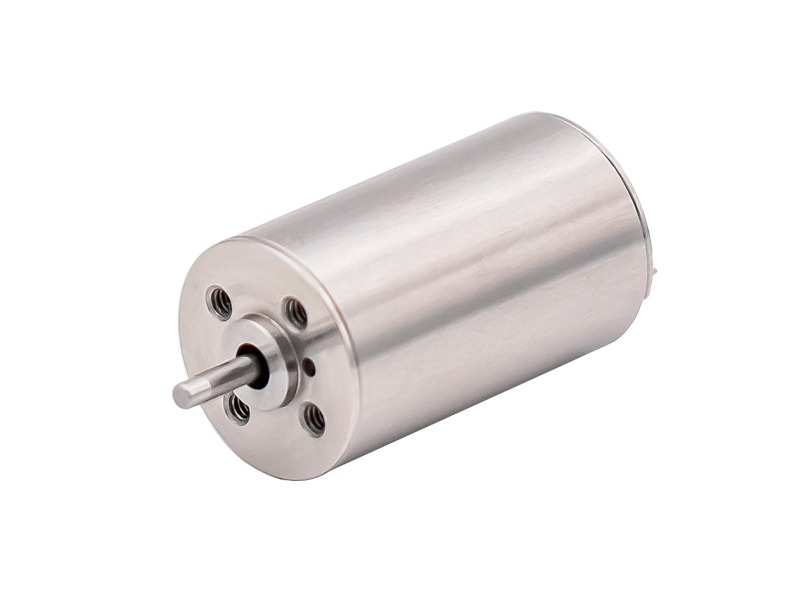
Micro motors are everywhere.
From the cleaning of robotic vacuum cleaners in the morning to the locking of smart door locks at night, micro motors have already permeated every corner of life. Among them, there are three types of DC motors: brushed motors, brushless motors, and deceleration motors. With their respective characteristics, they become the "power core" of different daily products, silently supporting the convenience and efficiency of life.
DC brushed motor:
The DC brushed motor, which is affordable and practical, has become the preferred choice for many entry-level daily necessities due to its simple structure and low cost. The edge brush drive of the entry-level sweeping robot at the hundred yuan level is commonly used with this type of motor. It can quickly start and drive the edge brush to rotate, sweeping the dust in the wall corner to the main brush area. Although the speed stability is slightly lower than high-end models, it is fully sufficient to meet basic cleaning needs. The four-wheel drive car and remote-controlled model airplane that children love to play with also rely on these types of motors to drive their wheels and propellers. The fast starting and flexible speed regulation characteristics make model control more enjoyable. Small massagers, portable fans, and other devices are often equipped with DC brushed motors, which can adjust different speeds through simple control to meet diverse usage needs. Despite the issue of brush wear, it still holds an important position in consumer products due to its low cost and ease of maintenance.
DC brushless motor:
The advanced choice for efficient and silent
DC brushless motors replaces mechanical brushes with electronic commutation, bringing higher efficiency and longer lifespan. After adopting it, the energy efficiency of the variable frequency air conditioning compressor at home can be increased by 18%, and the noise can be reduced by more than 5 decibels. The main drive wheels and vacuum fans of mid to high end robotic vacuum cleaners also rely on brushless motors, which not only have strong power and a range 2-3 hours longer than brushed models, but also can accurately control steering to avoid knocking furniture during cleaning. High end hair dryers and drones also favor this type of motor, which can provide stable wind or flight power while operating with lower noise. For example, when using a brushless motor in a hair dryer, the noise can be controlled within 60 decibels, close to the sound of daily conversations.
DC deceleration motor:
A torque expert with precise power generation, the DC reduction motor amplifies torque through a gear reduction mechanism and excels in low-speed precise driving. The extension and retraction of the lock tongue of the smart door lock are all controlled by it, which can achieve a fast response of 0.5 seconds after fingerprint recognition. The silent version runs with less noise than a cat's meowing. The smooth opening and closing of smart curtains also relies on it. The multi-stage gear reduction design allows the curtain body to be accurately positioned to the centimeter level, with no jerking during start and stop. The pan tilt rotation of security cameras and the feeding mechanism of automatic feeders rely on the stable output of DC deceleration motors. It can provide sustained high torque in small spaces, making the device move accurately and reliably, becoming the "invisible manipulator" in smart homes.
Although these three types of micro motors may not be eye-catching, they are like countless "micro engines" that make daily necessities smarter and more considerate, truly demonstrating the technological charm of "small parts play a big role".