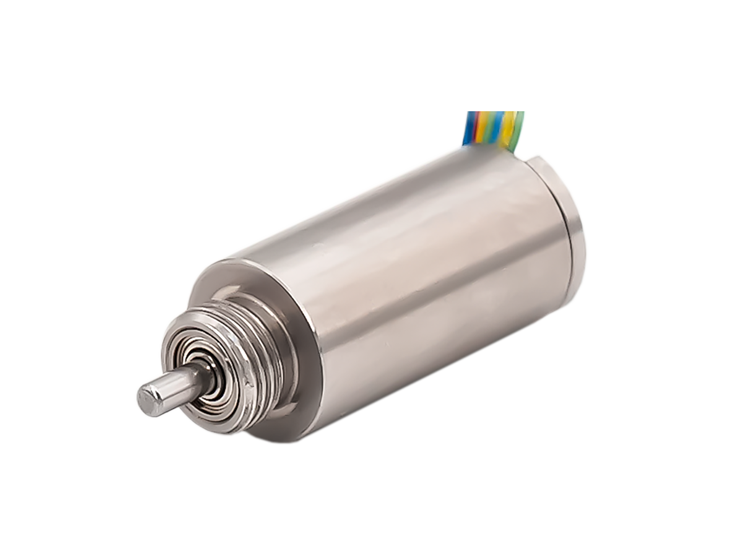
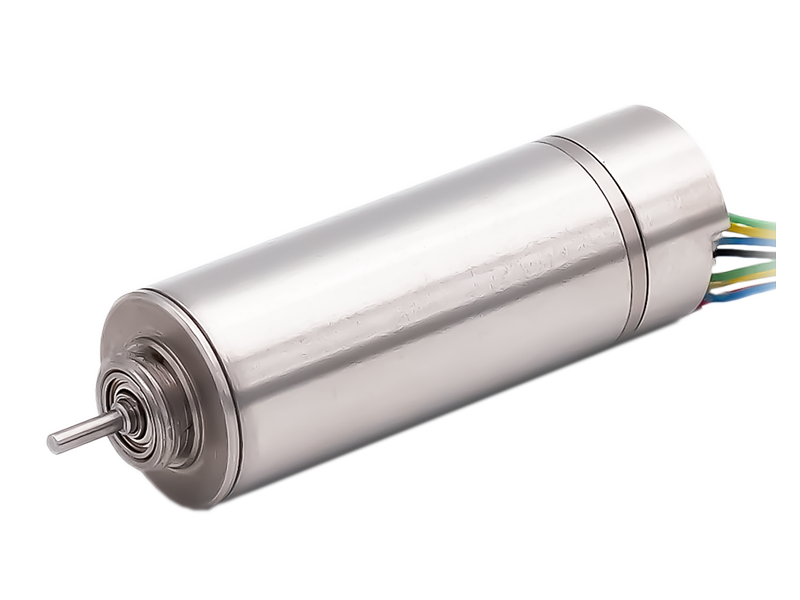
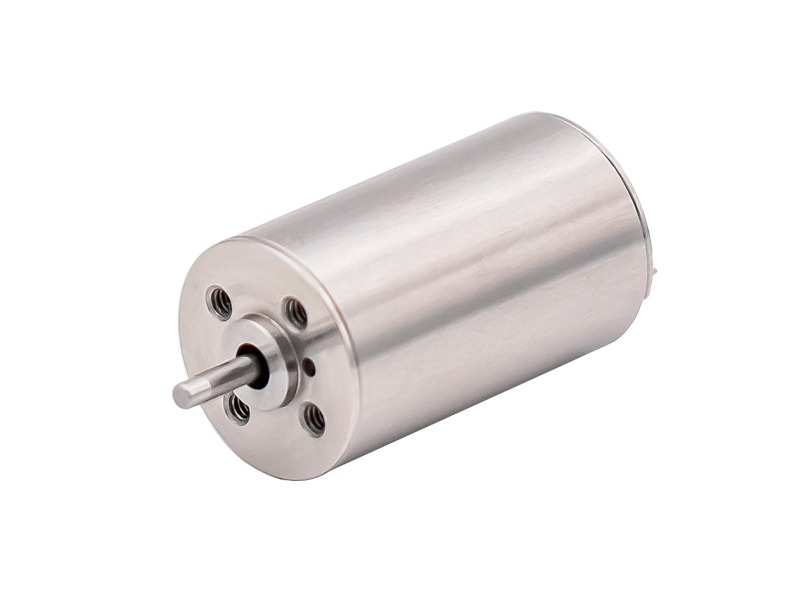
Is a coreless motor a brushless motor? Both coreless motors and brushless motors excel in small and compact design and efficient operation, and are commonly used in precision equipment. But the two are not the same concept. In fact, coreless motors can be classified into brushed or brushless types based on their structural design.
Brushless motor and coreless motor: definition and key differences
1. What is a brushless motor? (Brushless DC motor/BLDC)
The core feature of brushless motors is the commutation method. It does not rely on electric brushes or mechanical commutators to switch the direction of current. Instead, it relies on an external electronic speed controller (ESC) or driver to electronically control the current flow to the fixed coil (stator) based on the rotor position.
The core advantages of
brushless motors are:
No brush wear, longer lifespan
High efficiency, lower energy consumption
Low wear of mechanical components and low maintenance costs
High reliability for continuous or high-speed operation
Common trade-offs:
The required electronic controller increases system complexity and cost. Due to the presence of iron cores in some designs, cogging torque (magnetic "unevenness" phenomenon) may occur at low speeds.
2. What is a coreless motor?
A coreless motor is defined by its rotor structure. Its rotor structure does not contain bulky iron cores (hence commonly referred to as "coreless"). The winding is usually made of self-supporting hollow cylindrical or bell shaped copper wire and reinforced with epoxy resin.
Core advantages of ironless motors:
Low rotor inertia (no iron core weight) for fast and precise speed regulation
Zero cogging effect, smooth operation
L has no iron loss characteristics and excellent efficiency
Compact structure and lightweight
Common trade-offs:
Compared to iron core motors, ironless motors of the same size and weight have lower torque due to the lack of magnetic cores that concentrate and enhance magnetic flux. During continuous high load operation, it is more susceptible to thermal damage due to the lack of an iron core as a heat dissipation medium.
It can be seen that "brushless" and "coreless" respectively refer to two different dimensions of the motor: the commutation system and the rotor structure. Therefore, the motor can present the following combinations:
Brushed+Ironless
Brushless+iron core
L brushless+coreless (i.e. brushless coreless motor)
Each type has its own advantages and is suitable for different application scenarios.
How to choose a suitable electric motor
Choosing the appropriate motor depends on the performance requirements of the application scenario. Here are some general guidelines:
1. When choosing a brushless motor:
The equipment needs to have a long lifespan and high reliability
Pursuing low maintenance requirements and silent operation
Require high efficiency and low heat generation characteristics
The motor needs to operate at high speed for a long time
Brushless motors are most suitable for equipment with running time, durability, and efficiency as core performance indicators, such as industrial fans/blowers, electric vehicles, robot actuators, power tools, and continuous running pumps.
2. Applicable scenarios for coreless motors:
L requires extremely fast response speed
Require smooth and vibration free rotation
Application scenarios require low inertia characteristics
The system requires high-precision control
Ironless motors perform excellently in lightweight systems, especially suitable for scenarios that require fast acceleration or high-precision control, such as surgical handheld instruments, high-end drones/UAVs, optical shutters, precision micro pumps, and high-speed scanners.
3. Applicable scenarios for brushless and ironless motors:
It requires both long lifespan and ultra smooth performance.
The equipment needs to have both compactness and strong power.
Require high-precision and high-speed control.
L needs to optimize heat dissipation and energy efficiency.
Brushless and coreless motors are often used in advanced medical and optical equipment where precision and durability are equally critical. They are playing a key role in high-end surgical robots, high-performance laboratory automation equipment, high-end gimbal systems, precision factory automation, and other high-precision application fields.