Introduce the three commonly used motors for robots.
Do you still remember the robot dog that made a name for itself at the Asian Games? Do you still remember Newton, the cute robot dog who accompanied the male lead Wei Cheng on a run in the TV drama 'Song of Lushan'? In recent years, with the development of intelligent manufacturing, the research and application of robots and robotic dogs have become increasingly common.

In the following articles, we will focus on introducing robot motors. Today, Jinyuan Electromechanical will first bring you the commonly used motors for robots.
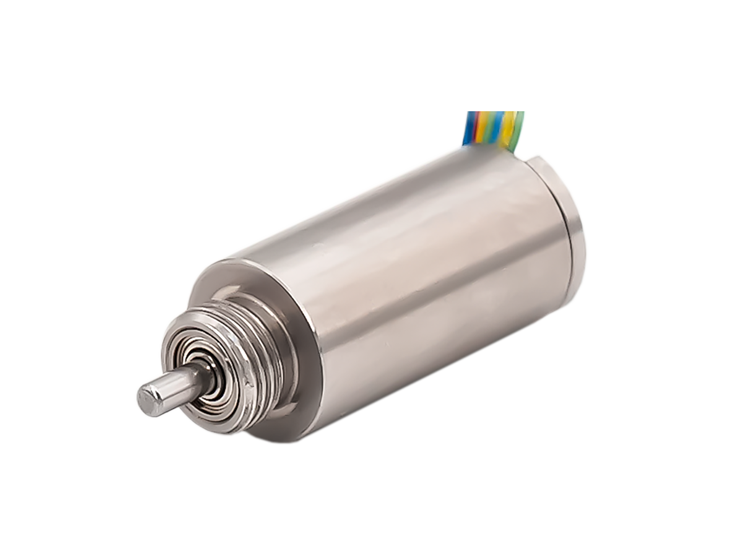
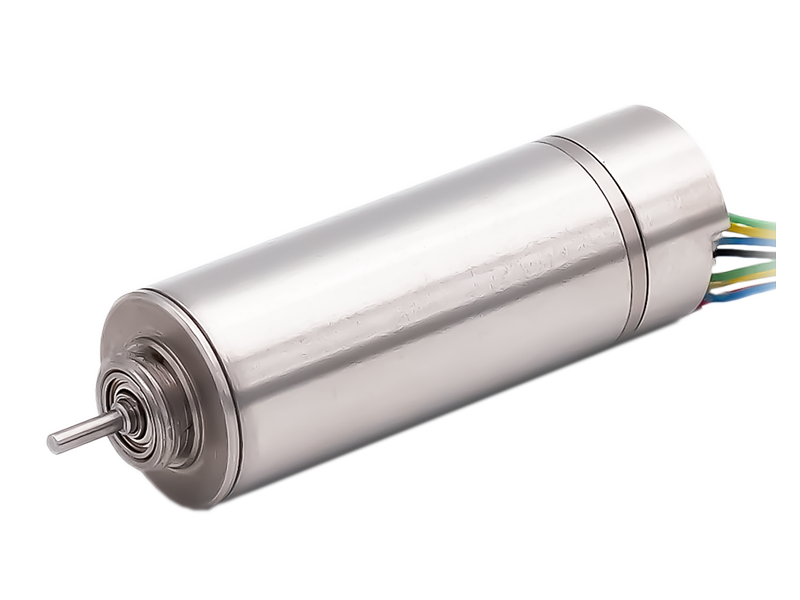
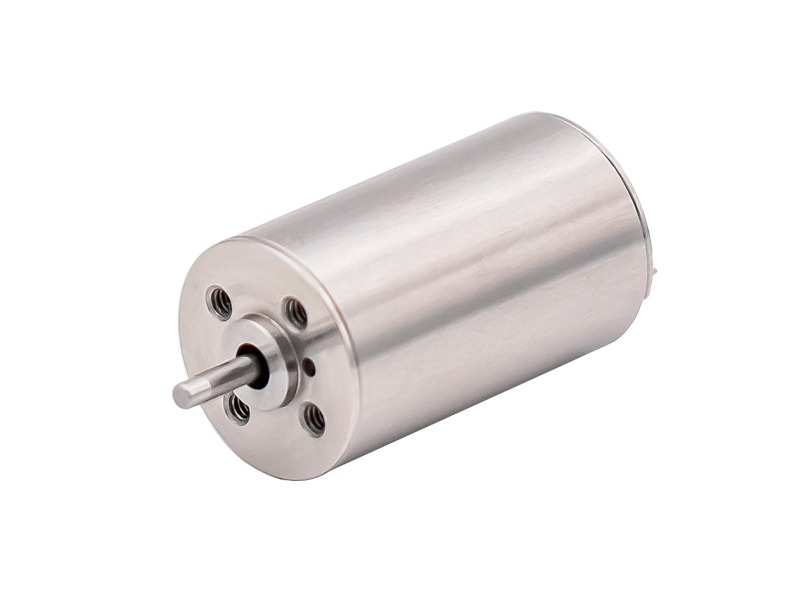
The commonly used motors for robots include three types: ordinary DC motors, servo motors, and stepper motors.
1. A rotating motor that outputs or inputs DC electrical energy is called a DC motor. It is a motor that can convert DC electrical energy and mechanical energy into each other. When it operates as an electric motor, it is a DC motor that converts electrical energy into mechanical energy; When operating as a generator, it is a DC generator that converts mechanical energy into electrical energy.
2. Servo motor, also known as actuator motor. In automatic control systems, it is used as an executing element to convert received electrical signals into angular displacement or angular velocity output on the motor shaft. It is divided into two categories: DC and AC servo motors. Its main feature is that when the signal voltage is zero, there is no self rotation phenomenon, and the speed decreases uniformly with the increase of torque.
3. Stepper motor is an open-loop control component that converts electrical pulse signals into angular displacement or linear displacement. In non overloaded situations, the speed and stopping position of the motor depend only on the frequency and number of pulses of the pulse signal, and are not affected by load changes. That is, when a pulse signal is added to the motor, it rotates one step angle. The existence of this linear relationship, coupled with the characteristic that stepper motors only have periodic errors without cumulative errors.
In the field of speed, position and other control, using stepper motors to control becomes very simple. Beginners are generally not familiar with microcontroller controlled motors. To start, they can use the PWM signal output by the microcontroller to control the DC motor, and further try controlling the stepper motor for higher control accuracy. For the motion drive of small cars, DC motors or stepper motors can generally be used, while servo motors are generally used on robotic arms to obtain accurate rotation angles and trajectory planning.