How to improve the efficiency of brushless motors?
Brushless DC motors (BLDC) are widely used in industrial automation, electric vehicles, household appliances, robots, and other fields due to their high efficiency, long lifespan, and low noise. In order to further improve its performance and energy-saving effect, we need to start from multiple aspects, optimize the motor structure, control system, and operation strategy. The following is a comprehensive analysis of the best practices for improving the efficiency of brushless motors from the dimensions of motor design, drive technology, system integration, and working environment.

1、 Optimize electromagnetic design to reduce losses
The electromagnetic design of brushless motors is the core factor affecting their efficiency. Efficient electromagnetic structures can significantly reduce energy loss, improve output power, and extend the service life of motors. The following provides a detailed explanation on how to optimize electromagnetic design from three aspects: copper loss, iron loss, and magnetic circuit optimization.
1. Reduce copper loss (I ² R loss)
Copper loss is caused by the heat generated by the current passing through the resistance in the winding, and its magnitude is proportional to the conductor resistance and the square of the current. Reducing copper loss can be approached from the following points:
Using low resistance and high conductivity materials: selecting high-purity copper or silver alloy winding wires can effectively reduce wire resistance, thereby reducing current loss;
Improve winding filling rate: By optimizing the winding structure and slot design, increase the filling density of the coil, reduce air gaps, and thus reduce resistance;
Optimizing the ratio of slots to poles: Reasonably matching the number of stator slots and poles not only helps balance electromagnetic forces, but also reduces losses caused by eddy currents and uneven local resistance;
Increase cross-sectional area: Thicken the wire diameter appropriately, and increase the cross-sectional area of the winding under allowable space and thermal management conditions to reduce the resistance value.
2. Reduce iron loss (hysteresis loss and eddy current loss)
The iron loss mainly comes from the hysteresis and eddy current losses of the stator and rotor cores in an alternating magnetic field, which can be optimized through the following methods:
Using high-grade silicon steel sheet materials: Select high silicon steel sheets with a thickness between 0.1mm and 0.35mm, such as grades 50W470, 30PNF160, etc., which have low hysteresis loss characteristics;
Adopting a multi-layer laminated structure: separating each silicon steel sheet with an insulation coating, effectively cutting off the eddy current path and reducing the overall eddy current loss of the iron core;
Control the peak magnetic flux density: Reasonably design the motor magnetic circuit to avoid the increase of nonlinear losses caused by magnetic saturation;
Precision stamping processing: Ensure that the edges of the iron core stamping are free of burrs and cracks to reduce local magnetic flux leakage and eddy current concentration.
3. Optimize the magnetic circuit structure and permanent magnet configuration
The magnetic circuit design of a brushless motor determines the magnetic energy conversion efficiency of the motor. Optimizing the magnetic circuit helps reduce energy consumption and improve power density
Using high-performance rare earth permanent magnets, such as neodymium iron boron (NdFeB), whose high remanence and coercivity characteristics can increase magnetic flux density, reduce stator excitation current, and thus reduce losses;
Application of skewed pole structure: Designing the magnetic poles at a certain tilt angle can effectively reduce cogging torque and harmonic losses, and improve torque stability;
Use embedded or surface mounted magnet arrangement: Choose the appropriate magnet installation method according to application requirements to achieve higher energy utilization efficiency;
Reducing the air gap length: Minimizing the air gap between the stator and rotor as much as possible while ensuring safety and assembly conditions can help improve magnetic flux density, reduce excitation current and power loss.
By systematically optimizing the electromagnetic structure of brushless motors, we can effectively achieve energy consumption control and efficiency improvement, providing a solid foundation for downstream control strategies and overall machine operation.
2、 Improve the intelligence level of drive control strategy
The optimization of the control system is one of the key factors in improving the efficiency of brushless motors. Modern BLDC control often adopts advanced algorithms such as FOC (Field Oriented Control) and SVPWM (Space Vector Pulse Width Modulation).
1. Apply FOC vector control technology
Realize current decoupling control and improve torque density;
Ensure that the motor can achieve optimal magnetic field utilization under various operating conditions;
Reduce harmonic interference and minimize energy loss.
2. Optimize PWM drive frequency and dead zone control
Reasonably set the PWM switching frequency to avoid overheating of power devices;
Minimize dead time, reduce switch losses and current distortion;
Adopting hardware current detection protection circuit to avoid efficiency degradation caused by overload.
3. Introduce closed-loop speed and torque control
Using high-precision Hall sensors or encoders to achieve efficient feedback;
Real time monitoring of speed/load changes, dynamic adjustment of driving strategies, and maintaining high efficiency operating points;
Introduce AI algorithms such as fuzzy logic and neural networks to achieve adaptive control.
3、 Improve the cooling system and thermal management capabilities
The motor generates a large amount of heat during operation, and if not dissipated in a timely manner, it will affect efficiency and lifespan.
1. Optimize the motor structure design
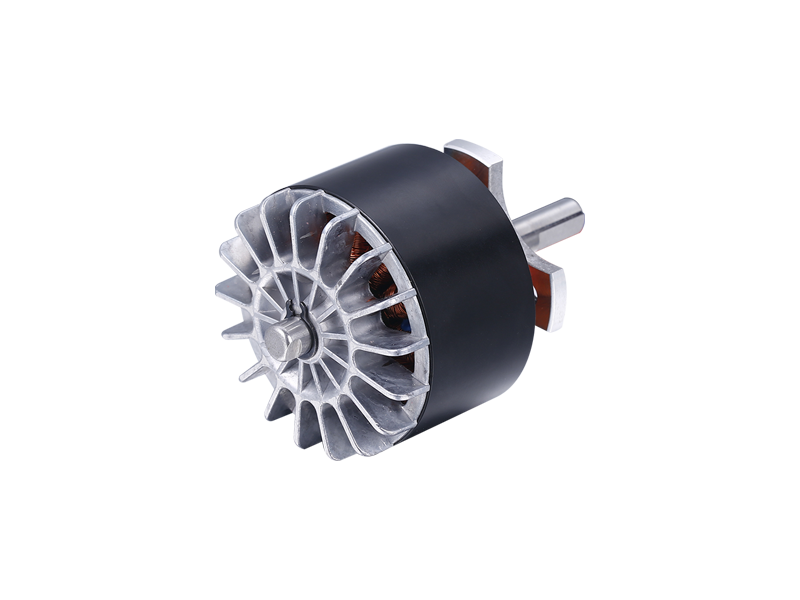
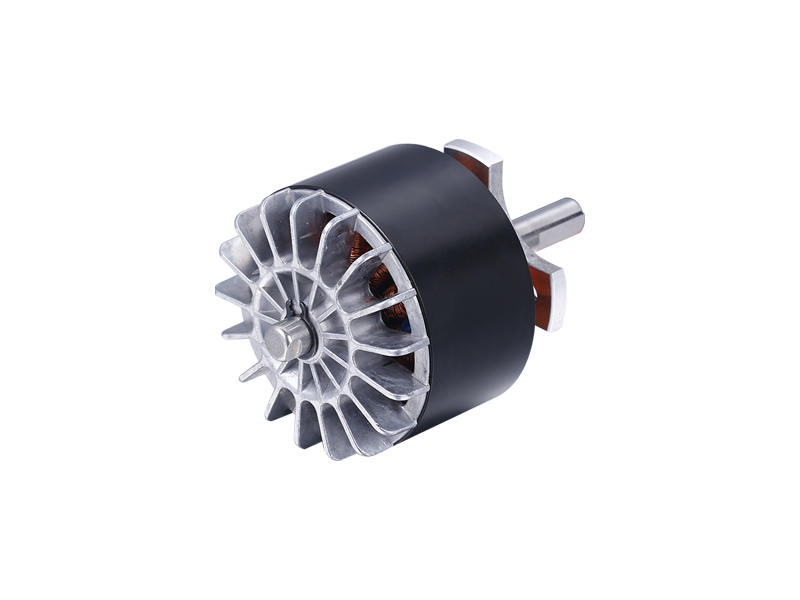
Adopting aluminum alloy shell and heat dissipation fin structure to accelerate heat conduction;
Apply air-cooled or liquid cooled cooling systems, suitable for high-power application scenarios;
High thermal conductivity epoxy resin sealing material is used inside the motor to ensure thermal stability.
2. Heat source monitoring and protection mechanism
Configure NTC thermistor or thermocouple to detect winding temperature in real-time;
The linkage controller performs overheat frequency reduction and shutdown protection operations;
System level thermal management algorithm, adjustable power allocation to achieve maximum energy efficiency.
4、 Reduce mechanical friction and air gap design losses
Even if the electromagnetic efficiency is high, the unreasonable design of mechanical structures can still result in energy waste.
1. Use low friction bearings and lubrication technology
Choose ceramic bearings or magnetic levitation bearings to significantly reduce friction losses;
Regular lubrication, using high-temperature resistant and long-life grease to ensure smooth operation of rotating parts;
Ensure the concentricity and assembly accuracy of the bearings to avoid eccentric wear.
2. Precise design of air gap length
The smaller the air gap of a brushless motor, the higher the magnetic field utilization rate, but if it is too small, it is prone to collision;
Recommend using finite element simulation software (such as ANSYS Maxwell) to optimize air gap design;
Minimize the air gap and increase the magnetic flux density while ensuring safety.
5、 Collaborative optimization of system integration and application environment
Brushless motors do not operate independently, and their efficiency improvement also depends on the collaborative work of the entire system.
1. Optional high-efficiency drive power supply
Select power modules with high conversion efficiency (≥ 95%);
The voltage and power should be perfectly matched with the motor to avoid under supply or over supply phenomena;
Implement precise control of multi-stage power supply system using DC-DC buck module.
2. System level energy consumption management
Establish vehicle or whole machine level energy efficiency models and optimize the working curves of each component;
Introducing energy feedback systems (such as brake energy recovery) to improve overall efficiency;
Adjust the motor start stop strategy, such as reducing the speed during light load operation to minimize unnecessary power consumption.
3. Adapt to different environmental temperatures and humidity
Select motors with IP65/IP67 protection level in harsh environments such as high humidity, high dust, and high temperature;
Cooperate with insulation coatings and electrical isolation protection measures to reduce leakage and short circuits;
Preheating the startup program in cold environments can reduce the startup current and improve efficiency.
6、 Regular maintenance and lifespan management strategy
Throughout the entire lifecycle of a brushless motor, even with excellent electromagnetic design and advanced drive control systems, it is difficult to maintain its efficient and stable operating state without scientific maintenance strategies and lifespan management mechanisms. Therefore, developing and implementing systematic and sustainable maintenance and management plans is crucial for improving the overall efficiency and extending the service life of motors.
1. Implement status monitoring and predictive maintenance
Traditional periodic maintenance often has lag and unpredictability, while data-driven state monitoring and predictive maintenance strategies can achieve early intervention and fault prevention:
Introducing IoT intelligent sensors: temperature, vibration, current, voltage and other sensors are installed in key parts of the motor (such as bearings, windings, and casings) to collect real-time operational data;
Establishing a digital twin model: By comparing simulation and physical operation data, anomaly identification and trend prediction can be achieved;
Applying machine learning algorithms: modeling and analyzing historical fault data, predicting potential future problems, and automatically generating maintenance recommendations;
Dynamic maintenance plan: Based on monitoring results, flexibly adjust maintenance cycles to achieve on-demand maintenance, reduce downtime and maintenance costs.
2. Regular maintenance and replacement of key components
Although brushless motors adopt a contactless commutation mechanism with relatively low maintenance requirements, certain vulnerable components and mechanical structures still require regular inspection and replacement:
Check the condition of bearings: Bearings are the main part of mechanical friction and need to be regularly inspected for lubrication status, smooth rotation, and abnormal noise;
Testing the insulation performance of the winding: Long term operation may cause aging of the winding and cracking of the insulation layer. An insulation resistance meter should be used to regularly test its insulation strength;
Cleaning the cooling air duct and heat sink: Dust and oil stains can seriously affect the heat dissipation efficiency, and regular cleaning is necessary to ensure smooth operation of the heat dissipation system;
Check the connectors and fastening screws: High frequency vibration can easily cause screws to loosen and cables to fall off, so it is necessary to regularly inspect the stability of each connection part.
3. Software and firmware maintenance and updates
Modern brushless motors are often equipped with embedded control systems, and timely updates of software firmware can effectively repair vulnerabilities, optimize control algorithms, and improve energy efficiency levels
Regularly upgrade the driver firmware: maintain the progressiveness of the control strategy, and introduce more energy-saving control algorithms such as PWM and FOC;
Introduce remote OTA update mechanism: achieve batch device upgrades through wireless networks to reduce manual maintenance costs;
Optimize interface interaction and data recording functions: facilitate maintenance personnel to quickly locate the source of faults and achieve traceability management.
4. Whole life cycle management and spare parts strategy
Establishing a comprehensive motor lifecycle file and spare parts management mechanism helps enterprises achieve optimal configuration of equipment assets and rapid response to faults
Record each operation and maintenance data, including running time, load curve, fault type and handling records, etc;
Set service life threshold and scrap standards: replace or upgrade the motor in a timely manner after it reaches the design life or the main components decay;
Spare parts management system: Ensure sufficient inventory of key components (such as bearings, windings, power boards) and regularly rotate them to prevent aging and failure;
Develop emergency plan: In case of motor failure, quickly replace and minimize production interruption time.
Through the above systematic maintenance and lifespan management strategies, not only can the overall operational efficiency of brushless motors be improved, but operating costs can also be effectively reduced, equipment lifespan can be extended, and unexpected downtime can be minimized, providing more reliable and stable power support for various application scenarios such as industrial automation, intelligent manufacturing, and electric transportation.
Conclusion
To achieve efficient operation of brushless motors, multi-level collaborative optimization is required, including electromagnetic, mechanical, thermal management, control strategies, and system integration. We should consider maximizing efficiency from the beginning of the design and continuously monitor and optimize during use to achieve the goals of energy conservation, environmental protection, and cost control.