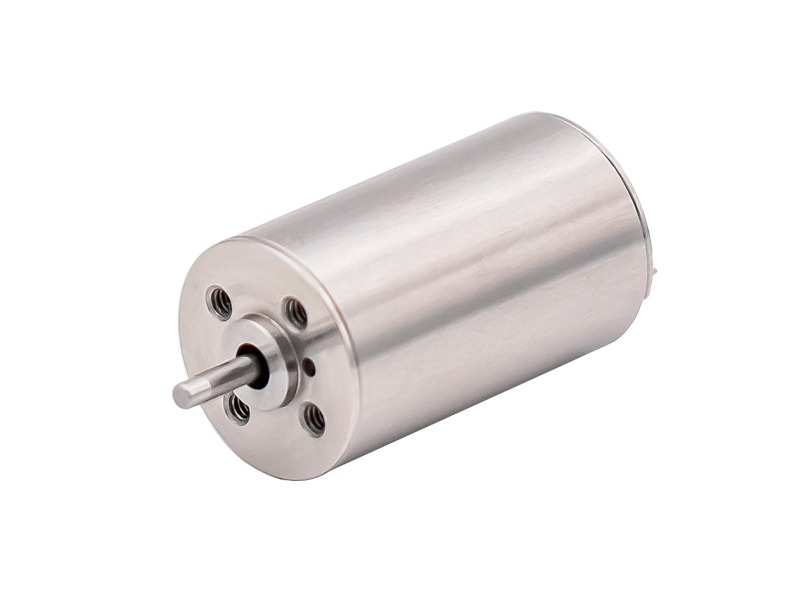
Do you know the exact power of the DC brushless motor?
From previous articles, we know that a brushless DC motor is a type of motor that achieves synchronous rotation of the rotor through electronic commutation technology, offering advantages such as a wide speed range, low electromagnetic interference, long lifespan, and high efficiency.
The power of a brushless DC motor typically depends on its application scenario, generally ranging from tens of watts to several thousand watts.
For low-power applications such as smart homes and electric bicycles, the power of brushless DC motors typically ranges from tens to hundreds of watts, while for high-power applications like new energy vehicles and industrial control, the power of brushless DC motors can reach several thousand watts or more.
The power of a brushless DC motor is primarily influenced by the following factors:
Motor dimensions: The power is directly proportional to the motor's size, so larger motors typically have higher power.
2. Motor materials: High-quality magnets and copper wires can deliver greater power output.
3. Controller: A high-quality controller can better regulate the motor and enhance power output.
4. Heat dissipation: Brushless DC motors generate heat during operation, and poor heat dissipation can affect power output.
The combined effect of the above factors can influence the power output of a brushless DC motor. Therefore, when selecting a brushless DC motor, it is essential to consider its application scenario to fully leverage its performance advantages, achieving optimal power output and energy utilization efficiency.