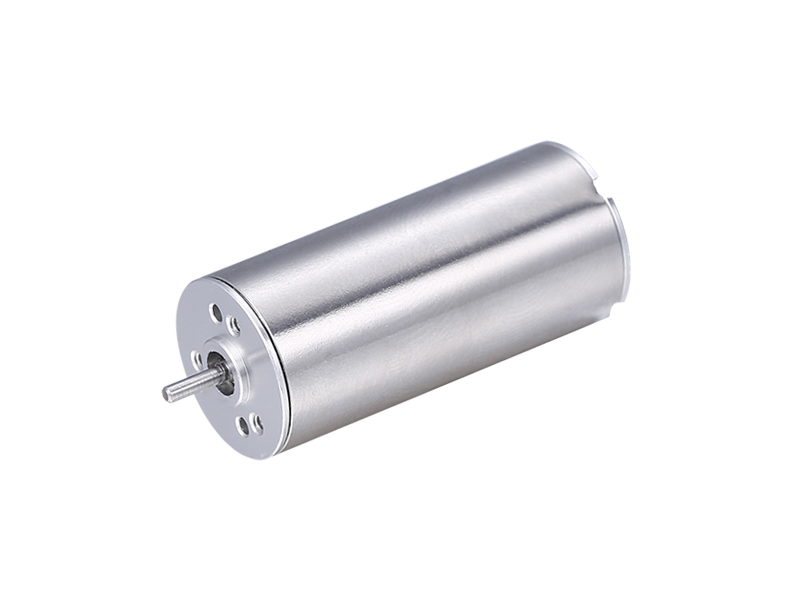
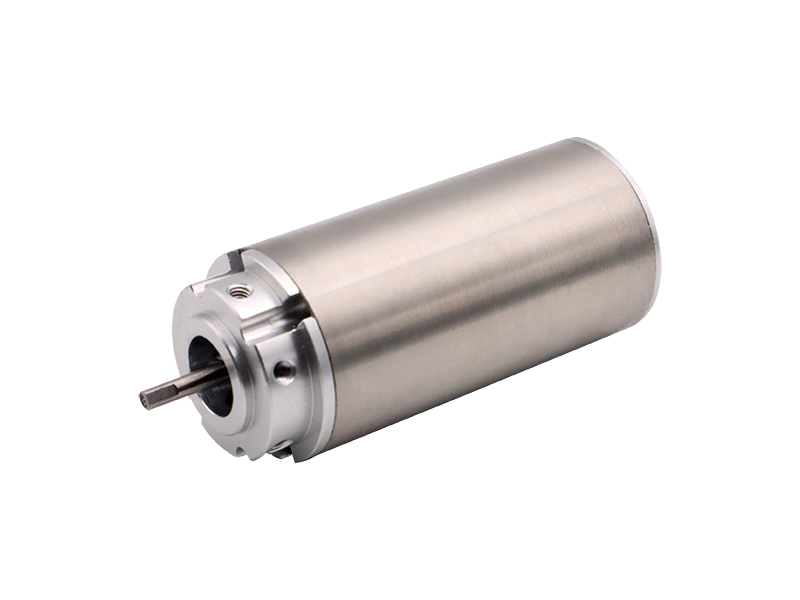
Detailed introduction of brushless DC motor.
1、 Background information of brushless DC motor
The stator winding of
brushless DC motors is often made into a three-phase symmetrical star connection, which is very similar to three-phase asynchronous brushless DC motors. The rotor of a brushless DC motor is attached with magnetized permanent magnets. In order to detect the polarity of the rotor of the brushless DC motor, a position sensor is installed inside the brushless DC motor. The driver is composed of power electronic devices and integrated circuits, and its function is to receive start, stop, and brake signals from the brushless DC motor to control the start, stop, and braking of the brushless DC motor; Receive position sensor signals and forward/reverse signals to control the on/off of each power transistor in the inverter bridge, generating continuous torque; Accept speed commands and speed feedback signals to control and adjust the speed; Provide protection and display, etc.
In the past thirty years, research on variable frequency speed regulation of asynchronous brushless DC motors has ultimately focused on finding methods to control the torque of asynchronous brushless DC motors. Rare earth permanent magnet brushless DC motors will undoubtedly demonstrate advantages in the field of speed regulation due to their wide speed regulation, small size, high efficiency, and small steady-state speed error.
Brushless DC motor, also known as DC frequency converter, has the characteristics of a DC brushed motor and is a device for frequency variation. The international term is BLDC. The operating efficiency, low-speed torque, and speed accuracy of brushless DC motors are better than any control technology inverter, so they deserve attention from the industry.
Although the development time of brushless DC motors in China is short, they have rapidly developed with the increasing maturity and improvement of technology. It has been widely used in various fields such as aviation models, medical equipment, household appliances, and electric vehicles, and has formed a large-scale industrial chain in Shenzhen, Changsha, Shanghai, and other places. A group of professional manufacturers such as Shenzhen Weiye Electric and Changsha Keda are continuously promoting industry development in technology. In recent years, brushless DC motors have become a rapidly developing force in the field of modeling. Due to production and price reasons, brushless DC motors have been widely used in mid to high end aviation models in the past few years. Now, with the rapid development of mechanical processing technology, the production cost of brushless DC motors has decreased significantly. Currently, they are entering various levels of the modeling field, from electric remote-controlled vehicles to electric remote-controlled ships to electric model airplanes, everywhere.
2、 Structural analysis of brushless DC motor
Structurally, brushless DC motors have similarities with brushed motors, including rotors and stators, but with the opposite structure to brushed motors; The rotor of a brushed motor is a coil winding connected to the power output shaft, and the stator is made of permanent magnet steel; The rotor of a brushless DC motor is made of permanent magnet steel, which is connected to the output shaft along with the housing. The stator is a winding coil, and the commutation brush used to alternately transform the electromagnetic field in a brushed motor is removed. Therefore, it is called a brushless DC motor. Now there is a problem. Without the transformation of the electromagnetic field, how can the brushless DC motor rotate?
3、 Operating principle of brushless DC motor
Simply put, by changing the alternating frequency and waveform of the current wave input to the stator coil of a brushless DC motor, a magnetic field rotating around the geometric axis of the motor is formed around the winding coil. This magnetic field drives the permanent magnet steel on the rotor to rotate, and the motor starts to rotate. The performance of the motor is related to factors such as the number of magnets, the magnetic flux intensity of the magnets, and the input voltage of the motor. It is also closely related to the control performance of the brushless DC motor, because the input is DC current, and the current needs to be converted into three-phase AC current by an electronic speed controller. It also needs to receive control signals from the remote control receiver to control the motor speed to meet the needs of the model. Overall, the structure of brushless DC motors is relatively simple, and the performance of their use is truly determined by brushless electronic speed controllers. A good electronic speed controller requires overall control of processes such as microcontroller control program design, circuit design, and complex processing technology, so the price is much higher than that of brushed motors.