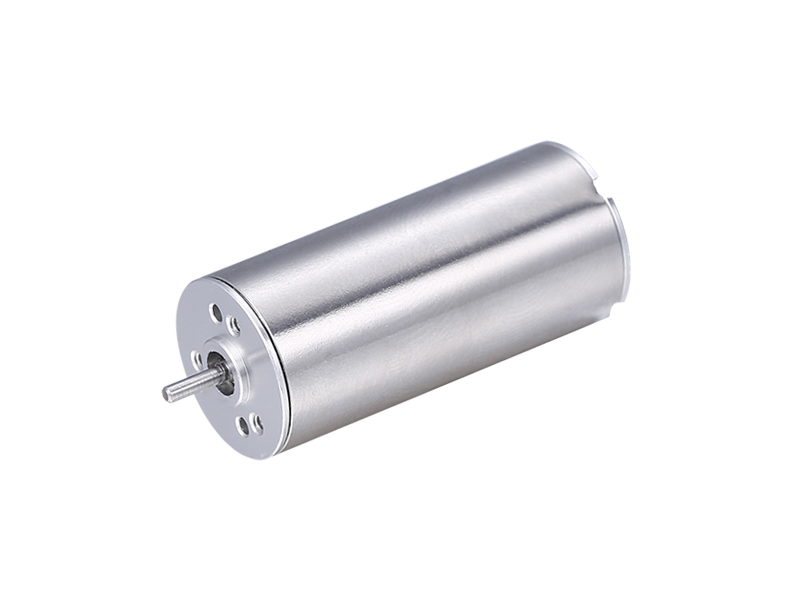
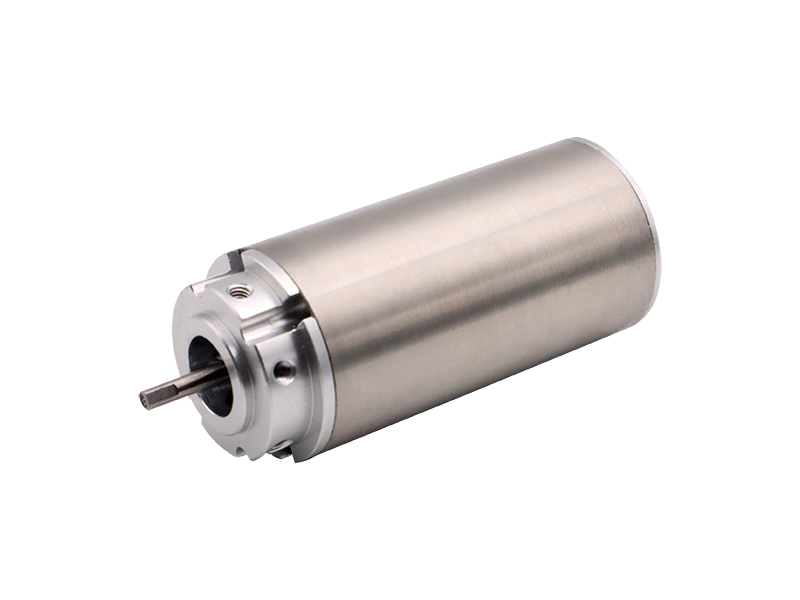
Definition of KV value for brushless motor.
The KV value of a brushless motor is defined as the speed/V, which means that when the input voltage increases by 1 volt, the idle speed of the brushless motor increases. From this definition, we can see that the input voltage of a brushless motor follows a strict linear proportional relationship with the motor's idle speed.

The significance of KV value of brushless motor
The significance of brushless motors is not only to illustrate the strict linear proportional relationship between motor speed and voltage, but also to provide a broad representation of motor performance.
Most friends who have used brushless motors have this feeling. When comparing the power supply of the outer rotor and inner rotor of the same level (outer diameter) brushless motor, they will find that the torque of the outer rotor motor is larger and "harder", while the torque of the inner rotor motor is slightly smaller and "softer". Looking at the motor parameters, the KV value of the brushless motor for the outer rotor motor is over 800, and for the inner rotor motor it is over 1000 to 2000. Looking at the speed again, the speed of the inner rotor motor is significantly higher than that of the outer rotor motor. In fact, these characteristics are all related to the KV value of the brushless motor. According to the definition of the KV value of the brushless motor, the idle speed of the brushless motor is the product of the KV value of the brushless motor and the input voltage, which explains why the speed of the inner rotor motor is higher than that of the outer rotor brushless motor.
In terms of torque characteristics, brushless motor KV The value reflects the torque performance of the motor in a sense. Take the external rotor motor as an example, the no-load speed of the motor is generally the same, but when the load (such as propeller) is added, its speed drops to 60% -70% of the no-load speed. However, when the internal rotor motor of the same level is tested, its speed with load can only reach 30% -40% of its no-load speed, which clearly reflects the difference between the torque characteristics of the two motors. The capacity with load of the internal rotor motor is relatively low. In order to meet the torque work, the internal rotor motor must automatically slow down, increase the passing current, and the output power of the motor will increase when the voltage is constant. The torque characteristics of the internal rotor motor are also reflected in In specific applications, many light foam fixed wing aircraft used to use internal rotor brushless motors at first, However, due to the torque characteristics, the aircraft propeller is not directly connected to the motor (non direct drive), but an additional reduction gear set is added to improve the torque performance of the inner rotor motor.
For brushless motors of the same series and size, the KV value of the brushless motor can also distinguish the characteristics of the motor. For example, for B3674 internal rotor motors, if one brushless motor has a KV value of 1860 and the other has a KV value of 2075, the torque of the first motor will be larger, and the peak working current will be relatively smaller; The second motor has higher technology, but its torque characteristics are worse than the first motor, resulting in a higher peak current.
The significance of brushless motor KV
Some basic knowledge models of brushless motors. The KV value of brushless motors ranges from 1-2 thousand to 5-6 thousand, representing the increase in speed for every 1 volt increase in voltage. For brushless motors, this value is a constant
For brushless motors of the same size and specifications: For those with more winding turns, the brushless motor KV value is low, the maximum output current is small, but the torque is large and the winding turns are small. The brushless motor KV value is high, the maximum output current is large, but the torque is small. Without a single brushless motor KV value, the quality of the motor cannot be evaluated because different brushless motor KV values have different applications: in low voltage environments (7.4v), brushless motors with low KV values are suitable for smaller reduction ratios and larger propellers due to low speed, relying on larger loads to increase current and output higher power; Brushless motors with high KV values are suitable for larger reduction ratios and smaller propellers due to their high speed. While meeting the output power requirements, the load should be reduced to avoid excessive current; Brushless motors with low KV values in high voltage environments (11.1v) can achieve high speeds and good torque, which is ideal. It is necessary to cooperate with a larger reduction ratio and a smaller propeller to reduce the load and avoid excessive current while meeting the output power requirements; For brushless motors with high KV values, if the speed is too high in this environment, in order to avoid excessive current, the load should be minimized as much as possible. It is very suitable for ducted fan engines to utilize its high speed. 7.4v and 11v are just examples and are commonly used sub levels. The brushless voltage range is very wide and the performance is amazing.