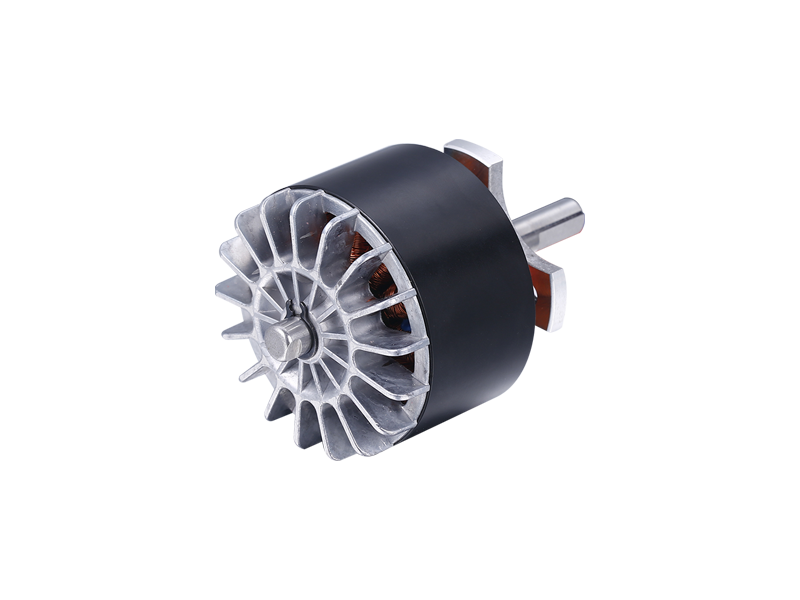
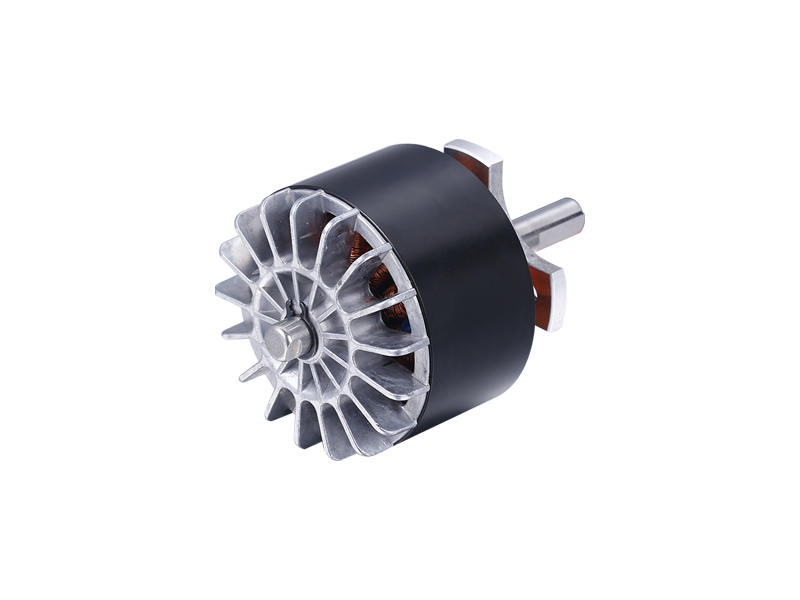
Comparison of application fields between brushless motors and brushed motors.
There are significant differences between brushless motors and brushed motors in application scenarios, mainly due to their differences in lifespan, efficiency, cost, and control performance.

1. Application areas of brushed motors
Due to its simple structure and low manufacturing cost, brushed motors are widely used in applications that do not require high performance and are cost sensitive
Household appliances: such as hair dryers, fans, mixers, etc.
Automotive equipment: window regulator, seat adjuster, wiper motor.
Electric tools: low-end electric drills, electric screwdrivers, etc., suitable for short-term use.
Toys and small devices: remote-controlled cars, electric dolls, etc., pursue low cost rather than high lifespan.
The advantages are high starting torque and simple control, but due to limited lifespan and high noise, it is more suitable for low-end and temporary applications.
2. Application areas of brushless motors
Brushless motors are widely used in high-end fields with strict performance requirements due to their high efficiency, long lifespan, and precise control
Drones and model aircraft: Strong power, lightweight, high efficiency, ensuring flight stability.
New energy vehicles: used for electric drive systems, with high efficiency and durability.
Industrial automation and robotics: used for servo control, CNC machine tools, and joint motors to achieve high-precision control.
Medical equipment: applied to ventilators and surgical robots, requiring quietness and reliability.
In the field of home appliance upgrades, such as high-end vacuum cleaners and smart fans, we pursue quietness and long lifespan.
Although brushless motors have a high initial cost, their low maintenance, long lifespan, and high performance have made them increasingly popular in modern technology and industrial fields.