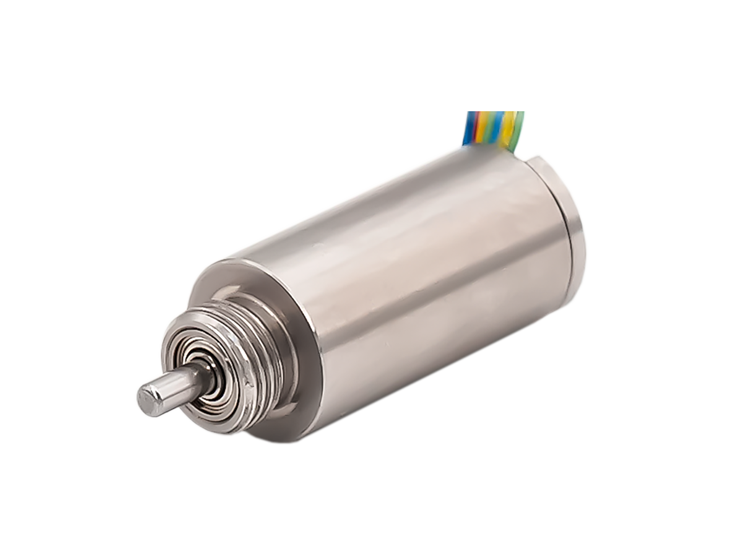
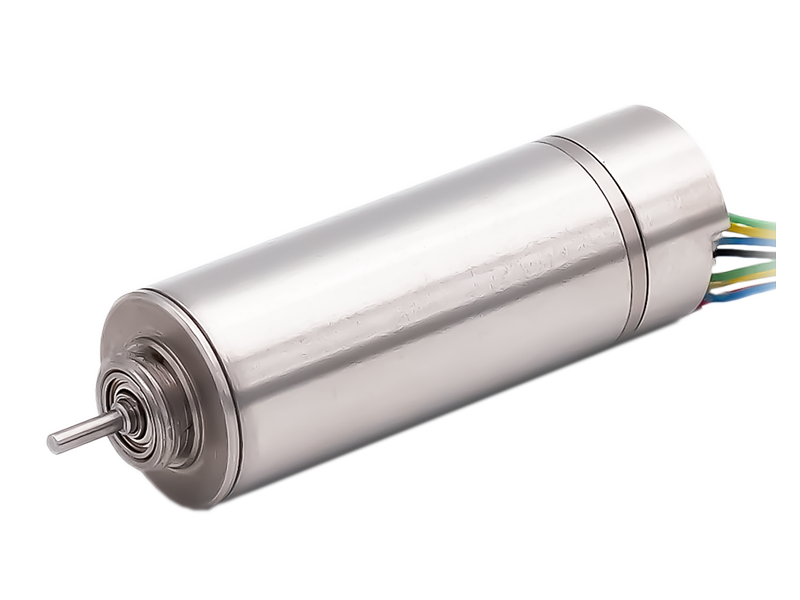
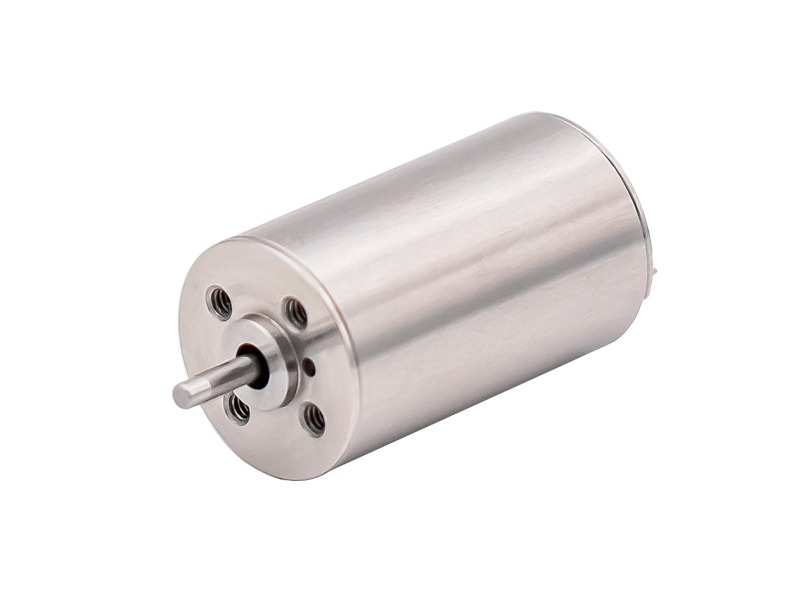
Comparison of advantages and disadvantages between brushed and brushless motor schemes.
The development of semiconductor electronics in the 1970s led to the elimination of commutators and brushes in DC motors. In brushless DC motors, electronic servo systems replace mechanical commutator contacts. Electronic sensors detect the angle of the rotor and control semiconductor switches, such as transistor switches and current passing through coils. Eliminating sliding contact, brushless motors have less friction and longer service life, and their working life is only limited by the bearing life.
A brushed DC motor generates maximum torque at rest, which decreases linearly with increasing speed. Brushless motors can overcome some limitations of brushed motors; They include higher efficiency and lower mechanical wear sensitivity. These benefits come at the cost of potentially less robust, more complex, and expensive control electronics.
A typical brushless motor has permanent magnets that rotate around a fixed armature, eliminating the problem of connecting current to a moving armature. An electronic controller replaces the brushless DC motor with brush/commutator components, constantly switching the phase windings to keep the motor running. This controller performs similar timed power distribution by using solid-state circuits instead of brush/commutator systems.
Compared with brushed DC motors, brushless DC motors have several advantages, including high torque to weight ratio, higher torque per watt (improving efficiency), higher reliability, lower noise, longer service life (brushless and commutator corrosion), elimination of spark generated by the commutator, and comprehensive reduction of electromagnetic interference (EMI). Due to the absence of windings on the rotor, they are not subjected to centrifugal force, and since the windings are supported by the casing, they can be cooled through conduction without the need for internal airflow in the motor. This in turn means that the interior of the motor can be completely sealed and protected from dirt or other foreign substances.
Brushless motor commutation can be implemented in software using microcontrollers or microprocessors, or in analog hardware, or in digital firmware using field programmable gate arrays (FPGA). Replacing brushes with electronic devices for commutation can achieve greater flexibility and functionality that brushed DC motors do not possess, including speed limitation, "micro step" operation for slow and/or fine motion control, and holding torque at rest. The controller software can customize specific motors for use in applications, resulting in greater commutation efficiency.
The maximum power applied to brushless motors is largely limited by heat, and excessive heat can weaken the magnet and damage the insulation performance of the winding.
When converting electricity into mechanical power, brushless motors are more efficient than brushed motors. This improvement is largely due to the frequency of the switching current determined by the feedback from the position sensor. The additional benefit is due to the absence of brushes, which reduces mechanical energy loss due to friction. The maximum efficiency improvement occurs in the no-load and low load regions of the motor performance curve. Under high mechanical loads, the efficiency of brushless motors and high-quality brushed motors is comparable.
The environment and requirements for manufacturers to use brushless DC motors include: maintenance free operation, high speed, and spark hazard or potential impact on the operation of electronic sensitive equipment.
The structure of a brushless motor may be similar to that of a stepper motor. Unlike stepper motors, brushless motors are typically used to generate continuous rotation. Stepper motors generally do not include shaft position sensors for internal feedback of rotor position. Instead, the stepper controller will rely on sensors to detect the position of the driven device. They often stop when the rotor is in a determined angular position while still generating torque. A well-designed brushless motor system can also maintain zero speed and limited torque.