Classification of industrial robot joints and selection of motors.
With the rapid development of automation in manufacturing, more and more companies are adopting robot technology and using industrial robots for production, attributed to the benefits of business automation and the use of smarter and more intelligent processes.
Each structure of industrial robots has specialized functions, such as wrists and end effectors. In order for these different components to work accurately, robot joints are required. Robot joints are sometimes referred to as axes. They are essential and can be used to ensure that arm movements are not restricted or interfered with.
1. Types of mechanical joints in industrial robots
Different types of industrial robots are used in the manufacturing industry, and various mechanical joints are also found. These joints vary in terms of movement and application, especially in terms of the types of industrial robots to be used.
When it comes to mechanical joints in robotic arms, we need to consider five main types. Two of the joints are linear, which means that the relative motion between adjacent linkages is translational. On the other hand, the other three are rotating, which means that the relative motion of the connecting rod involves rotation between them.
The five types of mechanical joints in industrial robots include:
Linear joint: In a linear joint, the relative motion of adjacent linkages is parallel. This means that the input and output links slide in linear motion. This motion leads to translational motion. This linear motion can be achieved in various ways, including the use of telescopic mechanisms and pistons. This type of joint is also known as an L-shaped joint.
Orthogonal joint: Orthogonal joints are also commonly referred to as O-joints. They have relative motion taken by input and output links. The motion involved in orthogonal joints is translational sliding motion. However, unlike linear joint arrangements, for orthogonal joints, the output link is perpendicular to the input link.
Rotating R-joint: When it comes to rotating joints, we find that the use of rotational relative motion is very useful for industrial robots working in multiple workspaces. These movements are performed with the rotation axis perpendicular to the axes of the input and output linkages. These rotary joints are also known as R-type joints.
Twisted joint: This type of joint has rotational motion and can also cause a certain degree of rotation during use. The motion of these joints is relative to the axis of rotation, which is perpendicular to the axes of the input and output linkages. Twisted joints are also known as T-joints.
Rotating V-shaped joint: In a rotating joint, the situation is slightly different compared to other joints. These joints also have rotational movements that are useful in different applications. The movement of these joints is characterized by the movement between two connecting rods. The axis of the input link is designed to be parallel to the rotation axis of the joint. On the other hand, the axis of the output link is designed to be perpendicular to the rotation axis of the joint. This type of joint is also known as a V-joint.
2. How to choose motors for industrial robot joints?
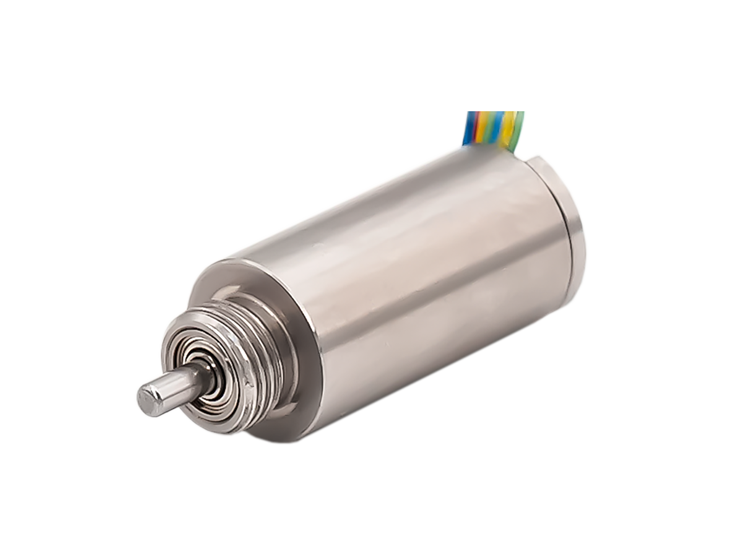
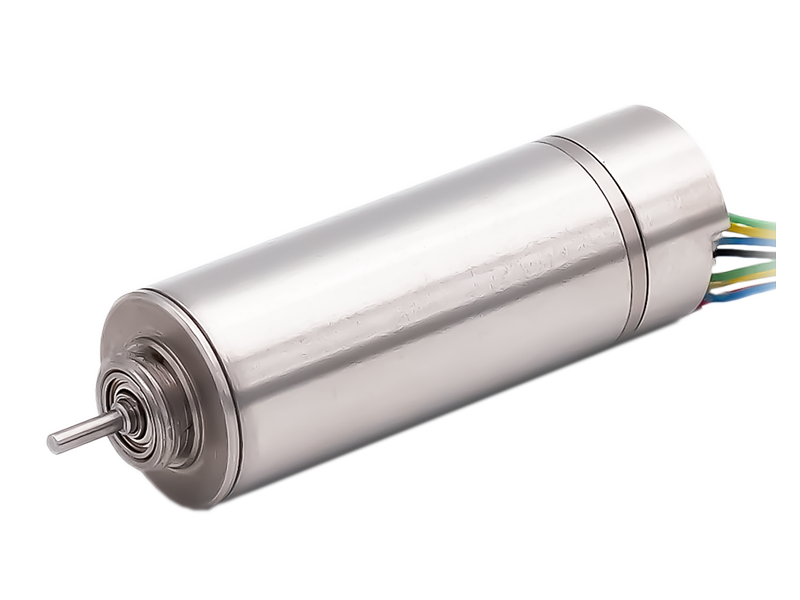
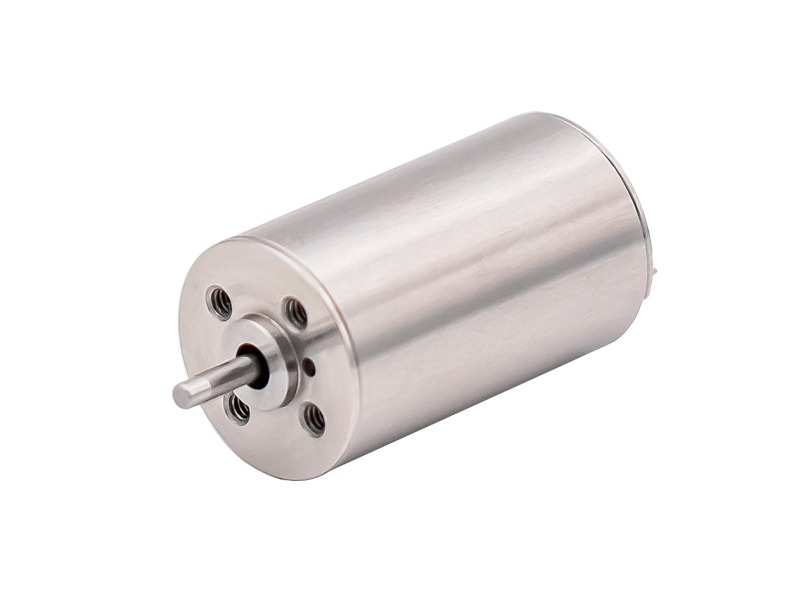
Industrial robot joints have highly integrated solutions for motors, encoders, gears, and sometimes brakes. Usually, a direct drive frameless torque motor kit coupled with a precision high ratio gear system is used. Although the terms "direct drive" and "precision gear" often conflict, this combination is successful in optimizing size and performance.
The choice of control methods, feedback requirements, and mechanical properties truly drives the selection of motors. Common electric joints include brushless permanent magnet frameless torque motor kits, absolute encoder kits, and high ratio zero backlash gears. In most cases, the output end of the gear also requires a high-precision absolute encoder to handle any idle and winding caused by low stiffness and idle in the gear system.
Compact integrated robot joints. It uses a frameless torque motor kit, and the input end adopts a high-resolution medium precision absolute encoder. It has a high specific zero backlash precision gear and a high-precision absolute encoder at the output end.