The difference between hollow cup motors and ordinary motors mainly lies in their structure and application. Structurally, the hollow cup motor is a special type of motor consisting of an outer frame, drive coils distributed along the periphery, a hollow rotor in the middle, and additional sensors. The name of the
hollow cup motor comes from the design of the rotor part.
The rotor of the hollow cup motor breaks through the structure of ordinary motors by using a coreless rotor, which is a hollow cup-shaped structure surrounded by windings and magnets inside. This rotor structure eliminates the electrical energy loss caused by eddy currents formed by the iron core, while significantly reducing its weight and moment of inertia, thereby reducing the mechanical energy loss of the rotor itself.
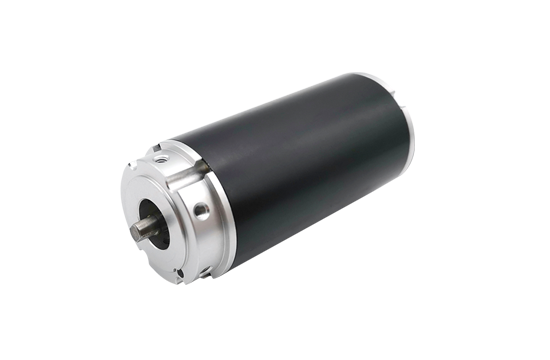
The structural differences between hollow cup motors and ordinary motors are as follows:
1. Different structures: The stator of a hollow cup motor is a hollow cup-shaped structure, while the stator of a regular motor is solid.
2. Small external dimensions: Due to the hollow cup shaped stator structure of the hollow cup motor, its external dimensions can be more compact, and compared to ordinary motors of the same power, the volume of the hollow cup motor is smaller.
3. Lightweight: The design structure of the hollow cup motor makes it very lightweight and suitable for applications with weight requirements.
The differences between hollow cup motors and ordinary motors in terms of application advantages are as follows:
1. High power density: Hollow cup motors have higher power density due to their small size, which means they can carry higher power output per unit volume.
2. High efficiency: The hollow cup motor has a compact structure, short magnetic circuit, and low losses in the iron and copper cores, thus having a high energy conversion efficiency.
3. High precision: Due to the use of hollow cup motors in conjunction with high-resolution encoders, very precise position control can be achieved.
4. High integration: Hollow cup motors often have the function of integrating sensors, such as encoders, allowing them to monitor the position and speed of the motor rotor in real time.