Structure, advantages, disadvantages, and applications of hollow cup motors!
There are many types of motors, which can be roughly divided into iron core motors, which are commonly seen, and hollow cup motors in terms of structure. The OP used to work in a Japanese company developing and providing technical support for hollow cup motors. The main focus of this article is on the hollow cup motor.
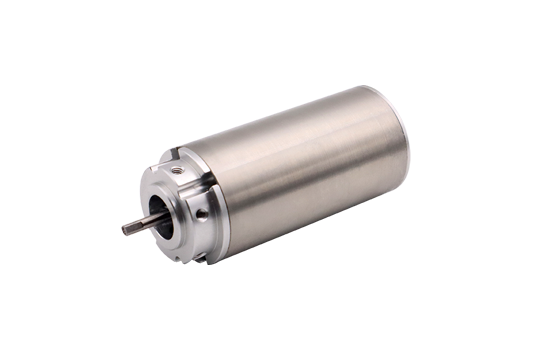
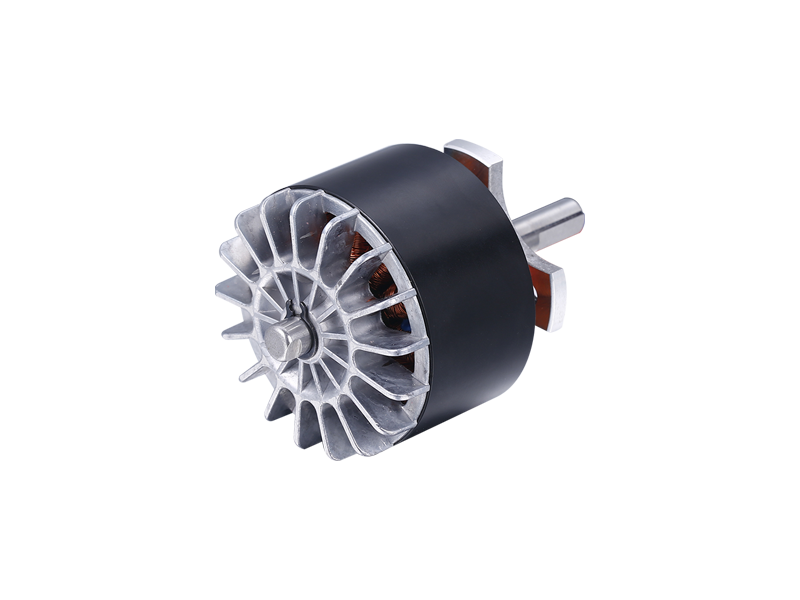
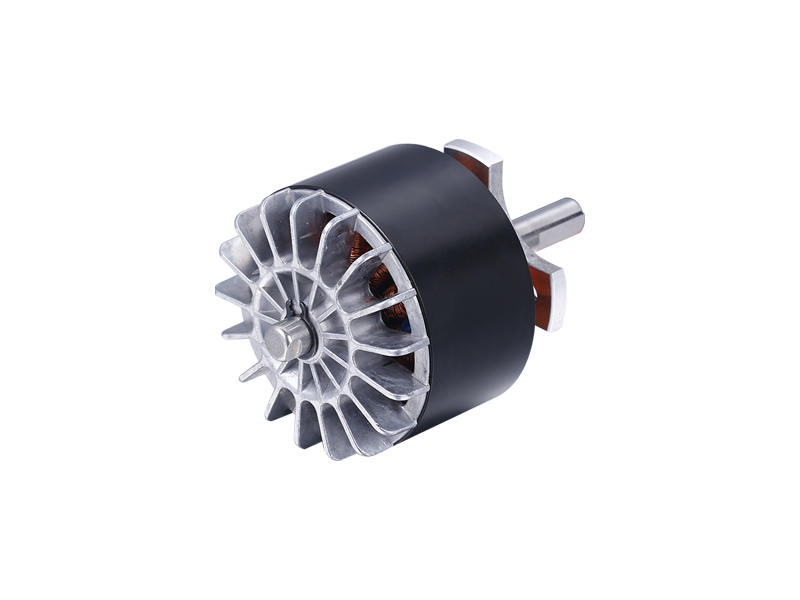
Let's briefly talk about the structure of a hollow cup motor, which consists of two main components: the rotor and the stator. Let's start with these two main components! The hollow cup motor, as the name suggests, has an empty rotor inside. You can imagine it as an empty glass cup with a shaft passing through it, which is the rotor of the hollow cup motor. The construction of motors can be divided into two categories. The first category is to make some coils into rotors and magnetic steel into stators (Maxon, Feng Haber both have this structure). The coils are fixed by special means (the process cannot be described in detail, as there is a confidentiality agreement, please forgive me). The second type is to make the coil into a stator and the magnetic steel into a rotor, which is generally the structure of high-power hollow cups.
The following poster briefly discusses the advantages of these two types of hollow cup motors.
(1) There are three types of motor losses: 1. Copper loss, 2. Iron loss, and 3. Mechanical loss. Hollow cup motors have only two major losses because they do not have iron cores. Therefore, the first major advantage of hollow cup motors is low loss and high efficiency.
(2) The first type of hollow cup motor, due to the absence of iron core, has low moment of inertia, high and stable speed, low noise, and low heat generation.
(3) The second type of hollow cup motor, due to the special stator technology, has strong overload capacity, generally at 3 times the rated value, with a duration of about 60 seconds, and a period of five times is generally not a problem. It also has low heat generation (because the motor's internal resistance is small), very stable speed, and stable torque. Even at 1rpm, the torque can still be maintained, and the vibration and noise are small.
The disadvantages of hollow cups are as obvious as their advantages. The biggest disadvantage is the high price. Generally, only mid to high end industries use hollow cup motors. In addition, the second type of motor (specifically referring to brushless hollow cups) has high requirements for the actuator due to its low internal resistance and large recoil current during emergency stop.
Next, let's talk about the application fields of hollow passive motors. The application fields of hollow cups are quite wide, let me give you a few areas that are worth mentioning!
1. Air pump industry. Generally used in medical machinery such as respiratory pumps, hollow cup motors are generally used for pumps that require high flow stability, as stable speed is their advantage.
2. AGV industry. The working environment of AGV cars often requires climbing slopes and starting with heavy loads, which requires the overload capacity of hollow cup motors. For general motors, there may be no problem once or twice, but after a long time, the motor may burn out.
3. Service robot industry. From a safety perspective, service robots generally require low voltage. Low voltage motors with iron cores are also gradually being developed in China. However, in terms of torque and speed stability, the lifespan is still lacking. Therefore, there are still many high-end service robots that use hollow cups, and it is not denied that some manufacturers use iron core motors.