Two control methods for brushless motors.
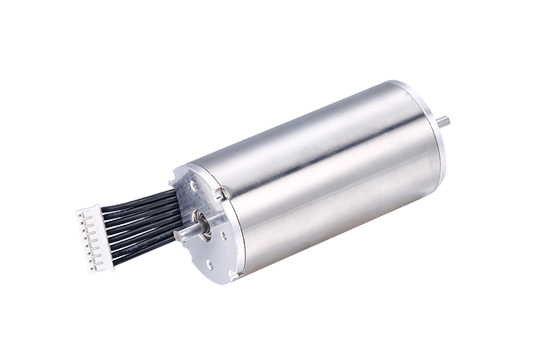
The control methods of brushless motors include square wave control and sine wave control. There are many misconceptions to be aware of, such as whether the motor will not break, whether the torque and speed are the same as those of brushed motors, or whether maintenance is required. Below, let me introduce the control methods of brushless motors in detail.
Understand the control method of brushless motor.
1. Square wave control
That is to say, six step control.
2. Sine wave control
It is called SPWM drive, strictly speaking, FOC is also called sine drive, but the control object of SPWM is voltage, while the control object of FOC is current. According to the complexity of control, the sine wave control of brushless motors can be divided into simple sine wave control and complex sine wave control.
(1) Simple sine wave control:
Apply a certain voltage to the motor winding to make the motor phase voltage a sine wave. As the motor winding is an inductive load, the motor phase current is also a sine wave. By controlling the amplitude and phase of the motor phase voltage to control the phase and amplitude of the current, it is relatively simple to achieve voltage loop control.
(2) Complex sine wave control:
Unlike simple sine wave control, complex sine wave control aims to control the motor phase current by establishing a current loop and directly controlling the phase and amplitude of the phase current. Due to the sinusoidal signal of the motor phase current, the decoupling operation of the current is relatively complex, and common methods include field oriented control (FOC) and direct torque control (DTC).
Brushless motor consists of a motor body and a driver, and is a typical electromechanical integrated product. Due to the self controlled operation of the electric motor, there will be no additional starting winding on the rotor like synchronous motors that start under heavy load under variable frequency speed regulation, and there will be no oscillation or step loss during sudden load changes. The permanent magnets of small and medium-sized brushless DC motors now mostly use high magnetic energy level rare earth neodymium iron boron (Nd-Fe-B) materials. Therefore, the volume of rare earth permanent magnet brushless motors is reduced by one frame size compared to three-phase asynchronous motors of the same capacity.